Best SUP Boards for Beginners 2026 — Buyer's Guide
Your first SUP board is the foundation. Get the volume and width right, and you'll paddle confidently for years. We'll show you exactly what to look for—and which boards we stock actually work.
Pick a board with 280–330 litres of volume, 31–34 inches wide, and built from military-grade PVC. The iSUP Ripper Air SLT and Fanatic iSUP Ray Air SLT both hit these marks. Volume floats you safely; width keeps you stable.
01 — SizingVolume, Width, and Float — What the Numbers Actually Mean
Volume is the one number that matters most. A 280–330 litre board floats you with a safety margin, handles wobble, and forgives bad weight distribution. If you're 50–90 kg, this range is your sweet spot. Go smaller and you'll sink; go bigger and you'll feel tippy and sluggish.
Width is your second choice. Boards between 31–34 inches wide give you a stable platform without being unwieldy to carry or store. Narrower boards (under 30 inches) suit riders who've paddled before. Wider boards (over 35 inches) are clunky and slow.
Length comes last. Most beginners ride 10' to 11' boards—they're easy to turn and forgiving in chop. Taller riders (above 185 cm) often prefer 11' or 12'. Shorter riders (under 165 cm) work well on 9' or 10'. Length affects speed more than stability, so don't obsess over it.
02 — Build QualityDurability: Military-Grade Materials Beat Budget Inflatables
Beginner boards take a beating—dropped in sand, dragged over rocks, left in the sun. Cheap PVC delaminates (layers peel apart) within a season. Military-grade PVC and reinforced drop-stitch cores stay intact for years.
We've shipped the iSUP Ripper Air SLT and Fanatic iSUP Ray Air SLT since 2025, and neither has come back with delamination complaints. Both use thick PVC and solid valve systems. That €50–100 difference between budget and quality boards? You'll make it back in a second season of reliability.
03 — Our picksOur 4 In-Stock Picks
We've narrowed it down to boards we actually stock and riders actually choose. All sit in the 280–330 litre range with widths between 31–34 inches.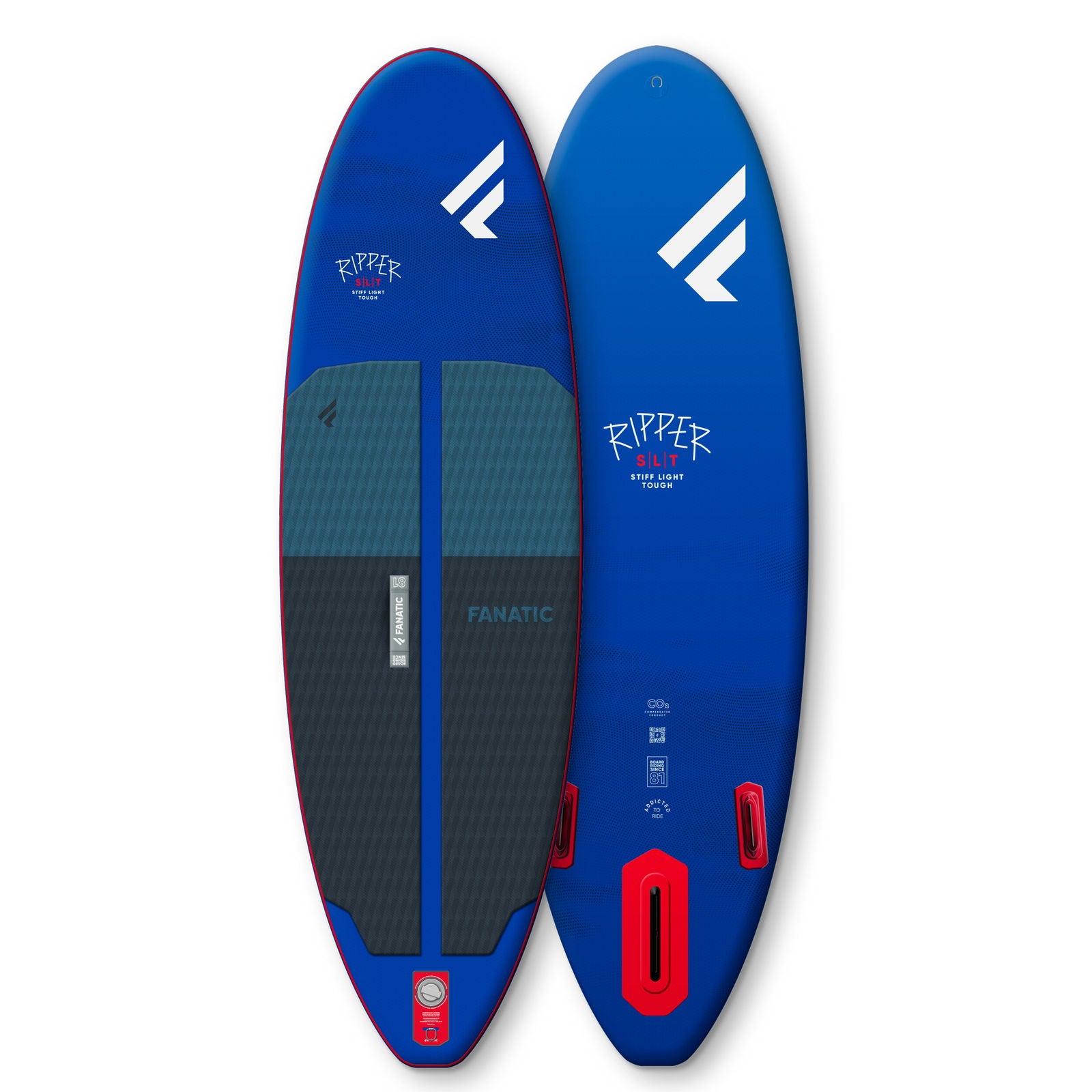
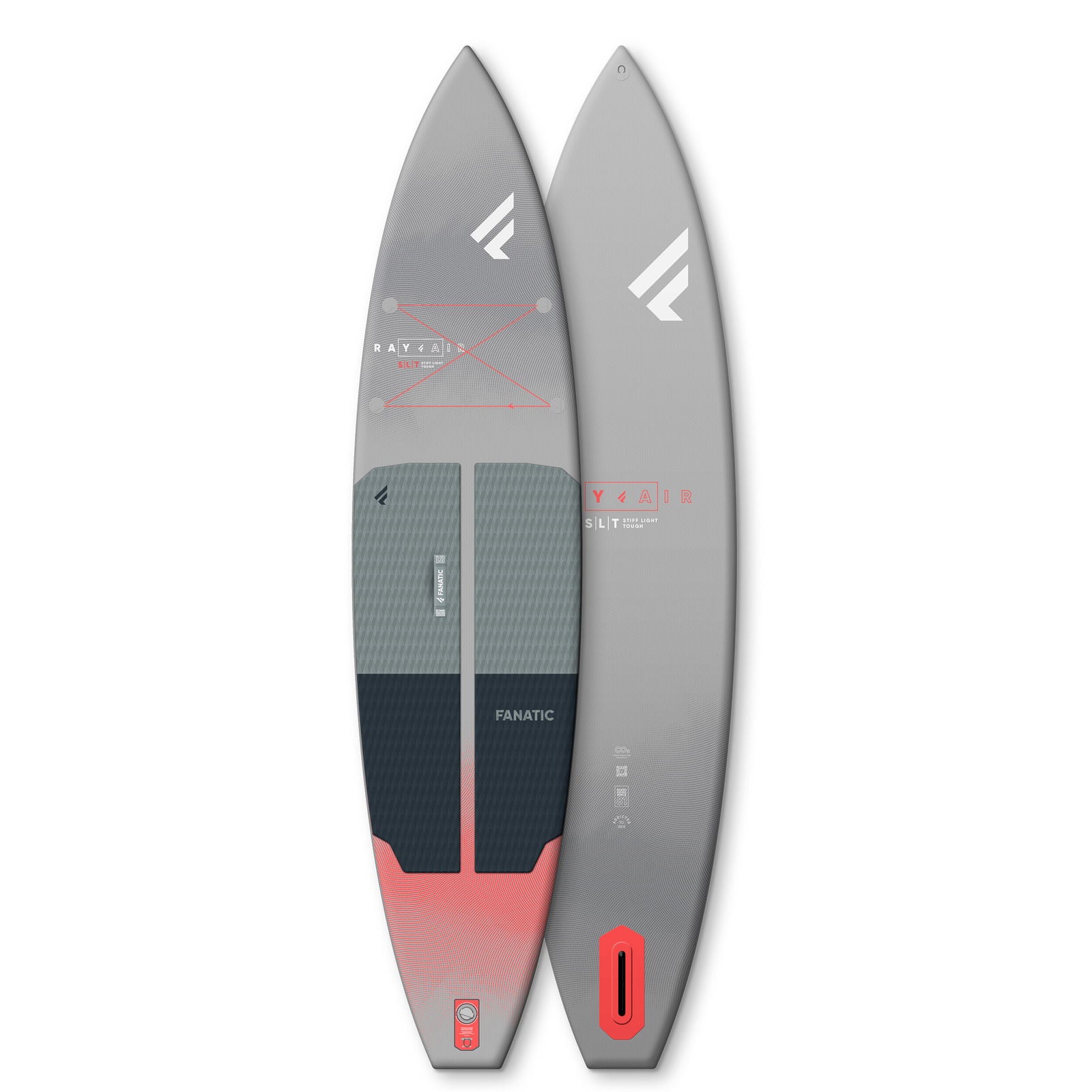
Prices and 2026 specs are pulled live from each product page. Confirm on the product page before checkout.
04 — MistakesThree mistakes we see every week
Ready to find your first board?
Browse our full range of beginner SUP boards — all tested, stocked, and backed by 20+ years of watersports retail.
Frequently asked
Inflatables (iSUPs) are lighter, easier to carry, and nearly indestructible—perfect for beginners. Rigid boards are faster and more responsive, but heavier and pricier. Start with an iSUP unless you have roof space and a car rack.
Yes, but beginner iSUPs aren't designed for it. They're built for flat water—lakes, rivers, calm bays. If you want to paddle waves, you'll eventually want a proper wave board (shorter, narrower, thinner). Start with flat water and upgrade later.
Too small: you sink below the water line and feel wobbly. Too big: the board feels sluggish and hard to steer. The 280–330 litre range for 50–90 kg riders eliminates guesswork—trust the numbers, not your gut.
No. A stable 10'–11' beginner board works everywhere—lakes, rivers, bays, calm seas. Once you're confident, you might choose a narrower board for rivers or a wider one for open ocean, but your first board should be a do-everything workhorse.