Flat Water vs Waves — Which Is Easier for Kitesurfing?
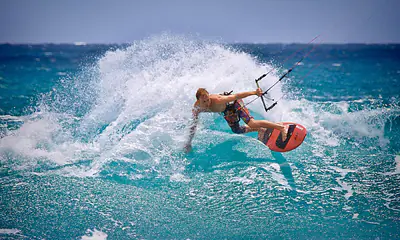
The honest answer: flat water is easier to learn on, but once you've mastered the fundamentals, waves often feel more forgiving because water movement absorbs your mistakes. Flat water demands precise bar control and body position--every error shows immediately. Waves, paradoxically, can hide poor technique if you're just trying to get down the line.
The Full Answer
For absolute beginners, flat water wins every time. There are no surprises--no whitewater dumps, no shore breaks, no undertow. You can focus entirely on getting the kite stable, learning water relaunch, and building confidence with the bar. Most kitesurf schools teach on flat water for this reason. You'll dial in your stance, edge control, and the feel of the board without the ocean throwing curveballs at you.
But here's the twist: flat water and wave riding demand different skills. On flat water, you're fighting for every bit of downwind distance and speed. Your bar control has to be precise--chicken loops tight, hands exact on the bar, weight forward. Any sloppiness and you're swimming back. That's why intermediate riders often find flat water harder than it looks. Waves, on the other hand, give you a moving platform. The water's own energy propels you. You can afford slightly loose technique because the wave is doing half the work.
The real difference comes down to mental load. Flat water requires constant active input--steering, pumping the kite, managing speed. Waves let you ride the swell and focus on turns. If you're new to the sport, flat water removes one complexity (wave reading). If you're intermediate and progressing, waves often feel more intuitive because your body understands how to work with momentum.
That said, flat water conditions--calm days with clean wind--are rarer than you'd think in most spots. Waves are almost always around, which makes them the more practical option for consistent practice in coastal regions. Choose based on what conditions you actually have access to, not which is theoretically easier.
Practical Guide
- Start on flat water if you're learning from zero -- Book lessons on a flat water spot (lagoons, lakes, bay areas). You'll progress faster without fighting chop and whitewater.
- Master the bar and kite control first -- Whether flat or waves, nail your kite steering, edge control, and relaunch before worrying about wave strategy. These skills transfer everywhere.
- Use small waves (waist-height) as your transition zone -- Once you can reliably ride flat water, move to rolling swell with small whitewash. Not true waves yet, but not glassy flat either.
- Practice your footwork and body position daily -- Whether flat or waves, sloppy technique shows up everywhere. Spend time in small waves or light flat water working on your stance and edge.
- Adapt your kite choice to conditions -- Flat water demands responsive, immediate kites (Duotone Dice SLS or Cabrinha Switchblade Apex work brilliantly). Waves reward slighly more drift-friendly kites for smoother control.
- Accept that both teach you different lessons -- Flat water teaches precision and active riding. Waves teach reading conditions, timing, and flow. You need both for well-rounded progression.
Common Mistakes
Many riders assume they'll 'just pick up' wave riding. Wave reading--swell angle, peak selection, timing your exit--is a completely separate skill. You might crush flat water and still get worked on small waves for weeks.
If your local spot has constant swell, it's tempting to skip flat water entirely. Don't. Flat water refines your bar sensitivity and board control in ways waves can't. Your wave riding will improve faster if you've built that foundation.
Grabbing whatever kite you own and heading out guarantees frustration. Flat water demands responsive, drift-resistant kites. Wave kites are built for float and pivot, not precision. Match your kite to the condition.
Flat water can become a crutch where bad footwork gets hidden. Build proper stance habits early. Your future wave riding depends on it.
Surf Store Recommendation
For flat water vs waves kitesurfing progression, your kite choice matters more than your board. If you're building both skills, we recommend a hybrid approach: a precision flat-water kite for drilling technique, and a slightly larger, more forgiving kite for small waves.
The Dice SLS is our gold standard for flat water work. Insanely responsive bar feedback, instant steering, zero forgiveness for sloppy technique. You'll learn exactly what your hands and body are doing. Once you've mastered the Dice on flat water, small waves feel like a holiday.
The Switchblade bridges both worlds beautifully. Neutral drift characteristics mean it works on flat water, but it's forgiving enough for your first small-wave sessions. Easy relaunch, predictable power delivery. A brilliant stepping stone between flat and wave conditions.
For boards, keep it simple: a flat-water focused directional for lakeside sessions, and a smaller wave-friendly board (48-54L) for swell. Most riders make this transition happen gradually over a season or two. There's no rush--consistency beats progression obsession.
Ready to Master Both?
We've coached hundreds of riders through flat water and wave progression. Get the right kite, build the habits, and trust the process.