How to Choose a Windsurf Mast — RDM vs SDM & Carbon Explained
The right windsurf mast transforms how your sail performs--too heavy and it'll exhaust you, wrong diameter and it won't slot into your sail, wrong length and you'll lose power or overstress the luff. The key is matching mast length and diameter (RDM or SDM) to your sail, then deciding between carbon (lighter, stiffer, pricey) or aluminium (durable, affordable, heavier).
The Full Answer
Windsurf masts come in two standard diameters: RDM (Regular Diameter Mast, 29mm) and SDM (Small Diameter Mast, 25mm). RDM is the modern standard--it's stiffer, cleaner, and fits all current sails. SDM is older, lighter, and used mainly for freestyle or by riders who prefer the feel. Most sails sold today are RDM-only, so unless you're hunting classics, RDM is your answer.
Length is where the real choice lives. Your mast must match your sail's luff curve (the vertical edge). Too short and you won't tension the sail properly; too long and you'll bend the top, killing shape. Mast lengths range from 370cm to 460cm+. Check your sail's spec sheet--it will list the mast range (e.g. "400-430cm"). Pick the middle or slightly shorter for control, longer for power in light wind.
Carbon vs aluminium: Carbon masts are 200-400g lighter per mast, stiffer, and faster. Aluminium masts are tougher, cheaper (by £50-150), and forgiving if you crash or stack them sideways. If you're racing, foiling, or going 100+ days a year, carbon wins. Learning or on a tight budget? Aluminium is smarter. Many shops (us included) stock both--compare the weight and flex feel before committing.
Don't overlook the IMCS rating (internal mast curve rating, stamped on the mast). This tells you how much power the mast delivers at a given curve. A softer IMCS (e.g. 25) flexes more, suits lighter riders and marginal wind. A stiffer IMCS (e.g. 30-32) needs weight and pressure but delivers crispness. Match your weight, strength, and riding style--not just the sail size.
Practical Guide: Step by Step
- Check your sail's luff length. Find the spec sheet (printed on the sail or online). Look for "mast range" or "luff" in centimetres. Write it down--it's your starting point.
- Pick RDM unless you have SDM sails. RDM (29mm) is the global standard since 2010. If your sail says SDM or "25mm", then hunt SDM. Otherwise, assume RDM.
- Choose the mast length within the range. If your sail is 400-430cm, pick 410-415cm for balanced control. Shorter = easier to handle, longer = more range in light wind.
- Weigh carbon vs aluminium honestly. Weigh the mast in your hand. If you're 90kg+ and riding daily, carbon saves arm fatigue and buys stiffness. If you're 70kg or casual, aluminium is tough and keeps cost down.
- Match IMCS to your weight and style. Light riders (60-75kg) suit soft IMCS (25-27). Medium (75-95kg) go 28-30. Heavy or aggressive? 30-32. Ask the shop--they'll know the feel.
- Try before you buy if possible. Borrow a mast, feel the flex. A 400cm RDM 30 carbon will feel nothing like a 410cm RDM 27 aluminium. Weight, stiffness, and control vary dramatically.
Common Mistakes
A 430cm mast in a 400-430cm sail will over-stretch the luff, bend the top, and kill shape and control. Shorter is faster and safer; you can always use a longer sail next season. Stick to the middle of the range.
Carbon masts vary wildly by IMCS, diameter, and wall thickness. A stiff 32 IMCS carbon will buck like a mechanical bull if you're under 80kg. Ask the shop which IMCS suits your weight and style--don't just grab the lightest.
An RDM mast won't fit an SDM luff box--the diameter is wrong and you'll jam the luff or split the sail. Always check both the sail spec and mast spec before buying. When in doubt, ask the shop.
Carbon masts are stiff but fragile--a crash or hard side-load can crack the tube invisibly. Aluminium bends, which is actually safer; you see the damage. If durability matters more than weight, aluminium earns its place in your quiver.
Surf Store Recommendation
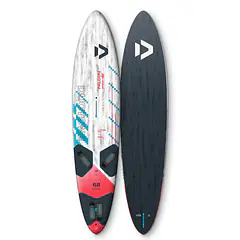
We don't hold a dedicated mast catalog page, but we stock Duotone windsurf rigs and boards that pair beautifully with premium carbon and aluminium masts from trusted brands like Duotone, Cabrinha, and NeilPryde. If you're building a complete setup--sail, mast, boom, board--start with our windsurf boards and windsurf sails pages. Our team will advise on mast length, diameter, and material once you've locked in your sail choice.
For example, if you pick a Duotone Super Star or Duke sail, we'll recommend the exact mast--RDM 400cm, carbon, IMCS 30--that unlocks its potential. Ring us or ask in the chat; we've been matching rigs since 2003 and ride the gear ourselves.
Ready to Gear Up?
Expert advice, authorized stock, ships across Europe within 24h.