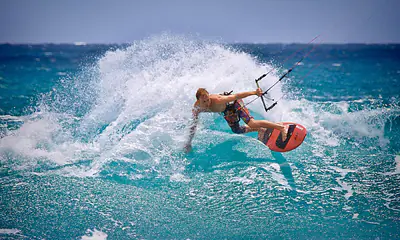

How to Gybe in Kitesurfing — Step-by-Step Technique Guide
A gybe in kitesurfing is a powered turn where you switch direction by steering your board through the wind while keeping the kite actively flying overhead. Unlike a tack (where you go upwind), a gybe is a downwind turn that lets you change course while maintaining speed and control. It's one of the most satisfying techniques to nail because it feels fluid, looks smooth, and forms the foundation for tricks and advanced freestyle riding.
The Full Answer
Gybing is all about timing and board control. You're essentially doing a controlled turn where the board passes through the downwind zone (directly downwind from where you started). The kite stays powered the whole time--you don't let it go slack or move to the edge of the window. Instead, you use the kite's pull to help carry you through the turn, then redirect it as your new direction becomes clear.
The magic happens in three phases: approach (building speed and setting up), the turn itself (steering the board while managing the kite), and exit (landing smoothly on your new course). Most beginners rush through the approach or panic mid-turn and let the kite die. The best gybes feel almost lazy--there's no drama, just smooth power delivery from start to finish.
What makes gybing different from tacking is that you're going with the wind, not against it. Your board naturally wants to slide downwind, which actually helps. The kite's pull, combined with the board's natural drift, means you need less steering input than you'd think. The key is confidence: commit to the turn, trust the kite, and let the geometry do the work.
Advanced riders use gybes to link tricks, maintain speed across the water, and navigate tight spots where an upwind tack would be impossible. Once you've got the basic gybe wired, you can layer in style--carving harder, snapping the board sharper, or transitioning directly into jumps or rotations.
Practical Guide: Step-by-Step Gybe Technique
- Build speed and choose your angle -- Ride a steady course, get comfortable, and identify a downwind direction you want to turn toward. You need enough speed to carry momentum through the turn. Aim to be moving at least 12-15 knots.
- Pop or lean into the board edge -- Begin your turn by weighting the heel or toe edge (depending on which way you're turning). This initiates the board's rotation. Don't jab the edge--smooth, confident pressure is what counts. The board should start to slide downwind naturally.
- Keep the kite powered in the middle of the window -- As the board rotates, keep the kite roughly overhead or slightly forward. Avoid moving it to the edge or letting it stall. The kite's power is what carries you through; without it, you'll bog down mid-turn and have to recover.
- Steer the board through the turn with your feet -- Guide your board across the downwind zone by shifting your weight and rotating your hips. The board should follow a smooth arc; think of it like carving a wave. Your upper body stays relaxed; the kite does most of the work keeping you moving.
- Redirect the kite as you exit -- Once your board is pointing your new direction, move the bar to generate power on the new tack. This locks you in and gives you the pull to ride away cleanly. Smooth transition = smooth exit.
- Practice in light to moderate wind first -- Gybes are easier to learn in 12-18 knots. Too light and the kite won't hold you through the turn; too strong and you'll over-rotate. Once it clicks in medium wind, scaling up or down becomes intuitive.
Common Mistakes to Avoid
The biggest mistake is moving the kite too far toward the edge of the window or stalling it while you're turning. Without power, the board loses momentum and stalls, forcing you to recover awkwardly. Keep the kite active--think of it as your engine throughout the gybe.
Gybes fail when you jab the edge too hard or twist your body aggressively. The board over-rotates, you lose your edge, and the whole turn collapses. Smooth, deliberate steering is faster and more controlled than aggressive input.
If you don't have enough speed before the turn, you'll bog down and won't make it across the downwind zone. Always build a little speed and commit. A slow gybe attempt usually ends in a wobble or a stalled recovery.
Tension or uncertainty often leads to yanking the bar during the turn. This causes the kite to surge, jerks your body, and destabilises the board. Trust the process--smooth hands, smooth feet, smooth progression through the turn.
Surf Store Recommendation
Learning the gybe technique depends more on choosing the right kite for your level than on any single piece of gear. You want a kite that's forgiving and responsive--one that stays powered when you need it but doesn't punish hesitation.
For intermediate riders working on gybe technique, we recommend a Duotone Evo or Cabrinha Nitro. Both brands are stocked at Surf Store and offer kites with excellent feedback and smooth, predictable power delivery. The Evo SLS range is especially popular for progression because the bar feel is intuitive and the kite's arc through the window is natural--exactly what you need while you're building timing and muscle memory. If you prefer a slightly more direct, snappy response, the Cabrinha Nitro Apex is brilliant for carving turns and locking into gybes.
Your board matters too. A freestyle or wave board with good edge hold and responsive turning will make gybes much easier than a large, drifty freeride board. Pair your kite choice with a Fanatic or JP Australia board suited to your style, and you'll progress faster on technique.
Ready to Gybe Better?
Expert advice, authorized stock, ships across Europe within 24h.