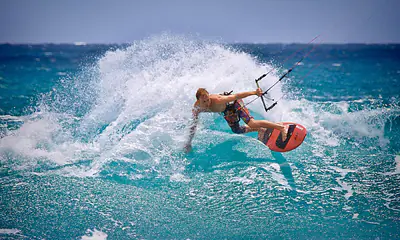
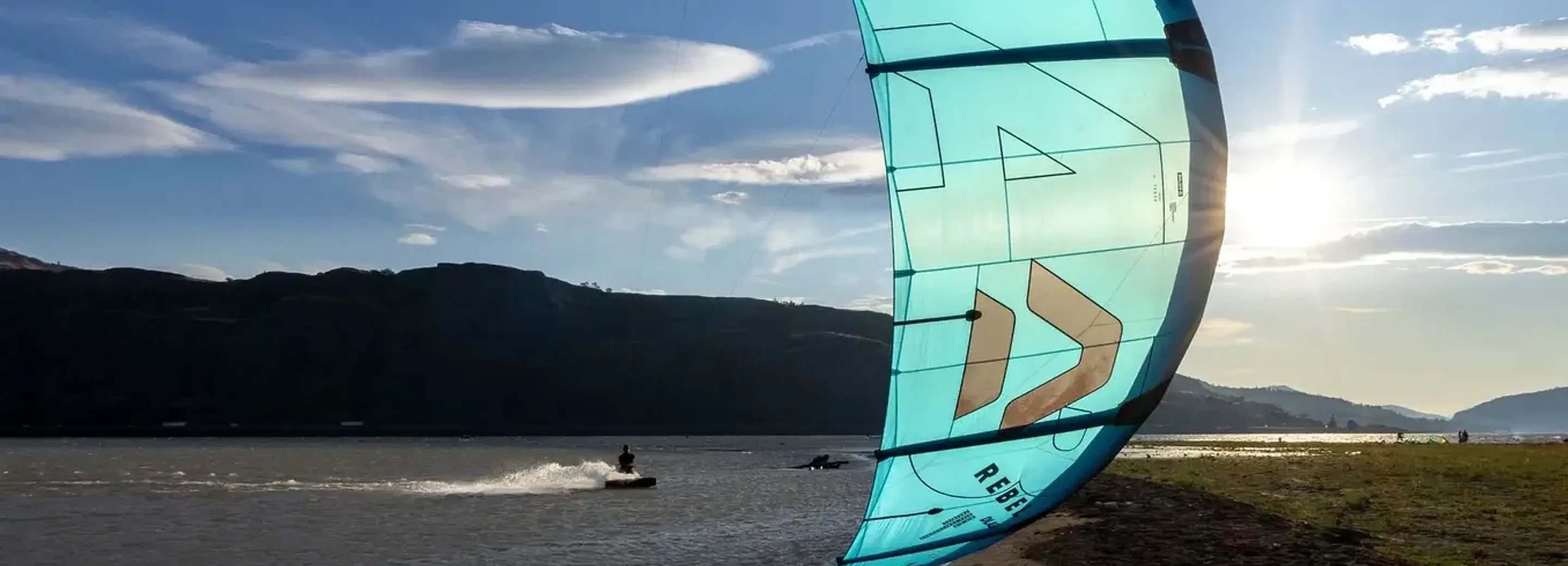
How to Jump Kitesurfing — First Jump Guide for Beginners
Your first kitesurfing jump is within reach once you've mastered board control and basic riding. The secret: position your kite at 45° above the horizon, load your legs, pop the board edge hard into the water, and let the kite's power lift you smoothly. Most beginners get airborne on their third or fourth serious attempt once they stop fighting the kite and trust the physics.
The Full Answer
How to jump kitesurfing starts with understanding that a jump isn't a trick--it's the natural result of combining board pop with kite power. When your kite is moving downwards (from 12 o'clock towards 3 o'clock), it loses lift. When it swings back up to 45°, it generates maximum upward force. That upward force, combined with your edge pressure and leg spring, launches you. Most first jumps happen when you stop overthinking it and let these three elements align: solid edge pressure, kite at the right angle, and explosive leg extension.
The windier your conditions, the easier your first jump will be. Jumping in 14-18 knots is far more forgiving than attempting it in marginal 10-knot winds. Light wind demands perfect technique; strong wind forgives minor mistakes. Many riders also jump higher and more confidently on boards with good pop and rocker--smaller freeride boards (around 36-39 cm) tend to be more responsive than large wave or freestyle boards.
Psychologically, the fear of height is real, but your first jump is usually only 1-2 metres high and lasts just 2-3 seconds. The most important mindset shift is accepting that you'll land--usually awkwardly, but you'll land. Once you've done it once, every jump after gets easier because your body knows the sensation and your brain stops fighting it.
Practical Guide
- Reach steady flat-water speed first -- You need enough momentum and control to hold an edge and feel the board under your feet. Spend 10-15 minutes cruising at speed before attempting any jumps.
- Position the kite at 45° above the horizon -- As you ride, steer the kite to 1 or 11 o'clock (45° angle). This is the sweet spot for lift without over-rotating. If it's too high, you lose power; too low, you have no vertical force.
- Weight your heels hard into the board edge -- Before the pop, lean back slightly and dig your heels into the water. This edge pressure stores energy in the board and creates the spring you need. Feel the board bend.
- Pop explosively with your whole body -- When the kite swings through 45°, extend your legs hard and stand up in the harness. Don't jump with your legs alone; use your core and arms to help pull yourself up. The pop must be fast and committed.
- Bring your knees to your chest mid-air -- Once airborne, pull the board up towards you. This tucks your legs, keeps you compact, and makes landing easier. It also looks cleaner if style matters to you.
- Land downwind and roll into your edge -- You'll drift downwind as you're in the air. Expect it. Land both feet at once, bend your knees, and immediately press your heel edge to control the board and slow down. Absorb the impact like a shock absorber.
Common Mistakes
Beginners often position the kite at 12 o'clock (straight up) or leave it at 3 o'clock (too low). At 12 o'clock, you lose forward drive and the power is vertical but weak. At 3 o'clock, there's barely any lift. The magic angle is 45°--that's where the kite generates maximum upward and forward force simultaneously.
Jumping without edge pressure is like bouncing on soft sand instead of hard ground. If your board isn't bent and loaded, there's no spring energy to release. Spend two full seconds pressing down into your heels before you attempt the pop.
New jumpers often yank the bar towards them out of panic, which stalls the kite and kills the jump. The kite should do most of the work. You pop the board; the kite supplies the lift. Keep your bar movements smooth and controlled.
Jumping in 10-knot winds is exponentially harder than jumping in 16 knots. If you're struggling, find stronger wind. The margin for error shrinks dramatically in light conditions, and your confidence will suffer unnecessarily. Save light-wind attempts for after you've landed several jumps in moderate wind.
Surf Store Recommendation
Your first jump success depends heavily on having a kite that's forgiving and responsive to input. For beginners, a stable freeride or all-round kite with predictable power is essential. We stock Duotone and Cabrinha kites that excel at this--both brands are known for smooth, progressive power delivery that makes learning to jump less intimidating.
The Evo SLS is our go-to recommendation for jump learning. It delivers smooth, progressive power that doesn't spike or dump suddenly, giving you confidence and control. The kite forgives small timing errors and rewards good technique immediately--you'll feel the difference between a well-timed pop and a sloppy one.
Pair any quality freeride kite with a 36-39 cm board that has good pop and rocker. Smaller boards respond faster to your input and make the pop feel snappier, which builds confidence. We stock Fanatic boards and JP Australia boards--both are trusted by riders learning to jump. The right board will make your first jump feel inevitable rather than miraculous.
Ready to Learn to Jump?
Expert advice, authorized stock, ships across Europe within 24h. We'll help you pick the right kite and board for your size and wind.