
Is Kitesurfing Harder Than Windsurfing? (2026 Answer)
The short answer is: kitesurfing has a steeper initial learning curve, largely because you must master kite control and safety systems before you ever touch a board. Windsurfing tends to be gentler in the first few sessions, but reaching the exciting planing stage -- where you skim across the water at speed -- can take considerably longer. Both sports are rewarding, and the right choice depends on your patience, fitness and the conditions where you plan to ride.
The Learning Curve: Kitesurfing
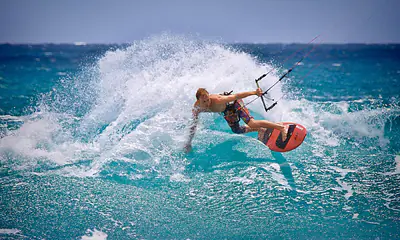
Learning to kitesurf involves several distinct phases, and each one must be mastered before moving on. Your first lessons will focus almost entirely on kite safety and depower systems -- understanding how to quickly release power from the kite in an emergency is non-negotiable. From there, you progress to flying the kite on dry land, then body dragging through the water (letting the kite pull you without a board), and finally the board start.
Most beginners need 10 to 15 hours of professional instruction before they can ride upwind independently. Skipping lessons is strongly discouraged, as an uncontrolled kite in the wrong hands is genuinely dangerous. On the positive side, once you crack the board start, progression can be surprisingly rapid.
For beginner kites, look at options such as the Duotone Rebel, the Cabrinha Switchblade, or the Nobile 50/50. These are all forgiving, user-friendly designs with reliable depower characteristics. Pair them with a twintip board in the 135-150 cm range from brands like Duotone, Cabrinha, or Nobile, and you have a solid starter setup.
The Learning Curve: Windsurfing
Windsurfing typically feels more approachable in the very first session. You start on a large, stable board and learn to pull the sail up from the water, find your balance, and steer using body weight and sail angle. There are no external power systems to manage and no safety releases to memorise -- you simply let go of the boom if things go wrong.
That said, windsurfing takes longer to master at an advanced level. Getting comfortable with basic sailing and tacking can happen in a weekend, but achieving planing -- that thrilling moment when the board lifts and accelerates -- usually requires weeks or months of practice and improving wind awareness. The water start, used in stronger winds, is another skill that demands considerable time.
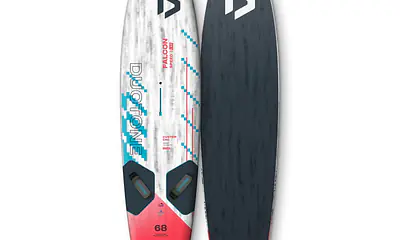
Excellent beginner boards include the Fanatic Gecko Eco 2022 in volumes between 160 and 180 litres, or the JP SuperSport. Both offer the stability beginners need while remaining fun enough to grow with. Pair them with beginner sails from NeilPryde, Gaastra, or Point7, which are designed to be light and easy to handle in light-to-moderate winds.
Which Is More Physically Demanding?
Both sports demand a reasonable level of fitness, but they challenge your body in different ways. Kitesurfing places significant strain on the upper body and core -- you are constantly steering the kite through the power zone and resisting pull through a harness. Your legs work hard on the board, but your arms and core carry much of the load.
Windsurfing is a more full-body workout. Balancing on the board, pumping the sail, performing gybes and tacks, and managing the rig in choppier conditions engages legs, back, arms and core simultaneously. Neither sport is particularly easy on the body, and both benefit from general fitness training off the water.
Cost and Gear Comparison
Starting budgets are broadly similar across both disciplines. A beginner kitesurfing kit -- kite, bar, lines, board and harness -- typically costs between 1,500 and 3,000 EUR depending on whether you buy new or second-hand. A beginner windsurfing kit -- board, sail, mast and boom -- usually falls in the 1,200 to 2,500 EUR range. Both sports also require wetsuits, impact vests or buoyancy aids, and appropriate footwear.
At surf-store.com you will find complete beginner packages for both kitesurfing and windsurfing, covering gear from all the leading brands mentioned above, at competitive European prices.
Surf Store Recommendation
Whichever sport appeals to you, we strongly recommend taking professional lessons before purchasing equipment. An instructor will help you identify the right board size, kite size or sail size for your weight and local wind conditions, saving you money and keeping you safe. Once you are ready to buy, surf-store.com stocks beginner kits for both sports, including complete kitesurfing setups from Duotone, Cabrinha and Nobile, and windsurfing packages built around boards from Fanatic and JP Australia paired with sails from NeilPryde, Gaastra and Point7. Our team is happy to advise you on the best setup for your level and location.