How to Plan a Downwinder — Kitesurfing Downwind Guide
A kitesurfing downwinder is planned by identifying a reliable wind direction, mapping a downwind route with clear landing zones, choosing appropriate kite sizes, and always riding with a buddy and safety systems in place. The key is preparation: know your wind window, understand the geography, and communicate your plan before you launch.
The Full Answer
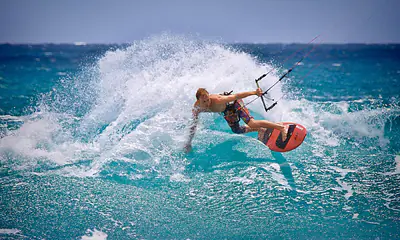
A downwinder is one of the most rewarding--and sometimes misunderstood--experiences in kitesurfing. Unlike a typical session where you stay in one bay or area, a downwinder takes you on a journey across open water, riding the wind from point A to point B. The appeal is obvious: you cover serious distance, experience pure flow, and explore coastlines you'd never reach otherwise. But it's not a spur-of-the-moment adventure. Proper planning is the difference between an unforgettable day and a rescue situation.
The planning starts with wind reading. You need confidence in the forecast--not just that wind is coming, but that it will hold steady in a single direction for hours. Downwinders typically work best in consistent trade-wind conditions or coastal wind regimes where the direction is predictable. Check your local forecast, wind maps, and speak to other riders who know the spot. A swell forecast matters too; downwind routes that work in small surf can become dangerous in big waves.
Route planning is equally critical. Before you launch, you must know your exit points--where you can safely land, catch a ride back, or call for help. Map your intended path, identify hazards (rocks, reefs, shipping lanes, strong currents), and have a backup plan. Most experienced downwinder riders ride in groups or pairs, with one person staying ashore as a spotter or shuttle driver. Communication is everything: tell someone your start time, route, and expected landing zone.
Gear choice differs from regular riding. Lighter, more drifty kites perform better on downwinders because you need responsiveness in lighter patches and the ability to hold position without muscling the bar. Many riders drop to a smaller kite size than they'd normally ride in that wind range, accepting a slightly tighter window but gaining control and safety. Board choice depends on conditions, but most downwinders favour directional boards or freestyle boards that turn easily rather than pure wave or freestyle machines.
Practical Guide: Step by Step
- Check the forecast 3-5 days ahead -- Look for a day with consistent wind direction (ideally 12-20+ knots) and stable weather. Use wind maps, local forecasts, and speak to locals or online forums about the specific spot's behaviour.
- Scout the route in advance -- Drive or walk the coast to identify launch zones, exit points, hazards (rocks, shallows, currents), and landmarks. Take photos or notes. Know where you can safely land if wind drops or conditions change.
- Assemble a team or buddy pair -- Never downwind alone. Ideally, have two riders of similar skill, or one rider with one shore-based spotter who has transport and communication. Brief everyone on the plan, start time, and what to do if someone gets separated.
- Choose a kite one size smaller than you'd normally ride -- A 14m in a 15-knot day instead of a 17m gives you precision, control, and a wider wind range if the breeze fluctuates. Lighter kites like the Duotone Evo or Cabrinha Drifter excel in this role.
- Wear a GPS watch or carry a charged phone -- Track your position, speed, and route. If you need rescue or have to abandon and get picked up, location data is critical. Tell someone ashore your expected timeline.
- Launch in shallow water and practice directional control -- Before you commit to the downwind, confirm your kite is stable, your board is responsive, and you feel confident. Start with a shorter downwind to build experience and confidence.
Common Mistakes
Choosing your normal session kite size on a downwinder is a fast way to lose control if wind patches or gusts appear. Oversized kites are harder to manage in transitions and make you exhausted over long distances. Drop a size--it's not weakness, it's smart tactics.
Assuming you'll find a landing spot when you get there is dangerous. Coastlines change, beaches get busy, rocks hide below the surface. Walk or drive the route beforehand and confirm safe exit points with photos or GPS marks.
Downwinders carry real risk: if you flip, get injured, or lose your board, you need help nearby. Always have a buddy in the water or a reliable shore-based spotter with a phone and transport. Many rescues happen because no one knew where a rider was.
If the wind forecast shows a swing in direction mid-session, or if locals warn that the wind often goes sideways or dies in the afternoon, don't ignore it. Plan your downwind to finish before the shift, or pick a different day.
Surf Store Recommendation
For downwinders, you need a kite that's responsive, drift-friendly, and forgiving in variable wind. The Duotone Evo SLS is our go-to recommendation: it's designed for control and precision, excels in light-to-moderate conditions, and gives you the confidence to hold your line and adjust in transitions. The Evo range is trusted by long-distance riders across Europe because it stays stable when the wind gets sketchy and doesn't demand constant bar input.
Precision handling and stability in variable wind make the Evo SLS the downwinder specialist. Responsive turning, predictable loops, and forgiving in light puffs. A size smaller feels perfect for long-distance sessions.
If you prefer a drifty, accessible kite that's easier to relaunch and more forgiving on the bar, the Cabrinha Drifter Apex is a solid alternative. It's specifically designed to handle light wind and variable conditions, making it ideal for downwind routes where wind isn't always perfectly consistent.
Ultra-drifty and forgiving, the Drifter excels in light and choppy conditions. Easy to relaunch, intuitive steering, and a wide wind range that rewards patience in variable breeze. Perfect for exploring coastal routes.
Ready to Plan Your First Downwinder?
Expert local knowledge, premium kites tested in real conditions, and fast EU shipping. Get geared up and go explore.