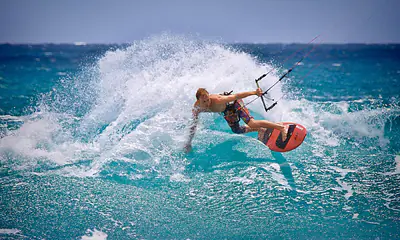

Kiteboard Pads & Straps vs Boots 2026 — Which to Choose?
What to Look For
When you're choosing between kitesurfing pads, straps and boots, you're really deciding how locked-in you want to be. Each system trades off safety, feel, and simplicity in different ways. Here's what matters:
- Foot security -- Boots lock you in completely; straps offer medium hold; pads give zero constraint and maximum board feel.
- Release behaviour -- Critical in falls. Pads let you swim free instantly; straps and boots require active foot effort to escape.
- Comfort duration -- Pads are friction-based (can blister in long sessions); straps and boots distribute pressure evenly for hours.
- Board feel & control -- Pads give the rawest connection; boots insulate you slightly but offer precision; straps sit in the middle.
- Water weight & drag -- Pads are lightest; straps add minimal weight; boots absorb water and add noticeable drag in recovery.
- Maintenance -- Pads wear fastest and need replacing yearly; straps and boots last 2-3 seasons with care.
Beginner vs Advanced
Start with Straps or Boots
Pads feel loose and unpredictable when you're learning edge and pressure. Straps or boots lock your feet in place, let you focus on the kite without worrying about losing the board. Boots especially give confidence because you're truly connected--perfect for building muscle memory in choppy water.
Pads for Feel, Boots for Sessions
Advanced riders often prefer pads for flat-water freestyle and wave riding--the barefoot-like connection lets you sense every edge micro-movement. However, for long downwind or cross-shore blasting, boots give you the security and comfort to push harder without foot fatigue. Many pros switch systems by condition.
Budget Guide
TierPrice RangeSystemBest For Entry€40-80PadsBeginners trying the sport; riders who switch systems often Mid€80-160Straps or Basic BootsIntermediate riders; daily users who want durability without premium cost Premium€160-250Pro Boots or Strap SystemsAdvanced riders; those with foot/ankle issues; water sports professionalsEntry pads work fine--you're not paying for durability, just trying the concept. Mid-range straps and boots from quality brands like ION and Mystic will last 2+ seasons and offer genuine comfort. Premium systems feature better closures, heat-moulded liners, and reinforced stitching that justify the extra spend if you're on the water 100+ days yearly.
Pads vs Straps vs Boots at a Glance
Here's the reality of each system:
- Pads -- Sticky adhesive or velcro strips glued to the board. Pros: lightest, instant release, maximum feel. Cons: grip fades after 40-60 sessions, can cause blistering, no foot security.
- Straps -- Webbing loops across the foot, tightened with velcro or buckles. Pros: balanced security and feel, moderate durability, easy on/off. Cons: can slip in big crashes, straps fray after heavy use.
- Boots -- Neoprene boots with integrated foot pockets (rear foot in heel cup, forefoot over integrated straps). Pros: maximum security, comfort for long sessions, consistent performance in all conditions. Cons: heaviest option, slower entry/exit, water absorption in long rides.
What We Stock & Recommend
We specialise in kitesurfing pads, straps and boots from trusted brands. While we don't carry a dedicated footwear catalog online, we stock premium foot systems from ION and Mystic--the leaders in water sports safety and comfort. Both brands offer entry straps, mid-range boots, and pro-level systems designed specifically for kitesurfing dynamics.
ION excels at comfort-focused engineering with reinforced toe boxes and adjustable closures. Mystic leads in durability, offering heat-moulded liners and aggressive grip patterns that last into a third season. For pads, both stock adhesive-backed options in various thicknesses.
Visit our shop or call ahead--we'll fit you properly and match your foot system to your riding style and local wind window. Free EU shipping on orders from €99.
Common Mistakes to Avoid
Some beginners ignore foot security and just tie their board to their ankle with a leash. This is dangerous--you lose directional control and the board becomes a missile in a crash. Always use pads, straps, or boots from day one.
If you're upgrading from pads to straps, remove all pad residue first. Adhesive residue prevents strap velcro from gripping the board surface, and your feet will slip exactly when you need security most.
Compression on your foot during a 3-hour session leads to numbness, reduced control, and blood-flow issues. Boots should feel snug when dry; they'll tighten slightly in cold water. Try on in a shop if possible.
If you buy boots because they feel secure, test your release mechanism in the pool first. A stuck boot in turbulent water can cause panic or ankle injury. Straps and pads release instantly; boots require you to actively loosen them or slip your heel out.
Worn pads lose grip gradually, and you might not notice until you're fighting to keep the board under your feet in strong wind. Replace pads every 50-60 sessions. Straps and boots should be inspected monthly for stitching or strap damage.
Ready to Find Your Perfect Foot System?
Expert advice, stock from ION and Mystic, ships across Europe within 24 hours.