Kitesurfing vs Windsurfing 2026 — Which Should You Choose?
Quick Verdict
Windsurfing has a gentler initial learning curve -- most beginners can stand and sail in their first few sessions -- but reaching the exciting planing stage takes months of practice. Kitesurfing demands a steeper upfront investment in lessons (typically 10-15 hours), yet once you crack it, the progression to jumps, waves, and freestyle is remarkably fast. If you want the most versatile, travel-friendly, adrenaline-driven option, kitesurfing edges ahead in 2026; if you prefer a more gradual, self-sufficient journey with deep technical roots, windsurfing rewards patience generously.
Learning Curve Comparison
Kitesurfing requires structured tuition. Expect to spend 10-15 hours with a qualified instructor before riding independently. The first phase is entirely kite control on land and body-dragging in water, before a board even enters the picture. The consequence of skipping lessons is real -- a depowered kite still carries serious force. Once the fundamentals click, however, progression accelerates quickly and many riders are jumping within their first season.
Windsurfing is more self-paced. Most beginners grasp the basics -- uphauling the sail, steering, and sailing in a straight line -- within 5-10 hours on a wide, stable board. The challenge is what comes next: learning to harness in, use footstraps, and actually plane (skim fast across the water surface) can take several months of regular sessions depending on wind conditions and coaching. The learning journey is longer but feels more incremental and less intimidating at the start.
Side-by-Side Comparison
AspectKitesurfingWindsurfingLearning curveSteep start, fast progressionGentle start, slow to planeSetup time10-20 minutes (pump kite, lines)15-25 minutes (rig sail, mast, boom)Wind rangeExcellent (8-35+ knots)Good (12-40+ knots; board-dependent)Cost (beginner package)€1,500-€2,500 + lessons€1,200-€2,000 all-inTravelVery easy -- kite fits in a bagBulky -- mast and boom are awkwardSpot flexibilityHigh -- needs open downwind spaceModerate -- can sail in tighter areasFitness demandCore and legs; low impactArms, back, and core; more physicalKitesurfing -- What to Expect
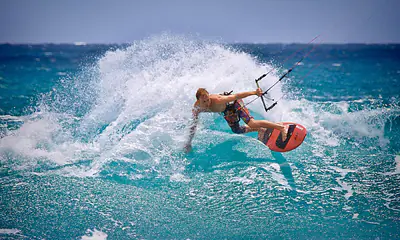
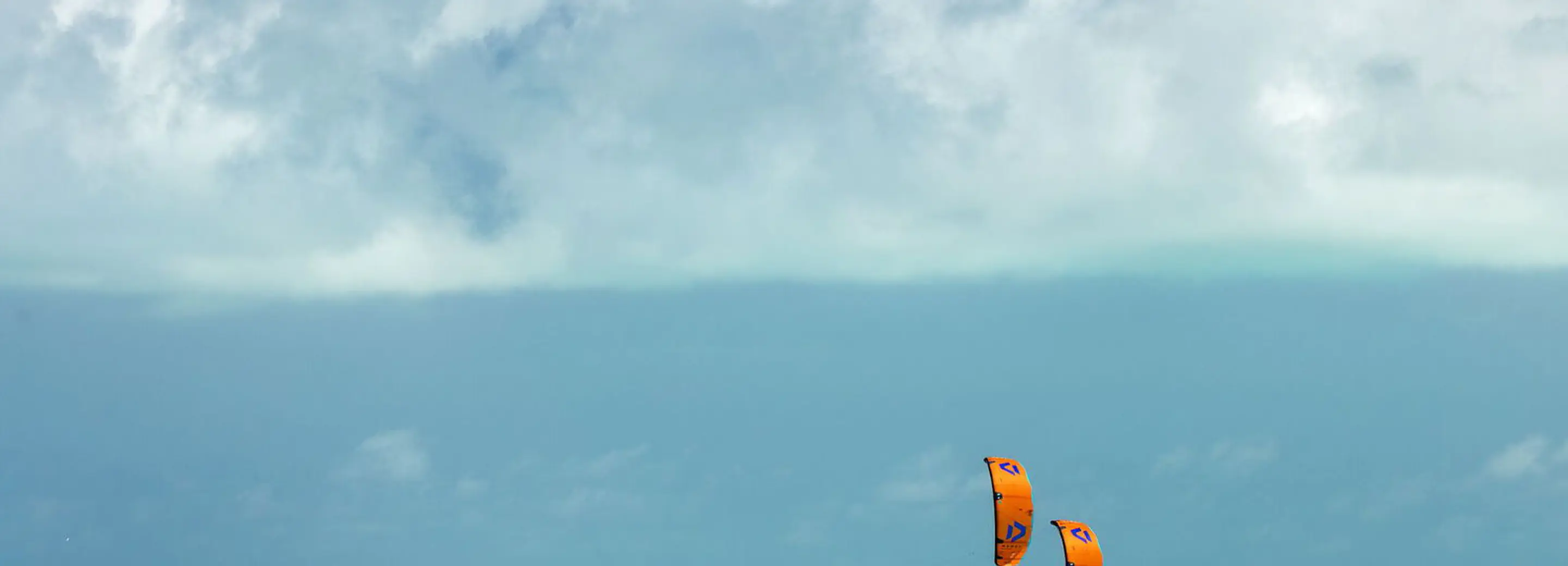
A kitesurfing setup consists of a kite, bar and lines, harness, and a twintip board (or directional for waves). Leading kite brands in 2026 include Duotone, Cabrinha, and Nobile, each offering reliable beginner-friendly options. The Duotone Rebel 2026 is a classic all-rounder praised for forgiving handling; the Cabrinha Switchblade 2025 suits riders who want power and sheet-ability across a wide wind window; and the Nobile 50/50 2026 is a versatile delta-hybrid that bridges freestyle and freeride beautifully.
Expect to budget €1,500-€2,500 for a complete beginner package, plus €300-€600 for a certified IKO or BKSA lesson course. Ongoing costs are low -- kites are durable and boards take minimal punishment in flat water.
Windsurfing -- What to Expect
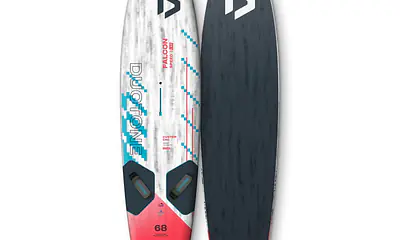
A windsurf setup is more complex: you need a board, sail, mast, boom, and mast base. Beginner boards are wide and high-volume for stability. The Fanatic Gecko Eco 2022 (available in 140-180 litres) and the JP SuperSport are ideal starting points -- both offer excellent stability and easy uphaul. For sails, brands like NeilPryde and Gaastra dominate the market; the NeilPryde Combat 2025 is a high-performance freerace sail, while the Gaastra Pure 2026 is a forgiving all-round choice for progression sailors.
A complete beginner windsurf package typically costs €1,200-€2,000. Bear in mind you will likely need multiple sail sizes as you progress, adding to long-term investment. Windsurfing kit is bulkier and harder to transport without a roof rack or van.
Who Should Choose Kitesurfing?
- Thrill-seekers who want to jump, do tricks, or ride waves within their first year
- Travellers who want to pack gear in a single holdall and fly to kite destinations
- Surfers or snowboarders who already understand edge control and body movement
- Riders who prefer lower physical exertion over long sessions
- Those who want to ride in lighter winds from around 8-10 knots
Who Should Choose Windsurfing?
- Riders who enjoy a gradual, technical learning journey with clear milestones
- Those who prefer a sport with a long competitive and recreational history
- Sailors or anyone comfortable with rigging and mechanical setup
- Riders who want to eventually race or access strong-wind locations like Tarifa or Maui
- People who value being self-sufficient on the water without relying on kite safety systems
Our Recommendation at Surf Store
Honestly, both sports are extraordinary -- and in 2026, both communities are thriving. If you are brand new to wind-powered water sports and want the fastest route to exciting riding, we lean towards kitesurfing -- invest in proper lessons first and choose a forgiving kite like the Duotone Rebel 2026 or Cabrinha Switchblade 2025. If you are drawn to a more methodical progression and love the idea of mastering sail trim and board dynamics, start windsurfing on a high-volume board like the Fanatic Gecko Eco with a manageable sail such as the Gaastra Pure 2026.
At surf-store.com we stock a full range of kitesurfing and windsurfing equipment from the best European and global brands. Our team of passionate riders is happy to match you to the right gear for your level, budget, and local conditions -- do not hesitate to get in touch.