Kitesurfing the Levante — Tarifa East Wind Guide
Understanding the Levante Wind at Tarifa
The Levante is Tarifa's signature wind--a warm, dry easterly that funnels down the Strait of Gibraltar with remarkable consistency. Unlike the Atlantic swells that need winter storms, the Levante blows strongest in summer and spring, creating thermal updrafts that hold steady through the afternoon. If you've heard Tarifa called the 'wind capital of Europe,' the Levante is why.
What makes the Levante perfect for kitesurfing is its predictability. It builds gradually from dawn, peaks mid-morning to late afternoon, then eases toward sunset. The wind is channelled through the strait, so you get clean, laminar flow rather than chaotic gusts. However, thermals can create sudden bumps--especially on scorching days--so you'll need kites that handle variable pressure without collapsing. The shallow Punta Paloma beach and lagoons offer protected water when the open strait gets too rowdy, making it ideal for progression and freestyle.
Best Gear for Levante Conditions
Your Setup
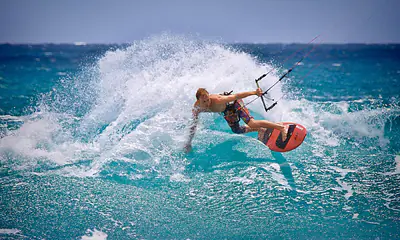
This is classic early-summer riding. You'll want a 14-17m kite to generate lift in the lighter thermals. Pair it with a 2025/26 freeride or freestyle twintip (138-148cm) for control and pop. A thin summer wetsuit (3/2mm) keeps you cool on those hot days. Focus on your edge and carving--light wind rewards clean technique.
Your Setup
When thermals spike and the strait winds up, switch to a 9-12m kite with responsive bar feedback. Drop to a lightweight 136-142cm wave or freeride board for manoeuvrability in choppy conditions. A rashguard or thin hood is all you need--the wind keeps you warm. Expect gust management and edge pressure; commit to your sheet control and ride the bumps smooth.
The Levante's range is broad, so having two kites (a 14-15m and a 10-11m) covers 90% of sessions. Look for a freeride or freestyle kite with solid stability--something that doesn't collapse in thermal lulls and forgives slight mistakes on the bar.
The Evo SLS is built for exactly what Tarifa throws at you--thermals, gusts, and shifting pressure. It's stable in light mornings, responsive in peak afternoon wind, and forgiving if you get caught in a lull. The construction is bulletproof, and the depower range means you stay connected across the entire Levante window without swapping.
A trusted choice for Tarifa veterans. The Nitro Apex delivers snappy, direct feedback on the bar, making it easy to read thermal bumps and adjust your angle instantly. Great float in lighter mornings, excellent edge control in strong afternoons. If you want a single kite that covers the full Levante range, this is it.
Technique Tips for the Levante
- Read the thermal bumps -- The Levante builds in layers. Light, steady wind up to 16 kts, then sudden gusts as thermals kick. Stay alert on your bar; feather the kite down into each gust to avoid overpressure. Small, controlled movements work better than big loops.
- Ride the morning sweet spot -- Levante peaks between 10 a.m. and 3 p.m. Early morning (dawn-9 a.m.) is lighter but silky smooth. Ride then to dial in your technique before the gusts arrive. Afternoon wind is stronger but choppier.
- Use the lagoons for progression -- Punta Paloma's lagoon gets the same wind but with flatter water and less swell interference. Perfect for edging practice, tricks, and learning in a forgiving environment. Move to the open beach once you're confident.
- Work your edge aggressively -- The Levante wind is clean and consistent; it rewards edge pressure and weight commitment. Carving feels buttery. Lock in your heelside edge early and let the kite do the work.
- Plan for wind-off sessions -- By late afternoon, the Levante can drop suddenly as sea breeze takes over. Session windows are usually 3-4 hours. Get on the water early and plan your exit before the wind dies.
Safety Checklist for Levante Conditions
The Levante looks smooth, but thermals can add 5-8 kts in seconds. You'll feel a sudden pressure spike on your bar. Keep a narrow window between your kite size and the max gust. If gusts hit 30+ kts and you're on a 12m, you're in trouble--ditch to a 9m or sit out.
Tarifa's strait has vicious tidal flows, especially on big tides. The Levante pushes you east toward Morocco; if the tide is against you, you can get pinned offshore. Check tide times at Tarifa before you launch. Always ride with a buddy and stay within sight of the beach.
Punta Paloma has rocks, shallow reefs, and breakwaters. The lagoon is safer, but the open beach requires discipline. Mark your launch zone, ride parallel to shore, and never get sucked too far downwind toward obstacles.
Summer Levante days are scorching. You're out 3-4 hours in heat and wind; sweat loss is huge. Bring water, a rash guard or light hood for sun protection, and take a break if you feel dizzy or fatigued. Heat exhaustion sneaks up fast on the water.
If the Levante dies mid-session, westerly Atlantic swells and sea breeze can arrive quickly. Wind can shift from steady 20 kts to confused 8 kts in 20 minutes. Watch the sky. If clouds build inland or the wind drops hard, head in rather than chase it further out.
Our Gear Recommendations at Surf Store
We've ridden the Levante ourselves--many times--so we know what works. Here are our go-to setups for year-round Tarifa sessions.
If you want one kite for the full Levante window, the Dice SLS is your answer. It's forgiving in light thermals, rock-solid in peak wind, and the bar feel is intuitive for reading gusts. We've seen beginners and advanced riders both nail their sessions on this kite. Bulletproof construction for Tarifa's daily grind.
Built for riders who want edge response and trick capability in the Levante wind. The Moto X reads thermals cleanly and doesn't overpower in gusts--ideal if you're working on your popping and upwind performance. Trusted by Tarifa guides and coaches.
Ready to Ride the Levante?
Expert advice, authorised stock, ships across Europe within 24h. We ride Tarifa ourselves--let's get you dialled in.