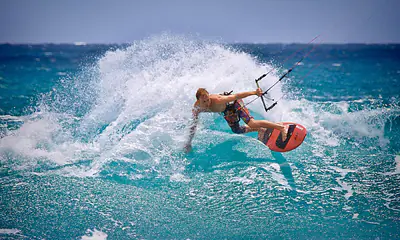

What Is Freestyle Kitesurfing? — Tricks, Styles Explained
Freestyle kitesurfing is a discipline where you perform aerial tricks, handle passes, and stylish manoeuvres with your kite and board. Unlike wave riding or racing, freestyle is about progressing through a technical skillset: you master one trick, then build on it. You'll spend time in the flats, working your way up from basic jumps to massive unhooked spins and inverted pass combinations.
The Full Answer
Freestyle kitesurfing is the art of using your kite as a platform to launch yourself high into the air, then performing controlled tricks before landing back on your board. The discipline sits somewhere between kiteboarding and skateboarding--it's technical, progressive, and style-driven. You're not chasing waves; you're chasing progression and the satisfaction of landing a trick you've worked weeks or months to master.
The core of freestyle revolves around three pillars: pop (getting air by loading and unloading your board), handle passes (rotating your kite handle beneath you mid-air), and unhooked manoeuvres (releasing the front strap of your board so you can swing it into tricks like air rotations or board grabs). Beginners start with basic jumps and simple grabs. Intermediate riders link tricks together--for example, a railey (straight-line backflip) or a shaka (board grab with style). Advanced riders perform inverted tricks like blind judge passes, backside spins, and multi-rotation combinations that defy gravity.
What makes freestyle special is the emphasis on consistency and control. A big jump looks impressive, but landing it cleanly, with style, in a consistent wind window--that's the challenge. Freestyle riders spend hours in the same spot, working repetitions, often in lighter winds (12-18 knots) where technique matters more than raw power. It's a discipline where a 50-year-old with years of practice will outshine a strong 20-year-old with poor board control.
The freestyle scene has exploded over the past decade, with major competitions--like the PKRA World Tour--showcasing the highest level of the sport. Events blend technical scoring (clean landings, trick difficulty) with style judging (how smooth, how far, how rad the manoeuvre looks). Professional freestyle riders are as respected in the water sports world as pro surfers or skateboarders.
Getting Started with Freestyle Kitesurfing
- Master basic jumps first -- Before any tricks, you need to feel comfortable launching 3-5 metres in the air and landing smoothly. Spend a week just jumping: load your edge, snap the board, and land upwind.
- Learn the edge and pop technique -- Freestyle relies on edge control. Edge hard into the wind, bend your knees, then explosively straighten them as you aggressively dive your kite. That timing--edge + pop--is everything.
- Start with simple grabs -- Once you're jumping confidently, add a grab (mute, tail, or indy). Grabs teach you body awareness mid-air and are the gateway to more complex tricks.
- Find a flat-water or light-swell spot -- Freestyle is easier in predictable conditions. Choppy, disorganised wind or heavy swell will frustrate you. Seek sheltered bays or flat lagoons.
- Practice one trick at a time -- Don't chase five tricks at once. Pick one (e.g., a railey or a handle pass), commit to 20-30 attempts per session, and come back the next day. Progression takes repetition.
- Invest in a freestyle-specific kite -- Freestyle kites have responsive handling, good hang time, and forgiving characteristics. They're designed for tricks, not cruising or racing.
Common Mistakes Beginners Make
Beginners often think bigger kite dives mean bigger jumps. In reality, a hard edge and explosive pop matter far more. You can jump 5 metres in 14 knots with perfect technique; you'll struggle in 25 knots with poor edge control. Master the pop; the height follows.
Freestyle is humbling. You'll crash, you'll miss tricks hundreds of times. Many people try it for a week, get frustrated, and go back to freeride. Real progression takes 10-20 sessions minimum before your first solid, repeatable trick lands. Patience is essential.
Trying to learn a blind judge pass before you can consistently land a handle pass is self-sabotage. Freestyle has a clear progression path: jumps → grabs → handle passes → unhooked tricks → inverted tricks. Skip steps and you'll waste months.
A heavy, stiff freeride board won't help you learn tricks. Freestyle boards are lighter, more responsive, and easier to manipulate mid-air. If you're serious about freestyle kitesurfing, invest in a proper freestyle or twintip deck.
Freestyle Kites & Gear We Stock
For freestyle kitesurfing, your kite is everything. You need a model designed for responsiveness, pop, and tricks--not a wave or race kite. We recommend kites from Duotone, Cabrinha, and Nobile, which all specialise in freestyle-focused designs.
The Dice is a pure freestyle machine. Incredible response, stable hang time, and forgiving landings. Whether you're learning your first jump or progressing to inverted tricks, the Dice rewards clean technique. The 2026 edition is razor-sharp and intuitive.
The Nitro Apex delivers explosive pop and predictable feed-back--exactly what freestyle riders crave. Sharp turning, stable bar, and superb handle control for pass combinations. A trusted choice among European freestyle professionals.
Beyond the kite, consider a freestyle-specific board (we stock Fanatic and JP Australia) and a solid bar setup from Duotone or Cabrinha. Your bar should have smooth, responsive steering and reliable safety systems. Also invest in good wetsuits (ION or Mystic) because you will spend hours in the water learning tricks--comfort and mobility matter.
Ready to Start Freestyle Kitesurfing?
Expert advice on kite selection, progression planning, and gear matching. We've been outfitting riders for over 20 years.