What Is the Kite Window & Power Zone? — Kitesurfing Theory
The kite window and power zone aren't just theory—they're how you control your speed, stay safe, and actually ride instead of fighting your kite. Master these two concepts and everything else clicks into place.
The kite window is the 180° arc of sky in front of you where wind reaches your kite. The power zone is the sweet spot within that window—roughly 45° elevation—where your kite generates maximum force. Move your kite into the power zone to accelerate; move it to the edge (or out of the window) to dump power and slow down. This is the foundation of control.
01 — The basicsUnderstanding the Kite Window
Stand on the beach facing into the wind. Everything in front of you—from your left shoulder to your right, ground to sky—is your kite window. It's roughly 180° wide and extends upward to roughly overhead. Outside that window (behind you), your kite gets no wind and falls to the ground.
When you're riding, your kite window moves with you. It's always the arc directly in front of you relative to the true wind direction—not your board, not your body position, the wind. This is why you see experienced riders constantly repositioning their kite even when they're not turning: they're keeping it in the active part of the window.
New riders often think the window is fixed to the beach. It's not. The moment you turn 45° to the wind, your window rotates with you.
02 — Peak forceThe Power Zone—Where Your Kite Actually Works
Inside the kite window, not all positions are equal. The power zone is the band of sky roughly 45° above the horizon, running from your left shoulder through center to your right. This is where wind pressure is strongest and your kite generates maximum pull.
When you move your kite to the edge of the window (near the water or high overhead), power drops dramatically. At the very edge, your kite generates almost no force—it just floats. This is how you control speed. Push your kite toward the edge, lose power, slow down. Pull it back toward the 45° sweet spot, power floods back in.
Most of your riding happens with your kite in the power zone. When you need to dump speed before a turn, brake, or land, you move it high or low. When you need to accelerate or hold a line, you keep it centered in that 45° band.
03 — Our picksOur 4 In-Stock Picks
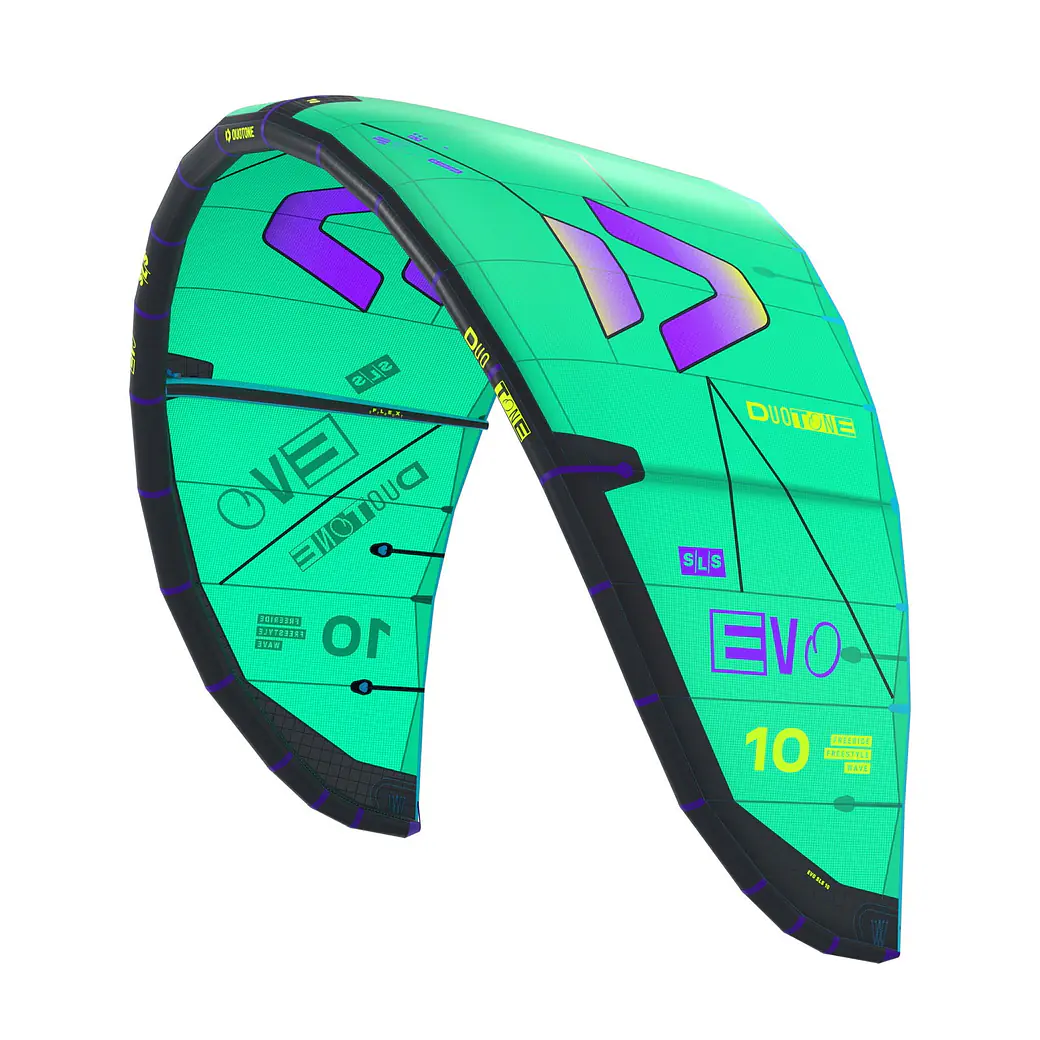
We stock Duotone across all four of their core ranges so you can find exactly what your skill level and local wind conditions demand. All four below are 2026 models we've tested and shipped since launch.
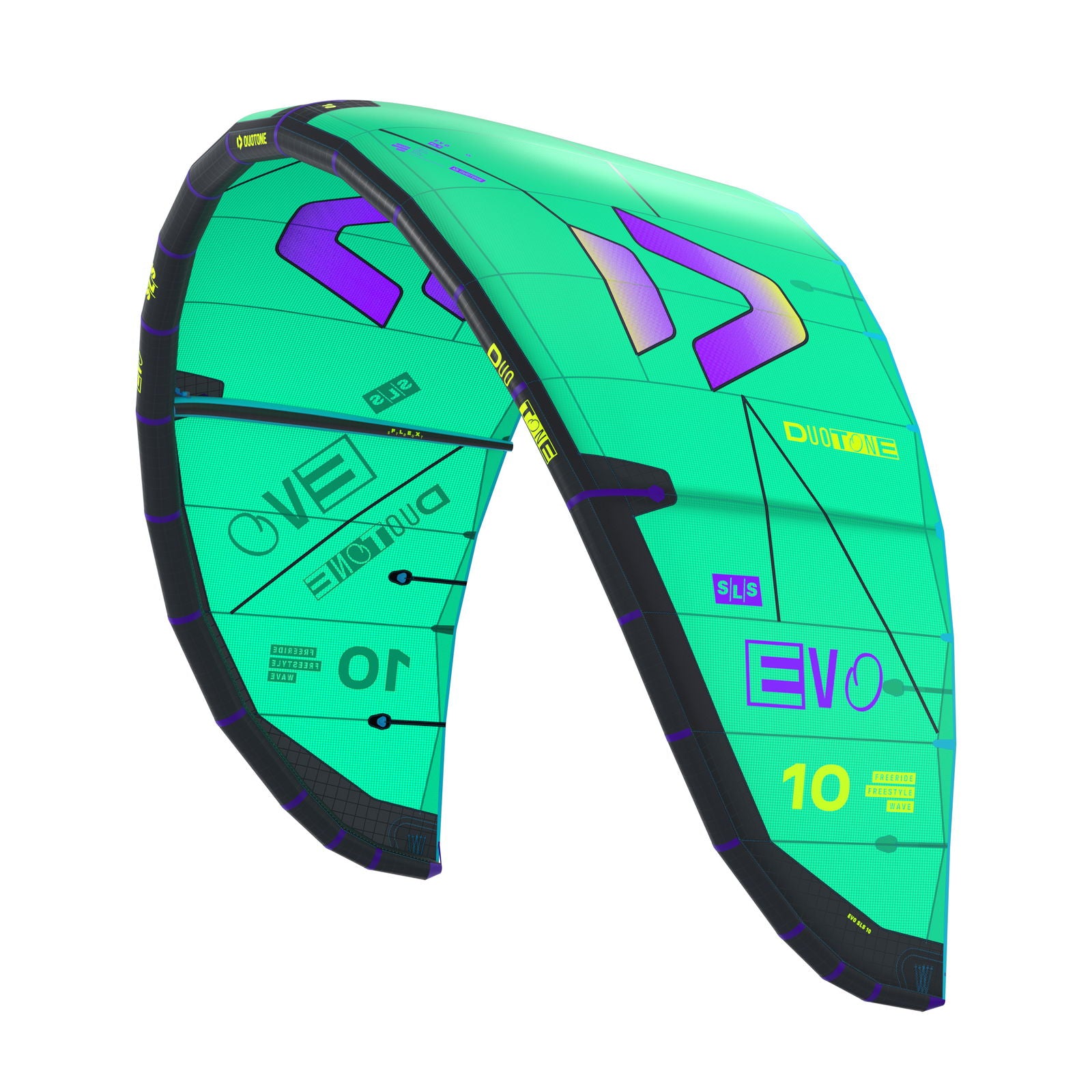
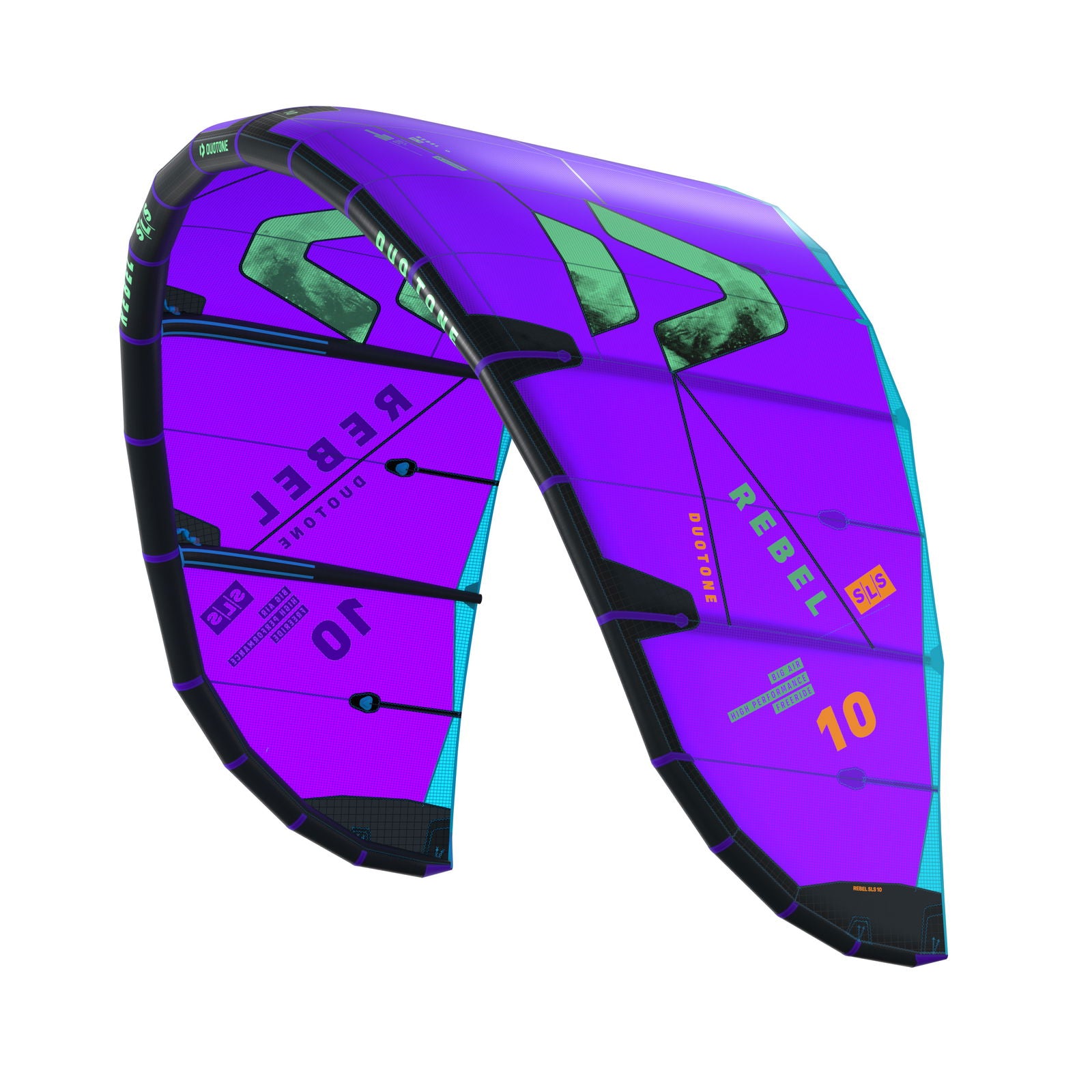
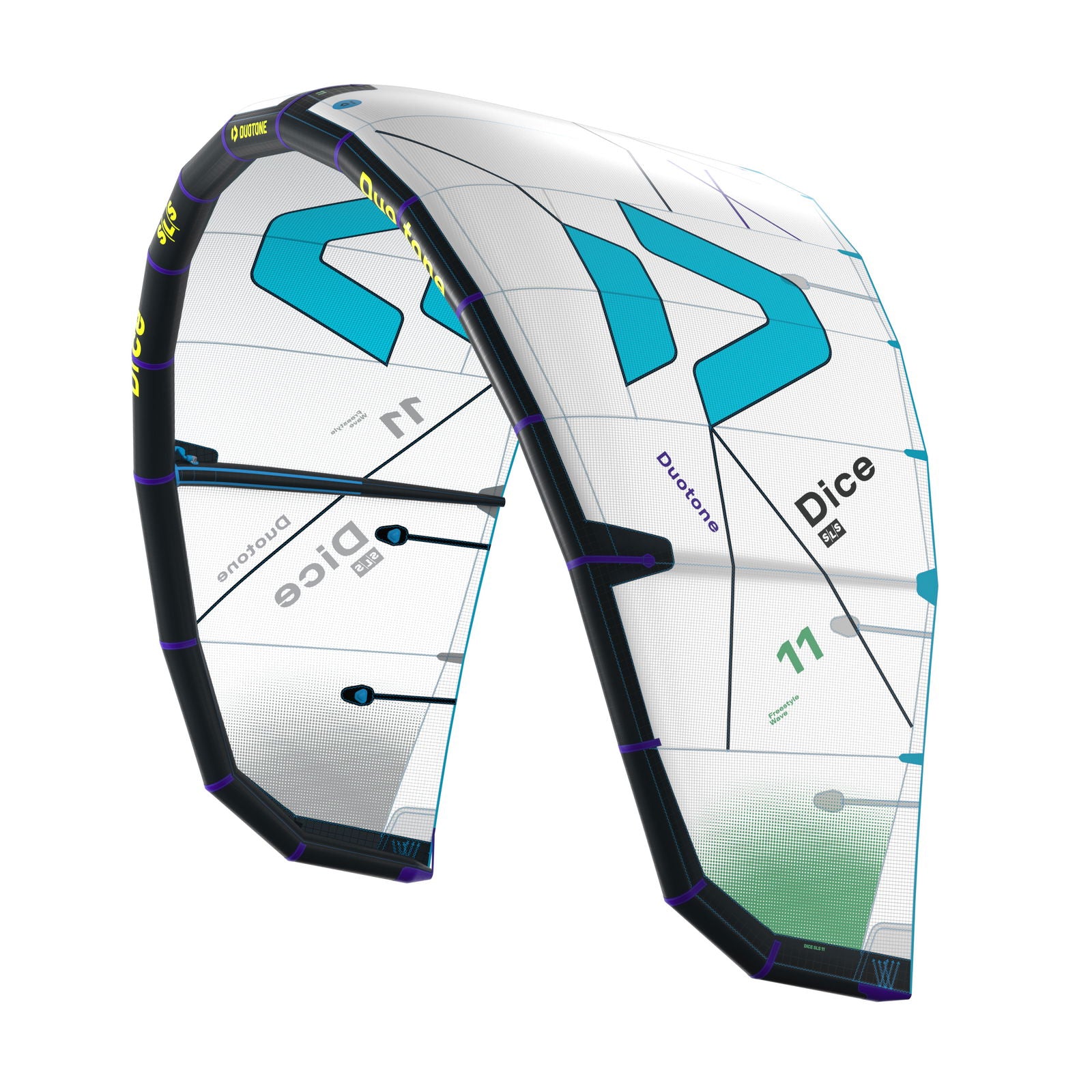
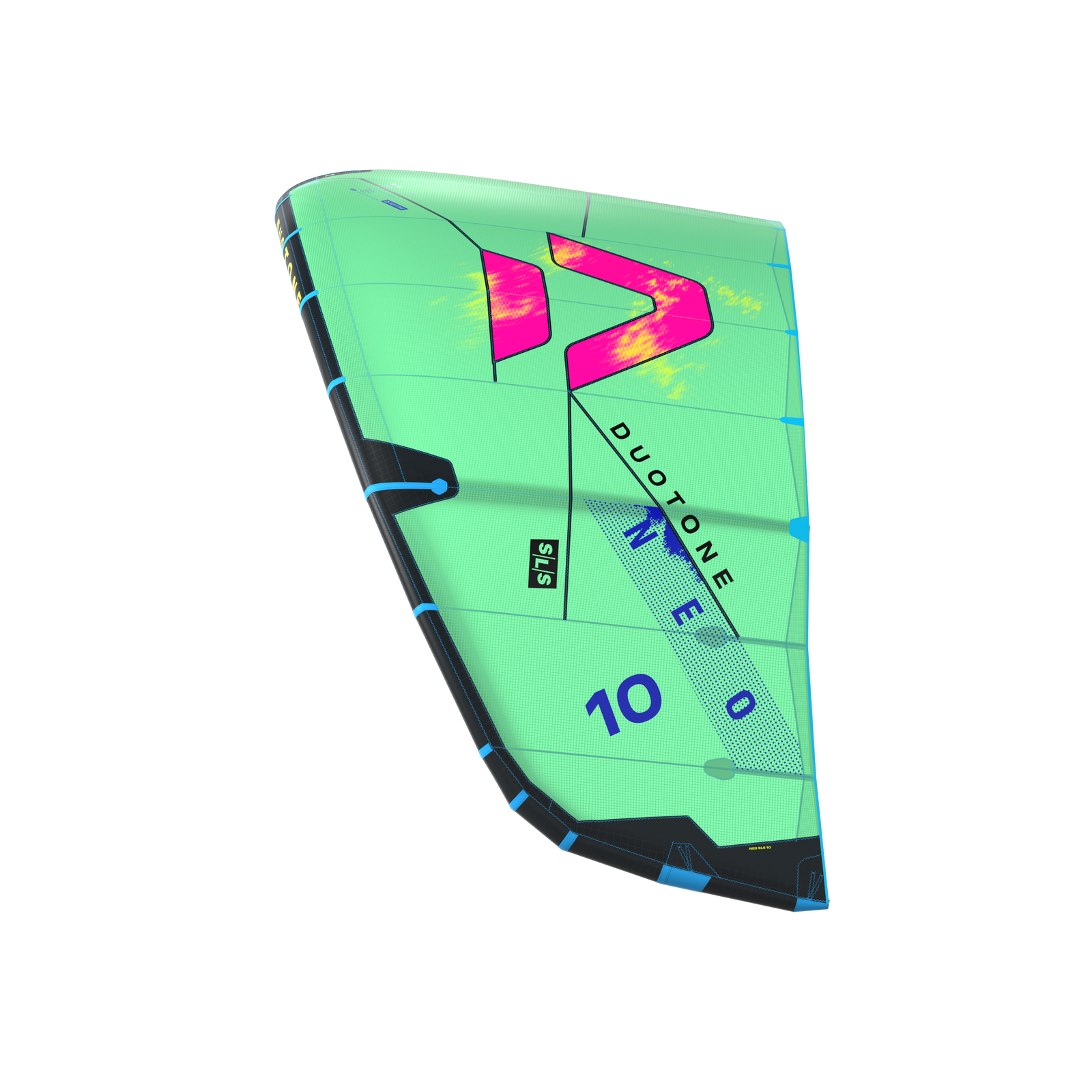
Prices and 2026 specs are pulled live from each product page. Confirm on the product page before checkout.
04 — MistakesThree mistakes we see every week
Ready to find your first kite?
Browse our full Duotone and Cabrinha range—all stock ships same day from Belgium.
Frequently asked
Wind moves forward and down. At 45°, you catch the maximum pressure angle without losing horizontal force. Higher or lower, and you sacrifice pull in one direction or the other.
Briefly, yes—for slow speed or tricks. But you'll tire fast and drift downwind. Most of a session should be spent in the power zone where your kite does the work.
The window stays roughly the same 180° arc. What changes is how much power fills it. Light wind (<12 knots) means less available power even at 45°—you may need a bigger kite.
Start with a 9 m² or 12 m² in 12–20 knot wind. The Duotone Evo SLS or Neo SLS are both forgiving in the power zone and won't punish small positioning mistakes while you're learning.