Windsurfing in Choppy Water — Tips for Rough Conditions
Understanding Choppy Water for Windsurfers
Choppy water is one of the most demanding environments a windsurfer can face. Unlike flat water, chop is typically caused by short-period wind waves -- often the result of strong local winds blowing across a shallow bay, an estuary, or an inland lake. When wind and tide oppose each other on coastal waters, the waves become steeper, closer together, and far less predictable than ocean swell.
For windsurfers, this constant surface disruption means your board is never fully settled. Each crest and trough tries to throw you off balance, making your core, ankles, and knees work overtime. The key difference from flat-water sailing is that you cannot rely on momentum alone -- you must adopt an active, dynamic stance at all times. Bent knees act as your primary shock absorber, and a slightly lower centre of gravity helps you react to sudden impacts without losing control of the rig.
Best Windsurf Gear for Choppy Conditions
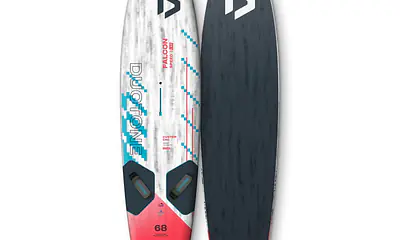
Choosing the right equipment is half the battle when windsurfing in rough conditions. Freewave windsurf boards in the 75-100 litre range strike the ideal balance between manoeuvrability and buoyancy in messy water. Boards in this category are designed with rocker lines and rail shapes that slice through chop rather than bouncing off the top of it.
- JP Ultimate Wave S-TEC 2025 -- available in 75-90L, this board's S-TEC construction keeps it light yet stiff, making it highly responsive in chop and ideal for riders who want performance without sacrificing durability.
- Duotone Ultra FreeWave SLS 2025 -- a freewave board that handles rough water beautifully, offering early planing and confident control when conditions deteriorate.
- Fanatic Gecko Eco 2022 -- a stable freeride option for riders who want extra volume and confidence in chop without committing to a full freewave shape.
For sails, aim for 4.5-6.5m freewave or wave sails with a low centre of effort. A lower centre of effort reduces the leverage the rig exerts on your body, making gusts far more manageable. Look for sails with a relatively flat profile and good draft stability. For fin choice, 25-35cm fins are the sweet spot in chop -- short enough to prevent nose-diving or catching on wave faces, yet long enough to maintain drive and upwind ability.
Technique for Choppy Water
Technique separates those who struggle in chop from those who thrive in it. The single most important adjustment is bending your knees deeply and continuously. Think of your legs as suspension -- soft and springy, never locked. Lower your boom by 3-5 cm compared to your flat-water setting; this brings the sail's power zone closer to your hips and improves control dramatically.
Anticipate wave crests rather than reacting to them. Watch the water surface ahead and pre-load your legs slightly before each impact. Move your rear foot further back in the footstrap to add leverage over the tail, and keep your front foot slightly more central to prevent the nose from pearling into the back of a wave. Harness line angle matters too -- lines set slightly forward prevent the rig from being pulled out of your hands in sudden gusts, keeping the power delivery smooth and predictable.
Transitions in Chop
Gybing in choppy water requires commitment and timing. Choose a relatively flat patch of water between wave sets if possible, carve early into the gybe, and keep your speed up -- a slow gybe in chop will result in the board stalling mid-turn. Keep your weight centred over the board rather than leaning back, and flip the rig decisively.
If you fall, waterstart recovery is your most valuable skill. In chop, position the board across the wind and use the sail to drag yourself up rather than fighting the waves. When unexpected gusts hit, sheet out immediately rather than trying to hold the power -- protecting your harness lines and mast base from shock loads is essential.
Safety Checklist
- Always use correctly sized windsurf equipment for the forecast conditions -- oversailing in chop is the leading cause of injuries.
- Never sail alone -- the buddy system is essential in rough water environments.
- Know your wind direction: offshore wind in chop can carry you away from shore quickly.
- Carry a self-rescue leash and know how to de-rig and paddle your board back to safety.
- Wear an impact vest and helmet when conditions are particularly aggressive.
Our Gear Recommendations at Surf Store
At surf-store.com, we stock a curated selection of windsurf equipment chosen specifically for European conditions, where chop and strong winds are a regular reality. Our top picks for rough water sailing include:
ProductTypeWhy We Recommend ItJP Ultimate Wave S-TEC 2025Wave/Freewave BoardLight, stiff, and perfectly shaped for choppy coastal waterGaastra Manic 2026Freewave Sail (4.5-6.0m)Low centre of effort, powerful in strong and gusty windsNeilPryde Zone Pro Fuse 2025Wave SailExcellent draft stability and control in rough conditionsBrowse the full windsurf board and sail range at surf-store.com and get the right setup for your next session in chop.