Wing foiling looks simple until you try to stand on the board for the first time. The difference between a smooth ride and a dunk in the water often comes down to one number. Beginners should choose boards 30 to 50 liters above their weight in kilograms for the quickest progress. That sounds like a lot, right? Here’s the twist. Many advanced riders actually do better and feel more freedom on smaller, lower volume boards. There’s no single board that’s best for everyone—finding your match depends on more than just your size and skill. See how much the right board changes everything.
Selecting a board with appropriate volume based on your body weight and skill level is crucial for stability and performance. Beginners should opt for boards 30 to 50 liters above their weight, while advanced riders can use lower volume boards for responsiveness.
Understand Board Shapes
Different board shapes impact stability and maneuverability. Progression boards are wider for beginners, performance boards are narrower for advanced riders, and specialized shapes cater to specific conditions like waves or freestyle.
Assess Your Skill Level
Your skill level should dictate the board type. Beginners need stable boards to build confidence, while intermediates can transition to more responsive designs that enhance maneuverability.
Consider Your Body Characteristics
Weight and height influence board selection. Heavier riders need higher volume boards for flotation, while lighter riders can opt for more responsive, lower volume options.
Match Board to Environment
Choose a board based on your typical riding conditions. Wave riders need different characteristics than flat water riders, and versatility can enhance performance across varying environments.
Comparing Wing Foil Board Volume
Selecting the right wing foil board volume is crucial for your performance and enjoyment on the water. The volume of a wing foil board directly impacts stability, maneuverability, and overall riding experience. Understanding how board volume relates to your skill level and physical characteristics will help you make an informed choice among different wing foil board types.
Weight and Skill Level Considerations
Board volume is primarily determined by a rider’s body weight and skill level. Beginners typically require higher volume boards that provide more stability and float. A general rule of thumb is to choose a board with volume approximately 30 to 50 liters above your body weight in kilograms. For example, a 75 kg rider would look for a board between 105 to 125 liters when first learning wing foiling.
Intermediate and advanced riders can use lower volume boards that offer increased maneuverability. Experienced wing foilers often prefer boards with volumes closer to their body weight, allowing for more responsive turning and improved performance. These lower volume boards enable more advanced techniques like quick transitions and aggressive carving.
Performance Characteristics of Different Volumes
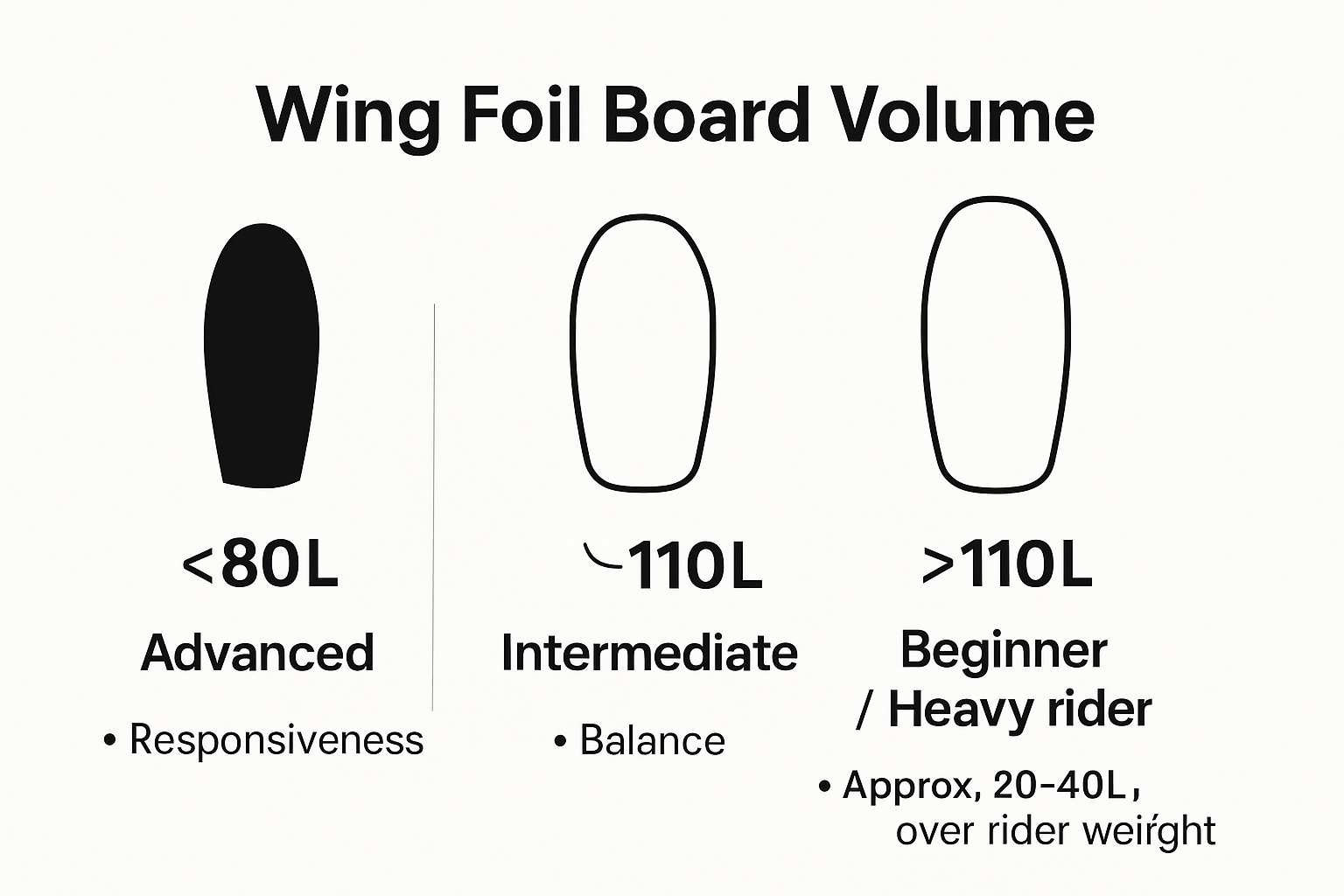
Wing foil board volumes dramatically change how you interact with the water and wing. Low volume boards (under 80 liters) provide exceptional responsiveness but demand high skill levels. These boards are perfect for riders who can consistently balance and control their foil with minimal surface contact.
Medium volume boards (80 to 110 liters) represent an excellent compromise for developing riders. They offer a balance between stability and performance, allowing progression without overwhelming technical challenges. Riders can practice more complex maneuvers while maintaining reasonable stability.
High volume boards (110 to 160 liters) are ideal for beginners and heavier riders. These boards provide maximum stability and easier learning experiences. They create a more forgiving platform for understanding wing foil board types and developing fundamental skills. The additional volume helps riders maintain balance and build confidence during initial learning stages.
When selecting a wing foil board, consider these key factors:
Body weight: Directly influences optimal board volume
Skill progression: Choose volume matching your current abilities
Riding conditions: Different water environments require specific board characteristics
Remember that wing foil board volume is not a one size all solution. Your personal physique, skill level, and local water conditions will ultimately determine the most suitable board for your needs. Consulting with experienced wing foilers or professional retailers can provide personalized recommendations tailored to your specific requirements.
Wing Foil Board Shapes Explained
Understanding wing foil board shapes is essential for selecting the right equipment that matches your riding style and skill level. Different wing foil board types feature unique shapes designed to optimize performance across various water conditions and rider preferences. The board’s shape significantly influences stability, maneuverability, and overall riding experience.
Progression Board Shapes
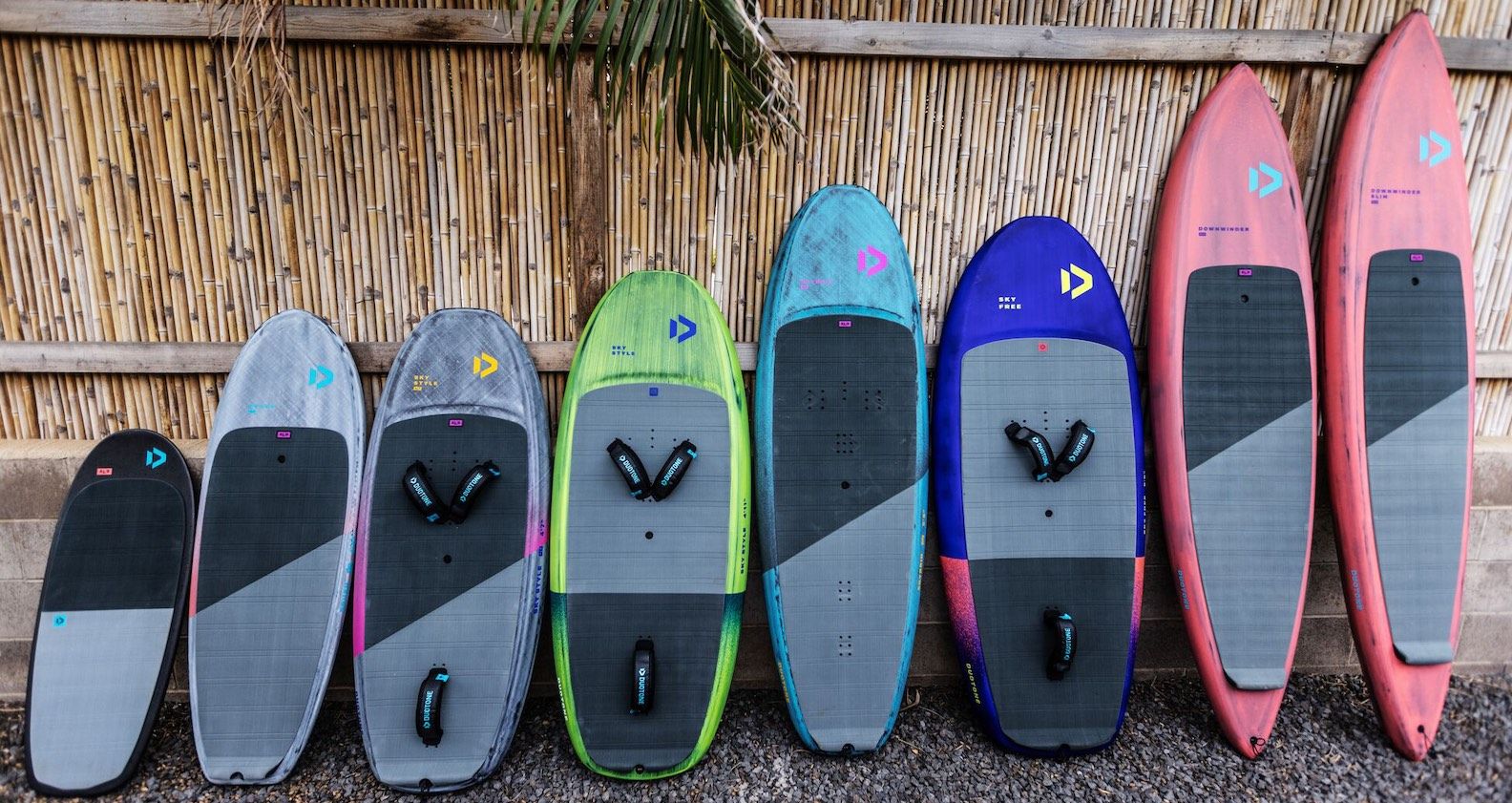
Progression boards represent the most versatile wing foil board types for riders developing their skills. These boards typically feature a wider outline with a more rounded nose and fuller rail profile. The additional width provides enhanced stability, helping beginners maintain balance while learning fundamental wing foiling techniques.
The design characteristics of progression boards include a relatively flat bottom contour and increased volume distribution. This shape helps riders stay above water more easily and reduces the technical challenges associated with initial learning stages. Progression boards often have a more forgiving outline that allows riders to build confidence gradually.
Performance Board Shapes
Performance wing foil board shapes cater to intermediate and advanced riders seeking maximum responsiveness and maneuverability. These boards feature narrower outlines with more aggressive rail profiles and refined bottom contours. The reduced width and decreased volume create a more dynamic riding experience that rewards precise technique and advanced skills.
Performance board shapes typically incorporate:
Narrower nose and tail sections
More pronounced rocker lines
Reduced overall volume
Enhanced rail sharpness for improved edge control
Advanced riders can leverage these design characteristics to execute more complex maneuvers, including quick transitions, aggressive carving, and high speed riding. The reduced surface area demands greater skill but provides significantly improved performance potential.
Specialized Board Shapes
Specialized wing foil board types emerge for specific riding conditions and advanced techniques. Wave riding boards feature asymmetrical designs with increased rocker and more refined rail profiles optimized for ocean environments. Freestyle boards prioritize lightweight construction and extreme maneuverability, allowing riders to perform complex aerial tricks.
Some specialized shapes include:
Wave specific boards with enhanced bottom contours
Downwind performance boards
Foil racing boards with minimal surface area
Cross discipline boards adaptable to multiple riding styles
Riders should carefully consider their primary riding environment and skill progression when selecting among wing foil board shapes. Each design offers unique advantages that align with specific performance requirements. The right board shape can dramatically improve your riding experience and accelerate skill development.
Choosing between different wing foil board shapes requires understanding your personal goals, skill level, and riding conditions. Consulting with experienced professionals and testing multiple board types can help you identify the most suitable shape for your individual needs. Remember that board shape is just one factor in creating an optimal wing foiling experience.
Picking The Right Board For You
Selecting the perfect wing foil board requires careful consideration of multiple factors beyond simple specifications. Your ideal board will blend personal characteristics, skill level, and intended riding environment into a single perfect match. Understanding how to navigate wing foil board types ensures you invest in equipment that enhances your performance and enjoyment.
Assessing Your Skill Level
Your current skill level is the most critical factor in choosing a wing foil board. Beginners need stable, forgiving boards that build confidence and support learning. Skill progression boards typically feature wider outlines, higher volumes, and more balanced designs that minimize technical challenges.
For new wing foilers, prioritize boards that offer:
Maximum stability
Generous volume relative to body weight
Wider outline for increased balance
Rounded rails for predictable handling
Intermediate riders can transition to more responsive board designs. These boards reduce volume and introduce more aggressive shapes that reward improved technique. You will want boards with slightly narrower profiles and more dynamic bottom contours that allow greater maneuverability.
Understanding Your Physical Characteristics
Your body weight plays a significant role in selecting the right wing foil board. Heavier riders require boards with increased volume to maintain proper flotation and stability. Lighter riders can choose boards with reduced volume that offer enhanced responsiveness and easier control.
A practical approach to matching board volume involves:
Adding 30 to 50 liters to your body weight for beginners
Selecting volumes closer to your body weight as skills improve
Considering your muscle strength and overall fitness level
Height also influences board selection. Taller riders might need boards with longer lengths and wider profiles to match their physical proportions. Shorter riders can benefit from more compact board designs that provide easier handling and quicker transitions.
Matching Board to Riding Environment
Your primary riding conditions will significantly impact wing foil board type selection. Wave riders need boards with different characteristics compared to flat water enthusiasts or those practicing in diverse environments. Understanding your typical water conditions helps narrow down the most suitable board design.
Consider these environmental factors:
Wave height and frequency
Water surface conditions
Wind strength in your typical riding location
Typical water temperature and potential gear requirements
Ocean wave riders might prefer boards with more pronounced rockers and refined rail profiles. Flat water riders can select boards with straighter outlines and less aggressive bottom contours. Riders who explore multiple environments should consider versatile board designs that adapt to changing conditions.
Ultimately, selecting the right wing foil board combines technical knowledge with personal experience. No single board serves every rider perfectly. Test different wing foil board types whenever possible. Speak with experienced riders, consult professional retailers, and remain open to adjusting your equipment as your skills develop.
Remember that your first board is a learning tool. As your skills progress, you will develop a more nuanced understanding of how board characteristics impact your riding experience. Embrace the journey of discovering your ideal wing foil board.
Frequently Asked Questions
What size wing foil board should I choose as a beginner?
Choosing a board that is 30 to 50 liters above your body weight in kilograms will provide the stability needed for learning. For example, if you weigh 75 kg, look for a board between 105 and 125 liters.
How does my skill level affect the choice of wing foil board?
Beginners should opt for higher volume boards for stability, while intermediate and advanced riders can select lower volume boards that offer enhanced maneuverability and responsiveness.
What board shape is best for progressing in wing foiling?
Progression boards with a wider outline and rounded nose are ideal for beginners, providing stability. As skills improve, intermediate riders should consider performance boards with narrower outlines for better maneuverability.
How does my weight influence the wing foil board volume I need?
Heavier riders typically require boards with more volume to maintain flotation and stability. A good rule of thumb is to add 30 to 50 liters to your body weight for optimal board selection.
Unlock Your Wing Foiling Potential with the Right Board!
If you’re ready to elevate your wing foiling game but feeling overwhelmed by the choices, Surf-store.com has the perfect solution for you! The right board volume and shape are essential for a smooth ride—whether you’re just starting or you’re a seasoned pro aiming for that perfect maneuver. Remember, beginners should choose boards 30 to 50 liters above their weight for optimal stability. But how do you transition to a more advanced board as your skills grow?
At Surf-store.com, we specialize in premium wing foiling equipment from world-renowned brands like Duotone, Fanatic,, and NeilPryde. Our extensive selection makes it easy to find the perfect board tailored to your skill level and riding environment. Whether its progression, performance, or specialized boards you seek, we’ve got you covered!
Don’t let indecision hold you back! Visit us NOW at https://surf-store.com to explore our diverse inventory, benefit from expert advice, and discover exclusive deals that will have you gliding confidently across the water. Your perfect board awaits—start your journey today!
Choosing a selection results in a full page refresh.