
Back Zip vs Chest Zip Wetsuit 2026 — Which Is Warmer?
Quick Verdict
Back zip wetsuits are the overall winner for most riders -- they're easier to enter and exit, more durable at the shoulders, and offer better water seal integrity. However, chest zip (front zip) suits excel if you prioritise maximum flexibility and don't mind taking 30 seconds longer to get suited up. For beginners and casual riders, back zip wins every time. For advanced freestyle and wave riders who value unrestricted arm movement, front zip deserves serious consideration.
Side-by-Side Comparison
Feature Back Zip Chest Zip (Front Zip) Entry/Exit Speed ✓ 10-15 seconds -- 30-45 seconds Shoulder Durability ✓ Highest -- no zipper stress -- Moderate -- front zipper pulls shoulders Water Seal ✓ Superior -- back entry avoids chest gaps -- Good, but front entry can trap air pockets Arm Freedom -- Slight restriction on paddle strokes ✓ Unrestricted -- full range of motion Warmth ✓ Better -- sealed back panel -- Slightly less insulating Price -- Typically €10-30 more ✓ Slightly cheaper, entry-level option Repair Cost -- Expensive (back panel complex) ✓ Cheaper (zipper replacement easier)Back Zip Wetsuits -- Full Review
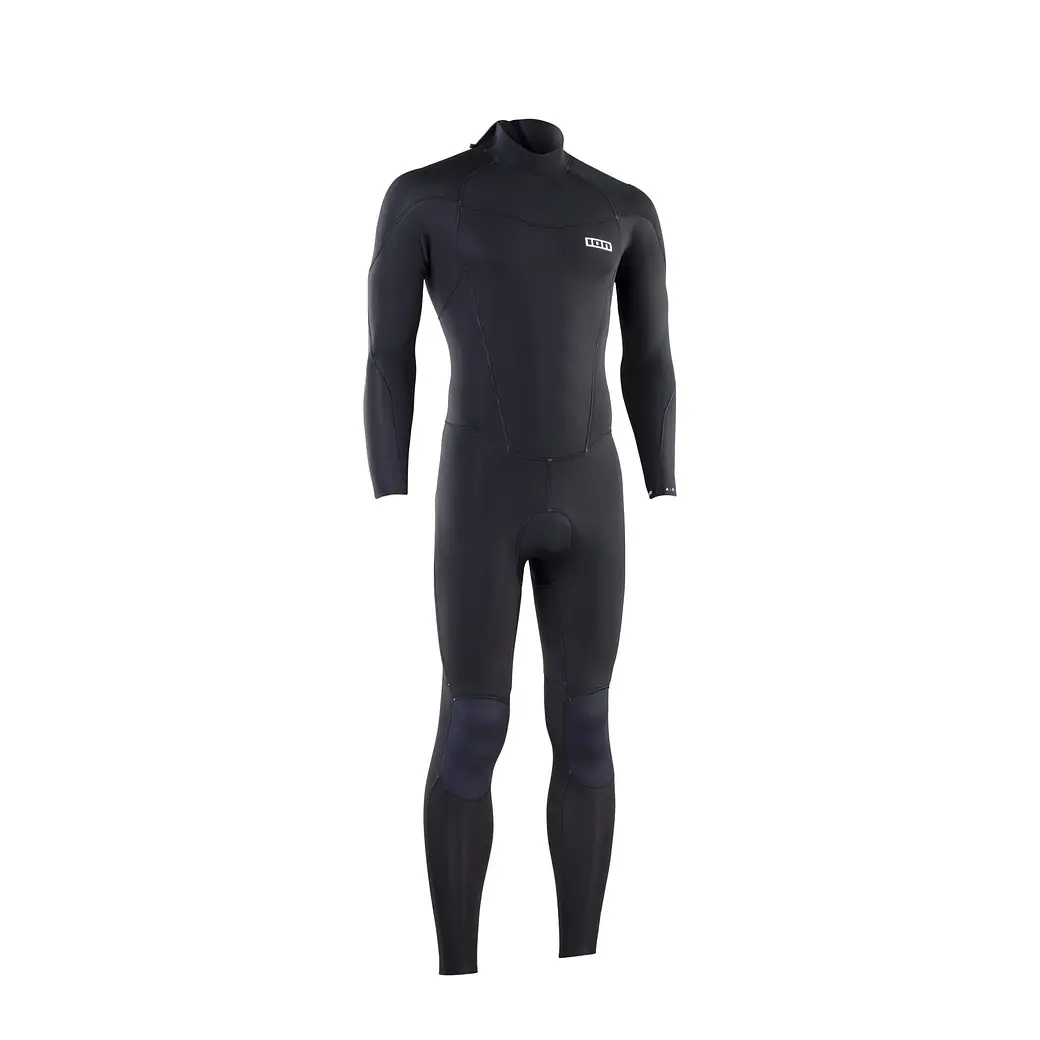
Back zip (back entry) wetsuits have become the industry standard for a reason. The zipper runs vertically down your spine, allowing you to slip in and out quickly while lying down or standing. This design eliminates the need to contort your arms and chest -- a massive advantage on a windy beach or boat.
The Element series delivers comfort without the premium price tag. Smooth entry, sealed back panel, and enough stretch for responsive kite control. Ideal for intermediate riders who want durability and warmth in a no-fuss package.
Strengths of Back Zip Wetsuits
- Fastest entry -- 10-15 seconds to suit up and be on the water. Game-changer on cold mornings or packed beach days.
- Shoulder durability -- no zipper pulling the shoulder seams during every paddle. Back zip suits last longer in high-stress areas.
- Better water seal -- the back panel creates a unified seal without the air pocket risk of chest-entry designs.
- More warmth -- sealed construction traps heat more efficiently, especially in cold water (autumn/winter riding).
- Industry standard -- most shops stock back zip first, and repair options are widely available.
Weaknesses of Back Zip Wetsuits
- Slightly higher price -- the engineering and sealed back panel cost more to manufacture.
- Minor shoulder stiffness -- you may notice a tiny bit of restriction on aggressive overhead movements, though most riders don't feel this at all.
Chest Zip (Front Zip) Wetsuits -- Full Review
Chest zip -- also called front zip -- runs horizontally or at an angle across the chest. You step into them like trousers, then zip up the front. This design prioritises arm mobility and flexibility, making it popular with wave riders and freestylers who demand unrestricted paddling and turning.
Perfect for warm-water sessions where arm freedom matters most. The chest zip eliminates back panel tension, giving you full shoulder rotation. Great for trick hacking, wave riding, or high-output sessions where flexibility beats durability concerns.
Strengths of Chest Zip Wetsuits
- Maximum arm freedom -- no back panel tension. You get full overhead mobility and unrestricted wave turning radius.
- Easier shoulder entry -- stepping in like trousers feels natural and requires zero contortion.
- Cheaper upfront -- front zip suits typically cost €20-30 less than equivalent back zip models.
- Simpler repair -- if the zipper fails, replacement is straightforward and affordable.
- Lighter weight -- no sealed back panel means marginally less bulk on dry land.
Weaknesses of Chest Zip Wetsuits
- Slower entry/exit -- you need to wiggle into them fully before zipping, adding 20-30 seconds to your morning routine.
- Shoulder stress -- the front zipper creates pulling forces on shoulder seams with every paddle stroke, shortening lifespan.
- Water can trap at the chest -- if the front zip doesn't seat perfectly, air bubbles can form, reducing warmth and buoyancy.
- Less warmth -- the open front panel design sacrifices insulation in cold water.
Who Should Choose Each?
Entry to Intermediate Riders
If you're learning to kitesurf, windsurfing, or just want to get suited up fast and stay warm, back zip is your answer. Fast entry means more time on the water, and the durability means your suit lasts longer through your progression. Ideal for consistent session riders in cool-to-cold water (autumn, winter, spring).
Wave Riders & Freestyle Athletes
Advanced riders who prioritise arm mobility and unrestricted movement choose front zip. Wave flicks, aerial tricks, and aggressive freestyle require full shoulder rotation -- back zip's minor stiffness matters at that level. Best for warm-water spots (summer) or riders who session often and accept faster wear on seams.
Our Recommendation
After 20 years selling wetsuits, we recommend back zip for 90% of riders. Speed, durability, warmth, and water seal are worth the extra €20-30. Grab an ION Element 3/2 Back Zip if you're in cool-to-cold water, or an ION Base 3/2 Back Zip if you want the ultimate mid-range all-rounder. Both last 2-3 years with regular use and feel like a second skin from day one.
Only switch to front zip if you're a strong rider in warm water and actively doing tricks where shoulder freedom is measurable. The ION Element 2/2 SS Front Zip is an excellent choice for summer sessions and high-output freestyle, but expect to re-glue the shoulders every 18 months. For the rest of us -- especially beginners and casual explorers -- back zip wins on practicality, durability, and value. Free EU shipping from €99 means no excuse to wait; order today and be in the water by tomorrow.
Ready to Choose Your Perfect Wetsuit?
Expert advice, authorized ION stock, ships across Europe within 24h.