Can You Learn Windsurfing Without Lessons? — Honest Answer
You can absolutely learn windsurfing without formal lessons--thousands of self-taught windsurfers prove it's possible. However, expect a steeper learning curve, more wipeouts, and a longer timeline to real competence than with instruction. The difference between "learning alone" and "progressing fast" comes down to how you structure your practice, choose your location, and select beginner-friendly gear.
The Full Answer
Self-teaching windsurfing is feasible, but understand what you're up against. Windsurfing demands balance, timing, and sail control that your body has never felt before. Without a coach spotting mistakes in real time, you'll repeat bad habits--often painfully. You might blame the wind, the gear, or your fitness when the real issue is technique. That said, modern YouTube tutorials, online communities, and flat-water spots have made self-teaching far more viable than it was 15 years ago.
The realistic timeline for self-taught beginners is 3-6 months of regular practice (2-3 sessions per week) before you can genuinely waterstart and sail in light wind. Contrast that with a lesson-based timeline: a good instructor can have you popping up and harness-ready in 4-6 sessions (typically 2-3 weeks). So yes, you save money on lessons, but you invest time--and bruises.
The biggest advantage of avoiding lessons is cost and independence. The biggest disadvantage is that you'll learn slower, develop fewer tactical skills early on, and miss safety cues that could prevent injury. Many self-taught windsurfers hit a plateau around 6 months because they lack the refinement that only coaching provides. However, if you're patient, methodical, and willing to post video clips in online forums, you can break through.
How to Teach Yourself: Key Steps
- Pick the right location first -- Find a shallow, flat-water bay with consistent wind (10-15 knots) and sand or mud bottom. Avoid crowded spots, reef breaks, and strong currents. Lake or bay beats ocean for self-teaching; you'll spend less energy fighting conditions and more time on technique.
- Invest in quality beginner gear, not bargain bins -- A cheap, poorly balanced board and sail will teach you wrong muscle memory. Buy a stable freewave or freestyle board (60-80 L) with a soft, forgiving sail (4.0-5.5 m). See our gear suggestions below for brands that hold your hand.
- Master dry-land drills before the water -- Spend 2-3 sessions on the beach practicing rig control: how to uphaul, rotate the boom, and feel weight distribution. Use a training rig or very light sail. This cuts water time wasted on basic mechanics.
- Film yourself, then ask experienced riders for feedback -- Post a 30-second video in Reddit's r/windsurfing or local Facebook groups. Real sailors will spot stance, boom height, and weight bias issues in seconds. Free coaching beats guessing.
- Set micro-goals, not just "learn windsurfing" -- Week 1: uphaul 20 times without falling. Week 3: sail 100 metres in a straight line. Week 8: waterstart attempt. Small wins prevent burnout.
- Accept that you'll hit a wall around month 4-5 -- This is normal. Your balance plateaus, the waterstart doesn't click, and you feel stuck. This is where most self-taught sailors quit. Push through with video analysis and patience; the breakthrough comes.
Pitfalls to Avoid
Self-taught sailors often misjudge their own limits. Choppy, windy days feel like a good challenge, but they're actually ideal for bad habits--you'll muscle the rig instead of finessing it. Stick to light, steady conditions (10-14 knots) for your first 50 hours.
Many beginners hold the boom tension manually for months, then panic when they finally strap in. Learn harness technique early (even in 3 knots of wind on the beach). It changes everything about balance and wrist health.
A twitchy 55 L twin-tip will throw you overboard 500 times before you make progress. Start with a beginner freewave (70-85 L) that forgives sloppy footwork. Switch boards once you can waterstart reliably.
Your first 100 falls are 99% your technique, not a dodgy sail. Many solo learners swap gear constantly instead of fixing their stance. Record video; watch other sailors; ask questions. The gear is rarely the problem early on.
Beginner Gear to Self-Teach Windsurfing
To learn windsurfing without lessons, you need gear that forgives mistakes and teaches correct technique naturally. Avoid racing sails and high-performance boards; they'll frustrate you within weeks. Instead, look for soft, balanced sails and stable, high-volume boards designed for progression.
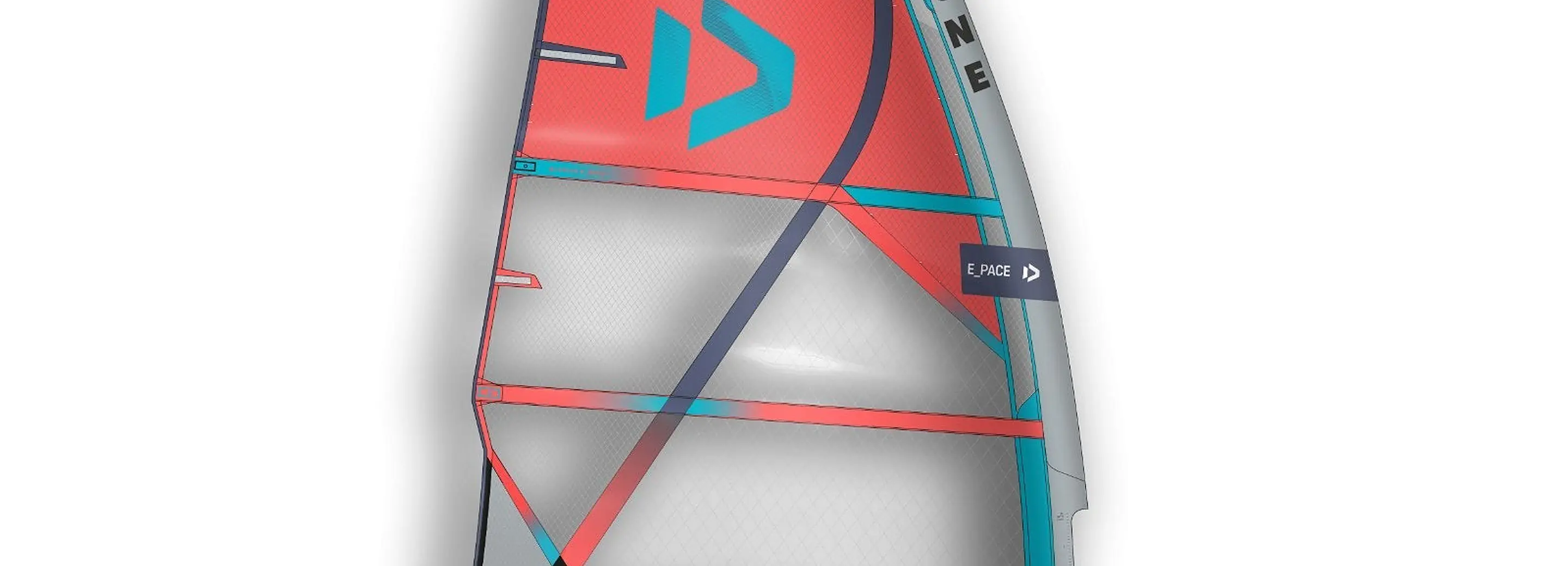
For your first sail, Duotone's E-Pace range is purpose-built for learners and self-taught sailors alike. These sails are forgiving, stable in gusty wind, and rewarding enough that progress feels immediate--critical for solo motivation.
The E_Pace is our go-to recommendation for anyone learning alone. It's soft enough to not punish poor technique, but responsive enough that you'll feel improvement instantly. Wide wind range means fewer "sorry, conditions are bad" excuses. We've seen more self-taught sailors start and stick with this sail than any other.
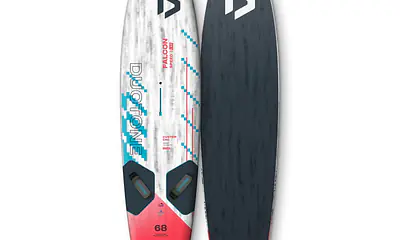
For your first board, choose something in the 70-85 litre range with a freewave or freestyle outline. The Duotone Eagle is rock-solid for progression: stable in choppy water, forgiving on choppy landings, and refined enough that you won't outgrow it for 6-12 months.
The Eagle is purpose-built for self-taught learning. It's stable enough that you won't spend your first month just staying on the board, but nimble enough to feel connected to the water. The forgiving rocker keeps you dry when you mess up your stance, and the volume range ensures you get one that matches your weight perfectly.
Beyond the board and sail, invest in a proper harness, wrist guards, and a impact vest. Self-taught sailors fall more; protective gear isn't luxury, it's essential. A good wrist guard prevents the sprains that derail weeks of practice.
Ready to Learn Without Lessons?
Start with quality beginner gear, flat water, and patience. Our crew rides what we stock--we'll help you pick boards and sails proven for self-taught progression.