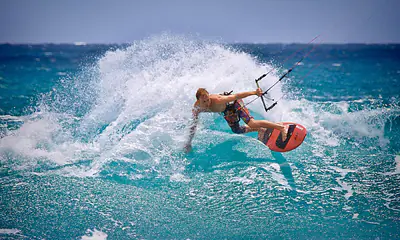
Can You Teach Yourself Kitesurfing? — Honest Safety Advice
Yes, you can teach yourself kitesurfing without professional lessons--but I wouldn't recommend it, and I'll tell you why. Kitesurfing is a high-energy sport where a single mistake with wind, kite control, or body position can result in serious injury. Most riders who self-teach either wash out within weeks or develop bad habits that take months to unlearn. That said, if you're disciplined, patient, and study the sport obsessively, self-teaching is possible. The key is starting in the safest conditions imaginable and accepting a longer learning curve.
The Full Answer
Kitesurfing self-teaching sits in a grey zone: it's not impossible, but it's significantly harder and riskier than structured lessons. Here's the reality from 20+ years of watching riders come through our shop.
When you take professional lessons, an instructor teaches you kite control, body mechanics, and safety protocols in a controlled environment. They spot mistakes before they become dangerous. They show you how to recover from edge cases--what to do if the kite loops, how to self-rescue, when conditions are too strong. Self-taught riders often skip these foundations and jump straight to chasing waves or tricks, which is where injuries happen.
The biggest advantage of self-teaching is freedom and cost savings. You progress at your own pace, you're not constrained by lesson schedules, and you're not paying €80-150 per hour. But you're also missing crucial feedback. You might be fighting the kite for months when a single instructor comment would fix your grip. You might be positioning yourself wrong on the board, which ruins efficiency and confidence. You're learning through trial and error, and in kitesurfing, errors can be painful.
That said, many of the world's best riders started self-taught, especially in the pre-YouTube era when lessons were scarce. They had wind, water, stubbornness, and friends who could spot obvious problems. Today, you have video tutorials, online communities, and decades of documented technique. If you're willing to learn methodically--spending weeks just on kite control, not rushing to riding--self-teaching is viable.
How to Teach Yourself Kitesurfing Safely
- Start with a trainer kite (2-3m) -- Learn kite control in zero-stress conditions. Spend 4-6 weeks flying it on land and in light wind. Understand power, edge, neutral zone, and self-rescue before you ever touch a full-size kite.
- Master the safety systems -- Study your kite's leash, depower system, and quick-release. Practise releasing and recovering in shallow water, windy days, when you're not under pressure. Know how to dump power instantly.
- Only ride in 12-16 knot winds (5-8 knots with a trainer kite) -- Don't push into strong conditions. Light wind is forgiving; strong wind is punishing. Build confidence before you chase power.
- Choose flat, wide water with soft sand and no obstacles -- Avoid beach breaks, rocks, piers, or shipping lanes. A wide, shallow lagoon is ideal. You need space to fall safely and room to self-rescue.
- Watch video tutorials obsessively, but focus on fundamentals -- Don't watch trick videos. Study body positioning, edge control, and safe progression. Channels like Red Bull Kitesports and brand tutorials from Duotone and Cabrinha are excellent starting points.
- Ride with at least one other person, always -- Never kite alone. Have a friend on shore with binoculars and a phone. If you get into trouble--depower system fails, you're drifting offshore--someone is there to call rescue.
Mistakes That Derail Self-Taught Riders
Many self-taught riders jump straight to a 12m kite because they're impatient. A trainer kite teaches you kite feel and power management with zero risk. Skip this, and you'll spend your first 20 sessions fighting a massive kite in winds that feel chaotic.
Self-rescue is non-negotiable. If you can't land your kite safely, fly it back to shore, or dump power in an emergency, you're a liability to rescue teams. Practise in shallow water until it's automatic.
Ego drives riders into strong conditions. You tell yourself you're ready, the wind is pumping, everyone else is out. You're not ready. Strong wind amplifies every mistake and turns recovery into panic. Build skill in light wind first.
A crowded beach, shallow water with rocks, or a river with traffic isn't a learning zone--it's a danger zone. Invest time finding a wide, flat, obstacle-free lagoon or beach. Your safety depends on space.
What You'll Need to Self-Teach
If you're committed to teaching yourself kitesurfing without lessons, your gear choice matters even more than it does for lesson-takers. You won't have an instructor catching your mistakes, so reliable, forgiving equipment is essential.
For kites: Choose a freeride or beginner-oriented design that's stable, easy to relaunch, and has forgiving handling. Avoid freestyle or wave kites--they're too aggressive for self-teaching. Models like a Duotone Juice or Cabrinha Drifter Apex are popular choices because they're stable, have soft bar pressure, and recover well from mistakes.
For boards: Start with a directional or hybrid wakestyle board in the 135-145cm range. Avoid twin-tips initially; they're trickier to control. A Fanatic board with good rocker and volume gives you forgiveness and confidence in light wind.
For safety: A quality waist harness (ION or Mystic), helmet, and impact vest are non-negotiable. Your first dozen sessions will include falls--make them survivable.
For learning: Start with a 2-3m trainer kite (most brands make them), then progress to a 12-14m freeride kite. Don't jump to 17m until you're riding cleanly in 14-16 knot winds.
Ready to Start Your Kite Journey?
Whether you're self-teaching or taking lessons, we stock everything you need: beginner-friendly kites, boards, harnesses, and safety gear from Duotone, Cabrinha, Fanatic, ION, and Mystic. Expert advice, authorised stock, ships across Europe within 24 hours.