
Can You Use a Surfboard for Wing Foiling? — Beginner Board Guide
The honest answer is no--you shouldn't use a regular surfboard for wing foiling, even if you're tempted to save money. A surfboard is built for paddling, pop-ups, and rail carving in waves. Wing foiling demands a completely different platform: a board that floats you effortlessly, holds you stable while you control a wing, and is designed for hydrofoil attachment. Using a surfboard puts you at risk of injury, frustration, and a bad experience that might put you off the sport entirely.
The Full Answer
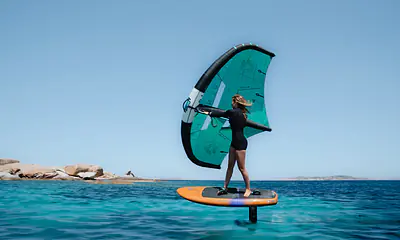
Wing foiling is not surfing with a wing attached--it's a separate discipline with its own physics. A wing foil board must meet specific requirements that a surfboard simply doesn't. First, volume and flotation: wing boards are wider, thicker, and more buoyant so you can generate lift and stay on the foil without paddling. A surfboard's narrower profile and rocker (curved bottom) make it sink under a wing's downward force. You'd be fighting the board constantly, never reaching flight.
Second, foil box compatibility: wing boards have a standardised box (usually 75mm) built into the deck to mount a hydrofoil mast. Surfboards have zero foil attachment points. You cannot retrofit one without destroying the board. Even if you could, the board's bottom shape is wrong--surfboards have concave or rocker, wing boards are flatter and wider to support the foil's lift and keep you stable.
Third, weight distribution and stance: on a wing board, you stand fairly central, using the wing for power and height control. On a surfboard, you're trained to move your feet for turns and pressure. The two biomechanics are incompatible. A surfboard under wing foiling conditions will pivot, twist, and dump you into the water far more often than a proper wing board.
Finally, cost vs. safety: a beginner wing board costs €600-1200; a surfboard is often cheaper. But buying a surfboard means buying frustration. You'll plateau quickly, get injured more easily, and potentially give up before you experience the real joy of wing foiling. Investing in proper gear from the start is the fastest path to success.
What to Do Instead: Start Right
- Buy a dedicated beginner wing board -- Look for 70-90L boards with wide, flat decks (like Duotone or Tabou models). They're forgiving, stable, and designed to teach you proper technique.
- Choose the right board size -- Beginners typically need 70-85L. If you're heavier (80+ kg) or just learning, go 85L+. Bigger boards float easier and reduce falls.
- Pair it with a proper wing foil system -- A complete foil set (mast, fuselage, front wing, rear wing) is essential. Gaastra and other brands offer hybrid or beginner-specific foils that are forgiving and responsive.
- Start in shallow water with a small wing -- Use a 3-4m wing, stand in waist-deep water, and focus on balance before attempting to fly the foil. This builds confidence safely.
- Take a lesson if possible -- A qualified instructor will teach you board stance, wing control, and weight management in an hour or two. It pays for itself in saved frustration.
- Don't skip a wetsuit -- Water is cold in Europe. A 5/4mm wetsuit keeps you comfortable and extends your session, making practice more effective.
Common Mistakes Beginners Make
It feels like a win, but you'll spend the session swimming and building bad habits. Wing foiling boards and surfboards are so different that skills don't transfer--you're essentially learning on the wrong tool.
Smaller boards are cooler-looking and cheaper, but they sink under wing pressure and force you to paddle harder to generate lift. Start big, progress small--not the reverse.
A board without a proper foil system is useless. The foil is 60% of the learning curve. Cheap foils break and discourage you. Invest in a proven system from a trusted brand.
It's its own sport. Windsurfers find the wing control easier but struggle with board stance. Surfers find popping easy but battle the different balance point. Start fresh with an open mind and proper instruction.
Surf Store Recommendation: Start With the Right Board
We always recommend beginners start with a dedicated wing board, not a repurposed surfboard. At Surf Store, we stock two excellent entry-level options that are proven to teach good technique and build confidence fast.
The Pocket is Tabou's entry-level wing board--stable, forgiving, and priced right. Wide deck gives you confidence on the foil; excellent float for learning without fighting the board.
Duotone's Sky Start is specifically engineered for learners. Generous volume, wide platform, and predictable feel make it the fastest path to your first flight. Trusted by thousands of beginners across Europe.
Pair either board with a beginner-friendly foil system. We recommend Gaastra Foil ALU Wing Foil Set options--aluminium foils are durable, affordable, and forgiving enough for learning. Once you progress, upgrade to carbon.
Ready to Start Wing Foiling the Right Way?
We've helped 6,000+ riders in Europe find the perfect gear. Expert advice, complete systems, ships within 24h across the EU.