
How to Choose a Windsurf Sail 2026 — Complete Guide
What to Look For
Choosing the right windsurf sail can be the difference between frustration and flow. After 20+ years selling to thousands of riders across Europe, I've learned that the best sail isn't always the most expensive -- it's the one that matches your conditions, your fitness level, and what you want to achieve on the water.
- Sail size and range -- A single sail rarely covers all conditions. Most riders need 2-3 sizes to stay efficient. Heavier or less athletic sailors benefit from sails with earlier power delivery; lighter riders can push larger sails in lighter wind.
- Battens and profile -- More battens (typically 6-8) give better shape retention and lighter, more controlled feel. Fewer battens suit freestyle tricks. The profile (full, balanced, or race-oriented) determines where the sail powers up.
- Build weight and materials -- Lighter sails (monofilm/Dacron blends) respond faster but cost more. Heavier Dacron sails are durable and forgiving for learners. D/LAB and SLS models use premium fabrics that combine both traits.
- Boom compatibility -- Check boom diameter and grommet style. Most modern 2026 sails fit standard 160-220 cm booms, but mast sleeve diameter matters for ease of rigging.
- Intended conditions -- Wave sails prioritise control and easy rotation. Freewave models forgive chop and variable wind. Foiling and slalom sails demand precision and early power. Freestyle sails need minimal battens and flex.
- Mast stiffness match -- A floppy mast with a race sail = loose, unresponsive feel. A stiff mast with a wave sail = harsh, tiring. The sail's flex window and your mast stiffness must align.
Beginner vs Advanced
Forgiving, Early Power, Durable
Look for sails with a full profile, mid-range batten count (6-7), and Dacron or Dacron-blend build. Models like the Duotone Duke or E_Pace SLS are engineered to power up early, so you don't exhaust yourself hunting for trim. They're also tough enough to handle learning impacts without delamination. Stick to one size at first--typically 4.5-5.0 m² for average wind conditions--then expand your quiver.
Precision, Lightweight Materials, Discipline-Specific
Advanced riders benefit from race-oriented sails like the Duotone S_Pace or specialised wave/freestyle models with fewer battens. You'll want D/LAB or SLS technology--monofilm and carbon-reinforced fabrics--for instant feedback and minimal weight. A quiver of 3-4 sizes covering 8-22 knots lets you dial conditions precisely. You can handle sails with tighter power bands and will exploit their upper-wind ceiling or unmatched wave-riding agility.
Budget Guide
Tier Price Range Best For Our Pick Entry €350-600 First-time buyers, learning to rig & uphaul Duotone Duke 2025 Mid €600-1000 Intermediate to advanced, want durability + performance Duotone E_Pace 2025 Premium €1000+ Competitive or specialist riders, full quiver potential Duotone S_Pace 2026Our Top Picks for 2026
The S_Pace is Duotone's all-round race and freewave platform for riders who want laser-sharp response without compromise. Lightweight monofilm construction means instant edge control, minimal weight fatigue, and a super-clean power delivery. Whether you're chasing marginal thermals or blasting flat-water slalom, the S_Pace reads every micro-adjustment you make. This is our go-to recommendation for how to choose a windsurf sail if you're intermediate-to-advanced and ride varied conditions.
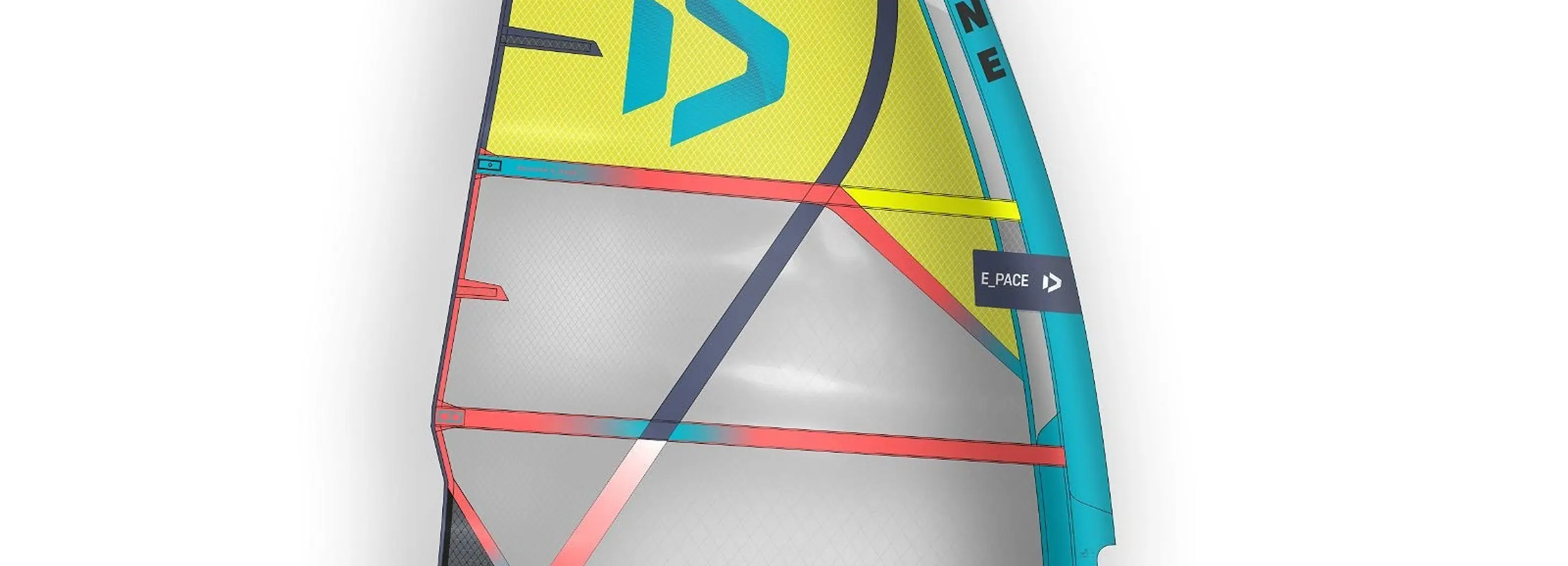
The E_Pace hits the sweet spot between durability and performance. It's Duotone's mid-range freewave sail, featuring a balanced profile that powers up progressively and never feels edgy. The blend of Dacron and monofilm keeps weight down while absorbing minor learning impacts. If you're asking how to choose a windsurf sail for all-day comfort and responsive wave riding, the E_Pace is our answer for most intermediate riders.
The Duke is purpose-built for learners and recreational riders. Full batten count, wide power band, and forgiving Dacron fabric mean you'll stay powered without constant trimming. It's bulletproof, affordable, and lets you focus on technique rather than gear tuning. Upgrading from the Duke to an E_Pace or S_Pace will feel revelatory, but the Duke is the perfect stepping stone.
If your water is mostly wind-powered and wavy, the Super_Star is king. Tiny, responsive, and super-light in hand, it excels in stronger, choppy conditions where you need instant manoeuvrability. The SLS (Super Light System) uses premium monofilm for explosive wave rotation and feather-light feel. Perfect for dedicated wave riders who'll dedicate a sail to 15+ knot conditions.
Common Mistakes to Avoid
A single 5.0 m² sail won't perform in 8-knot lulls or 22-knot gusts. Most riders need 2-3 sizes; lightweight beginners might prefer smaller ranges, while heavier sailors benefit from overlap. Budget for a quiver from the start.
A race sail on a bendy IMCS 25 mast will feel gutless. A wave sail on a super-stiff IMCS 35 will feel harsh. Always cross-reference your mast flex specs with the sail's recommended range. Duotone sails come with detailed mast guides.
Every brand makes great gear, but profiles and power delivery differ. We stock Duotone, Cabrinha, and NeilPryde because each excels in different scenarios. Try before you buy if possible, or ask us for a detailed comparison.
A premium monofilm race sail is brilliant, but if you're still learning, Dacron models forgive more and last longer. Don't overspend on technology you can't yet exploit. Grow into it.
Some vintage sails need shorter booms (140 cm); modern 2026 models typically fit 160-220 cm. Mismatched boom and sail = poor pivot point and sloppy feel. Always verify grommet style and diameter before purchase.
Ready to Gear Up?
Expert advice, authorised stock, ships across Europe within 24h. Not sure which sail is right for you? Get in touch--we've got 20+ years of local knowledge.