
How to Choose a Kite Size 2026 — Complete Sizing Guide
What to Look For
Choosing the right kite size is the single most important decision you'll make in kitesurfing. Get it wrong, and you're either underpowered and frustrated, or overpowered and unsafe. The core factors are your body weight, your local wind range, and your skill level.
Weight matters because heavier riders need more lift and drive. A 70 kg rider in 12 knots of wind needs a significantly larger kite than a 55 kg rider in the same conditions. As a general rule, lighter riders (under 70 kg) can work with smaller kites; heavier riders (80+ kg) will want to size up.
Wind range is equally critical. If you live somewhere with consistent 14-18 knot winds, you can afford a more specialist kite. If your spot is inconsistent (10-20 knots), you need a kite that performs well across that range. Check your local wind statistics before buying.
Kite size runs from 7 m² up to 19 m² for most riders. As a starting point:
- Light riders (50-65 kg): 11-13 m² for moderate winds
- Medium riders (65-85 kg): 13-15 m² for moderate winds
- Heavy riders (85+ kg): 15-17 m² or larger for moderate winds
These are baseline recommendations. Your actual sweet spot depends on your wind window and how often you want to be on the water.
Beginner vs Advanced
Beginners and advanced riders have very different priorities when they choose a kite size.
If you're a beginner, stability and forgiveness are more important than having a quiver of specialist kites. You want a kite that responds clearly to your inputs without overreacting to gusts. A mid-sized kite (13-15 m² for most body weights) that performs well across a wide wind range is your friend. Look for kites with good depower margin--this lets you let out the bar and instantly feel safer if the wind picks up. Entry-level designs like the Duotone Neo or Cabrinha Drifter are specifically engineered for smooth, predictable handling.
If you're advanced, you likely have multiple kites and choose based on the day's conditions. You might own a 12 m² for strong wind, a 15 m² for moderate conditions, and a 17 m² for light wind. Advanced riders can also appreciate specialist designs: wave kites (smaller, more responsive), freestyle kites (pop and slack for tricks), or foil kites (lightweight, precise). Your body weight and local wind window will guide which sizes to prioritise.
Intermediate riders often benefit from starting with one versatile mid-range kite and building a quiver after 1-2 seasons on the water.
Budget Guide
Entry-level (€400-€600): These kites won't have cutting-edge technology, but they're durable and forgiving. Ideal if you're testing the sport or learning. Expect smooth power delivery and easier handling.
Mid-range (€600-€1000): This is where most serious water sports enthusiasts spend their money. You get better materials, smarter design, and kites that reward good technique. Most riders in this band own 2-3 kites to cover their local wind range.
Premium (€1000+): Top-tier construction, aerospace-grade materials, and years of development. These kites offer marginal gains in performance and durability. Worth it if you're riding 100+ days per year or competing.
When budgeting, remember: a €700 kite you'll actually use is better value than a €1200 specialist kite gathering dust. Buy what fits your riding frequency and local conditions first; upgrade later as your needs clarify.
Beginner-Intermediate Recommendations
Duotone Neo 2026 -- The best all-rounder we stock for learning. Forgiving, stable, and responsive at the bar. Available in sizes 13-17 m², it suits most body weights and wind ranges without drama.
Cabrinha Drifter Apex 2026 -- A rock-solid freeride kite with excellent depower and smooth power curve. Brilliant if your wind is variable and you value confidence over edge performance.
Duotone Evo SLS 2026 -- A step up in responsiveness while staying beginner-friendly. The SLS construction offers better durability and snappier feedback at the bar.
Intermediate-Advanced Recommendations
Duotone Dice SLS 2026 -- A freestyle workhorse packed with pop and slack. If you're into tricks or want a kite that rewards precise handling, this is your pick.
Cabrinha Nitro Apex 2026 -- High-performance wave riding or strong-wind freeride. Built for riders who know what they want and demand instant response.
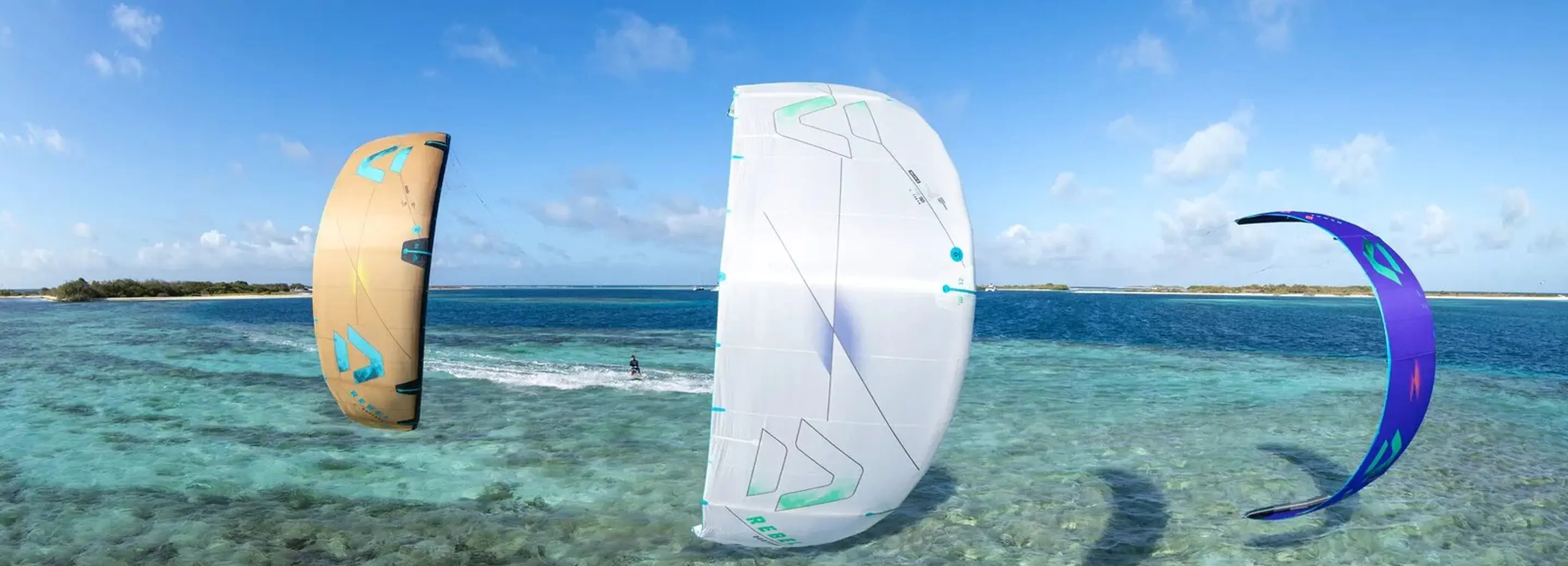
Duotone Rebel D/LAB 2026 -- Premium all-rounder combining wave credentials with freeride versatility. Perfect for intermediate riders ready to invest in a kite that'll grow with them.
Common Mistakes to Avoid
Oversizing because you're impatient. New riders often buy a 17 m² because they want to feel powered in light wind. You'll either be too scared to fly it, or you'll have a nasty surprise when the wind picks up. Start one size smaller than you think you need. You'll learn faster and stay safer.
Ignoring your actual wind range. Don't choose a kite for your best-case wind scenario. If your spot averages 12-16 knots, buy for that. A 17 m² kite is wasted money if you only use it twice a year.
Buying a kite purely on price. A cheap kite with poor resale value and flaky stitching will cost you more in frustration than a solid mid-range model from Duotone or Cabrinha. These brands hold value and perform when you need them.
Not considering your local spot. A wave kite is pointless if you ride flat-water lakes. A freestyle kite won't give you the stability you need for long-distance cruising. Match the kite design to your actual riding reality.
Forgetting about bar pressure and depower. A kite that feels numb or too demanding in gusts will exhaust you and limit your riding days. Always test how much the bar pressure increases as you sheet in, and how far back you can depower safely.
Visit surf-store.com to browse our full range, compare specifications, and get expert advice from our team. We've ridden everything we stock, and we're happy to help you find your perfect kite.