How to Duck Tack in Windsurfing — Advanced Technique Guide
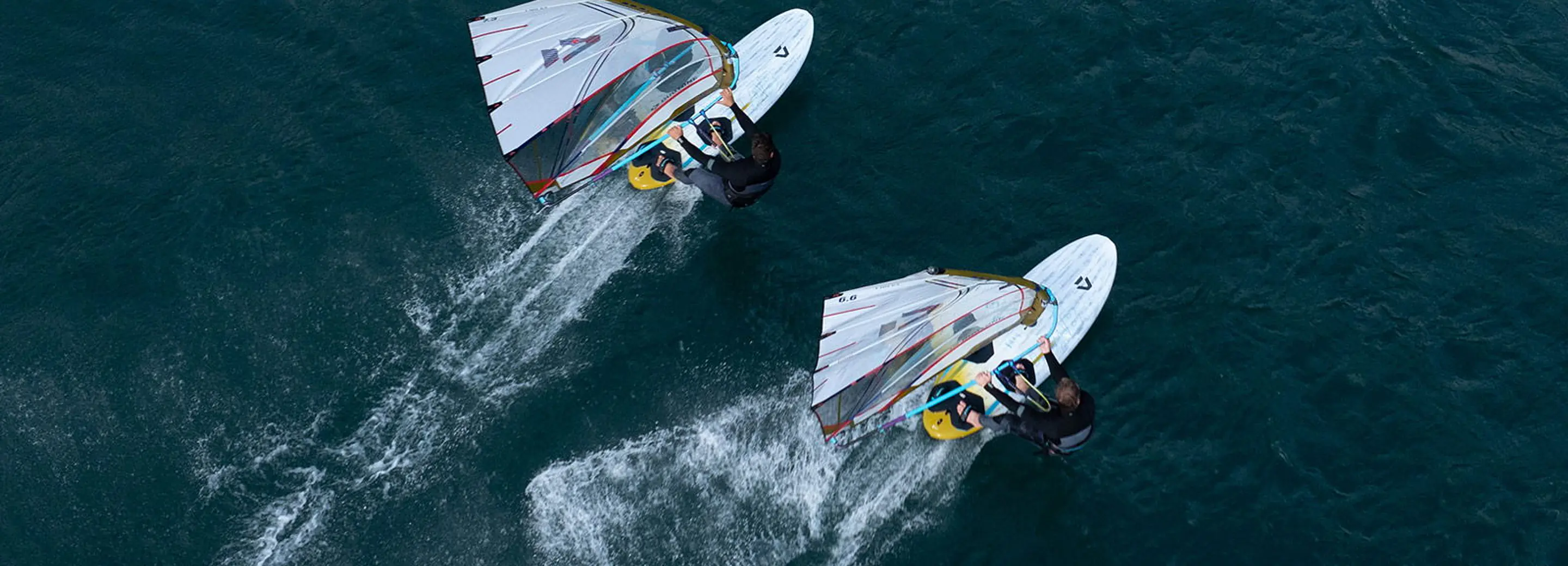
A duck tack (also called a pivot tack or uphauled tack) is an advanced windsurfing manoeuvre where you rotate the board through the wind without fully releasing the sail. Instead of completing a full flip, you keep the rig upright, step around the mast, and maintain power -- allowing you to tack in marginal or light wind conditions where a powered flip would fail. It's the technique that separates confident intermediate sailors from true wave and freestyle riders.
The Full Answer
The duck tack is fundamentally different from a powered flip tack because you never fully invert the sail. Instead, you use the board's rotational momentum, your body positioning, and a well-timed sheet-out to pivot the rig around you as you turn the board through the eye of the wind. The key is understanding that the sail stays mostly upright -- it simply switches sides of the mast -- which is why the technique works in light wind and marginal conditions where a flip would leave you stranded.
In strong wind, a powered flip is faster and more efficient. But in 8-14 knots, when your board has just enough speed to plane but not enough power to flip cleanly, the duck tack becomes your most reliable transition. Professional wave sailors live by this manoeuvre because it preserves speed, keeps you in control, and gets you back on course with minimal energy loss. The technique also doubles as a style move -- executed smoothly, it looks effortless and fluid, which is why you see it in freestyle and wave competitions.
The real challenge is timing. You need enough board speed to carry momentum through the turn, precise footwork to move around the mast without catching the boom, and the confidence to lean into the rotation rather than panic and bail. Most beginners overthink it; the sail wants to help you turn if you let it. Your job is to read the wind window, commit to the pivot, and trust your feet.
Practical Guide: Step-by-Step
- Approach with speed -- Build momentum on your approach. You need enough board velocity to carry through the pivot; if you're barely planing, the tack will stall. Aim for a clean beam reach with controlled speed.
- Sheet out progressively -- As you begin to turn into the wind, ease the boom back smoothly. Don't dump the sail all at once; a gradual release lets the rig swing around you rather than flip over.
- Pivot the board underfoot -- Rotate your hips and shoulders into the turn. Keep your feet central and let the board's inertia carry it through the eye of the wind. Think of the board as a spinning top -- you're just adding rotational force.
- Move your feet around the mast -- Step forward and across, moving from one rail to the other behind the mast. Keep your weight centred and your knees bent. The boom should pass cleanly overhead without catching your head or body.
- Catch the sail on the new side -- As the board completes its pivot, the sail naturally swings to the opposite side. Grab the boom at the right moment and sheet in firmly to re-engage power and drive away on your new course.
- Practice in light wind first -- Start in 8-12 knots on a spacious, flat body of water. Once your footwork and timing feel natural, you can attempt it in stronger or choppier conditions with much higher success.
Common Mistakes
If you don't have enough board speed, the pivot stalls mid-tack and you'll either complete an accidental flip or fall backwards. Always build speed before the turn; treat it like you're setting up for a powered move.
Releasing the boom suddenly destabilises the rig and kills your turning momentum. Sheet out gradually and smoothly so the sail can rotate with you, not against you.
Commit to stepping around the mast decisively. Timid or half-hearted footwork causes you to tangle the boom or get caught mid-step, breaking the flow of the manoeuvre.
The final catch is crucial. If you don't grab and commit power on your new course, you'll float in irons and lose all forward momentum, forcing you to uphaul or flop back.
Sail and Board Setup for Duck Tacking
Duck tacking is an intermediate-to-advanced technique that works best with responsive, forgiving equipment. A freestyle or all-round freewave sail -- one with decent rotational response and moderate pivot characteristics -- will make your tacks smoother and more intuitive. Sails that are too stiff or weighted toward the leech make pivoting harder; you want something that swings with you, not against you.
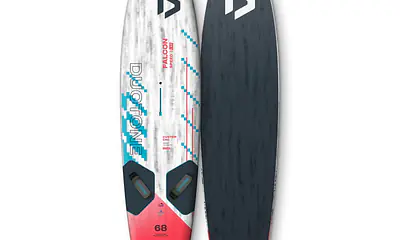
On the board side, a mid-sized freewave or freestyle board with balanced rocker and a moderate tail width (around 55-60 cm) will give you the manoeuvre-ability you need. Boards that are too wide or too long resist rotation; boards that are too narrow can feel unstable during the foot transition. Look for a design that sits comfortably at your weight and skill level -- something you can already waterstart and carve on confidently.
The Ultra FreeWave is a true intermediate-to-advanced all-rounder that pivots intuitively and carves tight. Balanced rocker, responsive flex, and a tail width that encourages clean foot transitions make it ideal for mastering duck tacks in variable wind.
Pair it with a mid-range freewave sail like a Duotone E_Pace or F_Pace (depending on your local wind window) and you'll have a dialed setup that rewards technique and makes the learning curve much gentler. Both sails offer excellent balance between power delivery and rotational ease.
Ready to Master Advanced Windsurfing Tactics?
Our expert team has been coaching intermediate sailors since 2003. Get the right sail and board combo for your skill level, plus hands-on advice on technique.