How to Go Upwind Kitesurfing — Technique & Tips
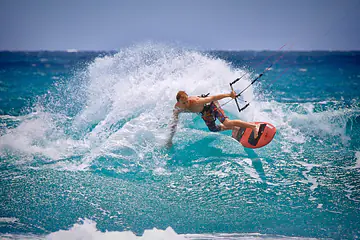
Going upwind in kitesurfing is about three things working together: kite position, board angle, and body tension. Position your kite at roughly 45° off the window, angle your board across the wind, and lean back hard against the kite's pull. The kite provides forward drive; your edge on the board converts that into upwind progress. Most riders think it's complicated, but once you lock the feeling--that sweet spot where the kite pulls and your edge holds--you'll climb upwind automatically.
The Full Answer
Upwind progress in kitesurfing isn't magic--it's applied physics. When you edge your board hard (rail in the water) and keep your kite powered and positioned off to the side, the combined force of the kite's pull and your board's resistance to sideways movement creates a vector that points upwind. Think of it like sailing: your kite is the sail, your edge is the hull, and together they produce "lift" in an upwind direction.
The key is maintaining tension. Many beginners sink into flat water, lose edge pressure, and instantly start drifting downwind. You need constant, muscular commitment to your edge. Lean your whole body back--shoulders, hips, legs all working--so your board carves a line that points into the wind. Your kite should be roughly 45° off the centreline (not directly overhead, not all the way at the edge). At that angle, it pulls both forward and across the window, keeping you powered.
Board choice matters too. Wider boards with better hold forgive mistakes and make edging easier. Lighter wind demands a bigger kite and more aggressive technique. Heavier wind lets you use a smaller kite and sit lower in the saddle. All intermediate and advanced riders go upwind regularly--it's essential for getting back to launch or exploring further downwind and still making it home.
Practical Guide: Step-by-Step
- Position your kite at 45° -- Not overhead, not at the edge of the window. A kite at 45° off the direction you want to travel pulls both forward and across, maximising upwind drive. Move it there before you commit to the edge.
- Angle your board across the wind -- Your board should point roughly 45-60° away from true wind direction. This angle lets your edge resist sideways slip and converts the kite's pull into forward, upwind motion.
- Lean back and edge hard -- Pressure through your heels (for heel-side upwind) or toes (toe-side). Drop your shoulder away from the kite and keep your weight back. The harder you edge, the better your hold and the more upwind you'll climb.
- Keep your kite powered -- Don't let it drift too far back or stall. Make small, quick figure-eight or circular movements to maintain consistent tension. If the kite goes neutral, you lose drive instantly.
- Look where you're going -- Don't stare at your kite or your feet. Eyes on the horizon and slightly upwind. This posture naturally corrects your board angle and helps you feel the edge.
- Switch edges if needed -- If one side isn't working, throw a transition. It's often faster to switch edge, reset your kite position, and climb on the other side than to fight a bad angle.
Common Mistakes When Going Upwind
A kite at the very edge generates mostly sideways pull, not forward drive. You'll bounce around but won't climb upwind. Move it forward to 45° and feel the difference immediately.
Your weight has to be behind the board to create edge pressure. Sitting upright puts your weight over the board, flattening it and killing your hold. Lean back aggressively and let your core keep you stable.
Upwind in 10 knots is much harder than in 18 knots. The smaller the wind window, the smaller your margin for error. If conditions are marginal, accept that you'll drift slightly and plan your route accordingly.
A slack kite (neutral position, no tension) can't generate any drive. Keep it moving gently through the power zone so you maintain constant pull. The moment you lose tension, you'll start slipping downwind.
Surf Store Recommendation
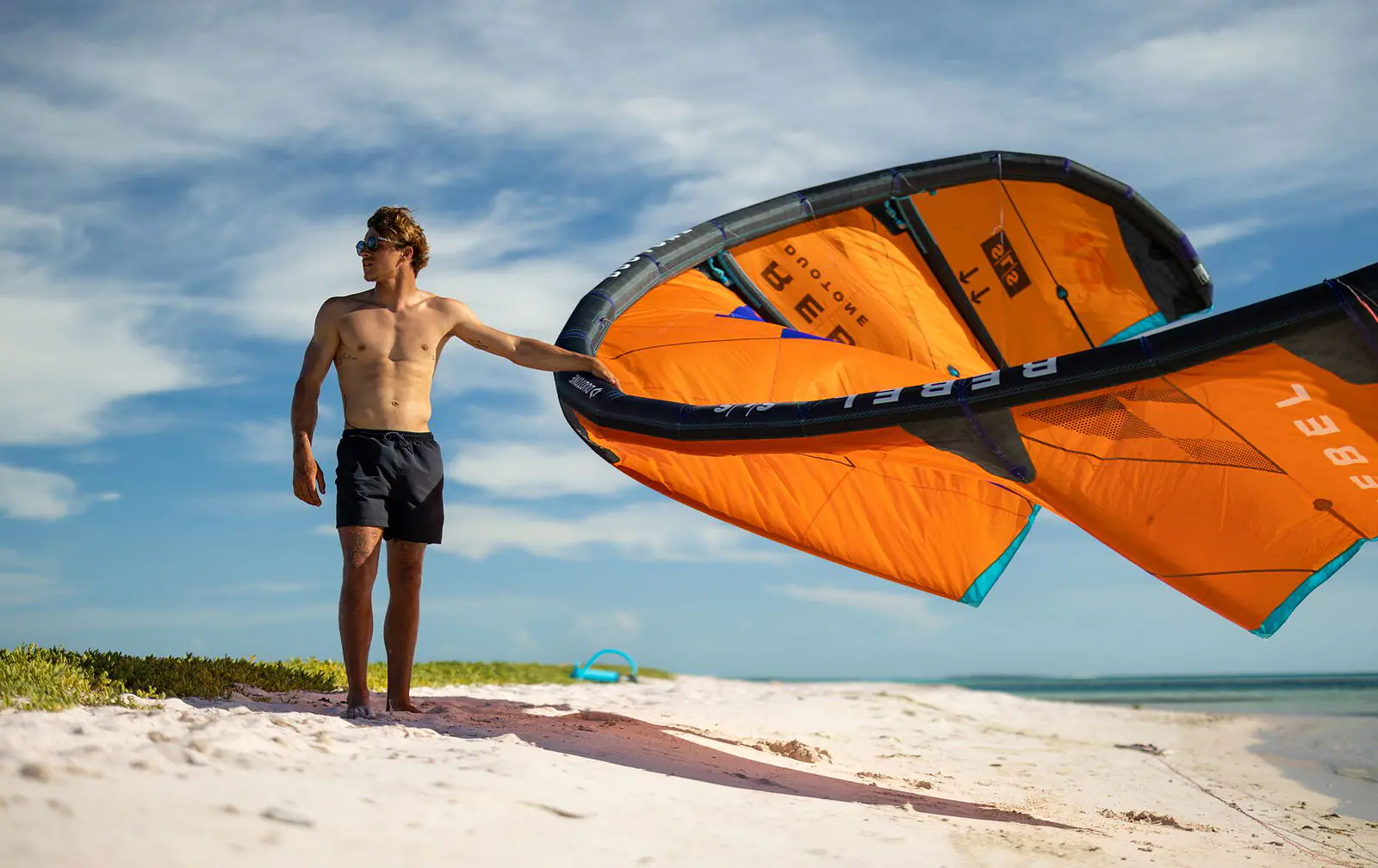
Upwind performance depends on kite design and size. Modern freeride and all-round kites are engineered for efficient upwind climbing--they hold their edge and stay responsive when positioned at that 45° angle. Duotone's Evo and Neo ranges are popular for intermediate to advanced upwind work because they're stable in the 45° zone and forgive small mistakes. Cabrinha's Nitro Apex and Drifter Apex are also strong upwind performers with predictable handling.
Board choice is equally important. A wider board (e.g., 135-145 cm for most riders) with good rocker and a sharp rail gives you better edge hold and more forgiving upwind feel. Fanatic and JP Australia both make excellent freeride and wave boards with the geometry you need.
If you're just learning upwind technique, start with your largest comfortable kite--a 15 m in marginal wind, for example--and a board wider than you normally ride. The extra float and power make it easier to practice the correct body position and kite angle without fighting for every inch.
Ready to Master Upwind?
Expert advice, authorized stock, ships across Europe within 24h.