How to Kitesurf Upwind Faster — Technique & Tips
The secret to climbing upwind efficiently isn't about fighting the wind--it's about working with your board and kite geometry. By angling your board correctly, positioning your kite at the power zone's edge, and transferring your weight properly, you'll hold ground and progress upwind without exhausting yourself. Most kiters waste energy fighting their edge; the best riders let physics do the work.
The Full Answer
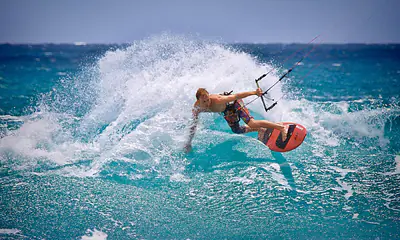
Upwind efficiency in kitesurfing comes down to three core mechanics: board angle relative to the wind, kite position in the power zone, and body weight distribution. When you're trying to make ground upwind, your board needs to sit at an angle that maximises edge grip without stalling your speed. Too perpendicular to the wind and you'll slow down; too much angle and you'll lose lift and drift sideways. The sweet spot is usually 40-50 degrees from the true wind direction, depending on your board shape and your weight.
Your kite's position is equally critical. The kite should hover between 10 and 2 o'clock (or 10 and 22 o'clock from the other side), never directly above your head. This position maintains steady power and directional pressure without overwhelming your edge. Many riders move their kite too much--constantly flying it side to side--which burns energy and causes course drift. A steady, locked position at the edge of the power zone gives you consistent drive and lets you focus on your board work.
Body weight and pressure on the edge is where most improvement happens. Your front foot should be weighted firmly, driving the heel edge hard into the water. Your back foot relaxes slightly, allowing the board to respond without fighting you. Lean your hips *into* the turn, not away from it--this shifts your centre of gravity over the edge and lets the board bite, rather than skate. The more stable your upper body, the more pressure you can apply through your legs. This is why straight-line upwind work is so different from freestyle tricks; you're rewarding patience and relaxation, not aggression.
Wind window awareness matters too. In light wind, you'll need to keep your kite moving slightly to maintain flow and avoid luffing. In stronger wind, lock it in place and trust your edge. Transitions between tacks (when you switch direction to climb higher) should be smooth and deliberate. Rush your tacks and you'll lose height; take your time and you'll gain it. Good upwind technique is about rhythm and consistency, not effort.
Practical Guide: Five Steps to Climb Faster
- Dial in your board angle -- Start at 45 degrees from true wind. Too tight and you'll wash out; too loose and you'll drift. Feel the board's natural "sweet spot" where it grips without fighting. You'll know you've found it when your edge feels locked but your speed doesn't drop.
- Lock your kite at the power zone edge -- Position it at 11 o'clock (or 1 o'clock) and leave it there. Only adjust if the wind shifts or you need to initiate a tack. Constant kite movement kills consistency and wastes power.
- Weight your front foot hard -- This is where edge pressure comes from. Lean into the turn; your heel edge should feel locked. Your back foot merely guides; your front foot drives.
- Keep your upper body quiet -- Avoid twisting your shoulders or leaning back. The more stable your torso, the more effectively your legs can work. Think "still hips, active feet."
- Slow your tacks and focus on height -- Rather than rushing through transitions, take two seconds to trim your kite, adjust your board, and reset. You'll gain more height and lose less momentum than riders who tack quickly.
- Practise in light wind first -- Once your technique is solid in 10-14 knots, stronger wind is easier. Light wind forces precision; everything else feels natural after that.
Common Mistakes That Kill Your Upwind Speed
Constantly pumping or moving your kite side to side looks active, but it wastes energy and causes your board to drift. Lock it in and let your board do the climbing. The kite's job is to provide steady drive; your board's job is to convert that into upwind gain.
Leaning back or away from your edge kills pressure and causes wash-out. Counter-intuitive as it feels, you must lean *into* the turn to hold ground. This takes confidence, but it's the single biggest difference between intermediate and advanced upwind technique.
Greed kills progress. If you're angling more than 50 degrees from the wind, you'll stall and drift sideways. Respect the physics: accept a 45-degree angle and trust that consistent tacks will get you where you need to go faster than aggressive angles.
Fast tacks look stylish but they cost height. Each tack should take 2-3 seconds. Trim your kite, reset your weight, and let your board respond. Patience gains more metres than speed.
Gear That Helps You Climb
Upwind efficiency depends largely on board choice. A board with a narrower tail, sharper rail, and moderate rocker will hold an edge better than a freestyle deck. Look for specialist directional boards--they're designed for carving and edge control, which translate directly into upwind performance. At Surf Store, we stock Fanatic boards that excel in directional riding and edge-hold. Models like our range of Fanatic freeride and wave boards are purpose-built for climbers who want to spend less time fighting the kite and more time riding hard.
Your kite choice matters too. Kites with efficient canopy design and tight leading-edge profiles--such as the Duotone Evo SLS 2026--deliver steady power without lag, which makes it easier to lock in a rhythm and maintain height. The Evo's predictable handling and smooth power delivery are perfect for riders focused on technique and upwind progression. If you prefer a lighter touch and more forgiving feel, the Duotone Neo 2026 offers excellent balance between ease and efficiency.
Ready to Improve Your Upwind Game?
Technique matters most, but the right gear makes it easier. Browse our range of directional boards and responsive kites, or contact our team for a free consultation.