How to Waterstart Kitesurfing — Step-by-Step for Beginners
A waterstart is when you launch yourself from the water using your kite's power to stand up on the board--it's the gateway skill from shallow water to open water kitesurfing. Once you master this, you'll never need to body-drag back to shore again. The key is timing your kite movement with board positioning and body weight to pop yourself up smoothly.
The Full Answer
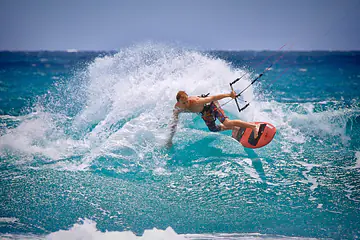
A waterstart happens in three phases: the pop, the ride-up, and the stand. You begin in deep water, sitting on your board with the kite at 12 o'clock (neutral). Your feet are in the footstraps, bar near your body. When you're ready, you steer the kite towards the edge of the wind window (either 10 o'clock or 2 o'clock) to generate power, then immediately dive it back across the window. This explosive movement, combined with your knees tucked and hips forward, lifts you from the water as the board planes underneath you.
The timing is everything. Too early or too late and you'll sink back. Your body position matters just as much as the kite: lean back slightly, keep your arms bent, and let the kite do the work. You're not muscling yourself up; you're using the kite's force and your board's flotation together. Once you feel the board lift and accelerate, gradually extend your legs and lean into the heels of your feet to lock in your riding stance.
Most riders take 5-15 attempts before they land their first clean waterstart. It's frustrating at first because the coordination feels unnatural, but once your muscle memory clicks, you'll find yourself popping up almost without thinking. The progression from body-dragging to waterstarts is a huge psychological boost--you'll suddenly feel like a real kitesurfer.
Practical Guide
- Position your kite neutrally -- Start floating on your board in deep water with your kite parked at 12 o'clock. Your feet should be in the footstraps, bar held loosely at chest height. This is your launch position.
- Dive the kite hard and fast -- Snap the bar towards your hip on one side to steer the kite into the edge of the wind window (10 or 2 o'clock). This is explosive--not gradual. The sudden power surge is what lifts you.
- Tuck your knees and lean back -- As the kite dives, bend your knees hard and lean your upper body back. Your board will start to plane. Don't stand up yet--stay compact and let the kite pull you.
- Stand gradually as the board planes -- Once you feel momentum, slowly extend your legs and shift your weight to your heels. Keep your chest open towards the wind and arms slightly bent. Fighting the kite will sink you.
- Trim the kite and ride away -- As you rise, guide the kite back towards 12 o'clock to maintain steady power. Once you're up and riding, you're in control.
- Practice in 12-18 knots first -- Too much wind and you'll get yanked; too little and the kite won't have enough power. Moderate wind with good window size is ideal for learning how do you waterstart kitesurfing first time.
Common Mistakes
Many beginners steer the kite, then think "now I'll stand up." A waterstart requires simultaneous action--the kite dive and your body compression happen in the same split second. Separate timing = failed waterstart.
A slow, gradual kite movement won't generate enough power. You need a sharp, deliberate dive across the window. Think "snap" not "slide."
If you try to extend your legs before the board is fully planing, gravity wins and you sink. Stay compact and trust the kite to do the lifting first.
Light wind means the kite can't generate enough pop; heavy wind will muscle you over. Aim for 12-18 knots with good wind window while learning how do you waterstart kitesurfing first time.
Surf Store Recommendation
Your waterstart success depends heavily on your kite's responsiveness and your board's flotation. For beginners perfecting this skill, we recommend freeride kites with excellent low-end power and predictable handling. Look for intermediate-level kites in the 12-17m range that reward precise steering without punishing timing mistakes.
Paired with a stable, forgiving freeride board (around 140-160L for most riders), you'll find waterstarts become natural much faster. Your board needs enough volume to float you comfortably at rest, and your kite needs to respond instantly to your bar inputs. Both matter equally.
Ready to Master Waterstarts?
Expert advice, authorized stock, ships across Europe within 24h.