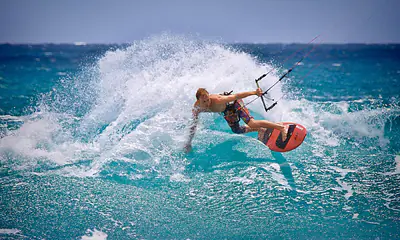

Kitesurfing in Gusty Wind — How to Stay Safe
Kitesurfing safely in gusty wind comes down to three core principles: choose a smaller kite than you think you need, maintain constant awareness of bar pressure and gusts, and position yourself upwind with plenty of room to manoeuvre. Gusty conditions are unpredictable, but they're manageable if you respect the wind and your own limits.
The Full Answer
Gusty wind is the enemy of consistency. One moment you're cruising on moderate power; the next, a sudden gust lifts you into the air or causes the kite to collapse. The reason this happens is that thermals, terrain changes, and wind shear create sudden spikes or drops in wind speed--sometimes 10+ knots in seconds. Your kite responds instantly to these changes, and your body can't always keep up.
The golden rule for kitesurfing gusty wind safety is to under-size your kite. If you'd normally ride a 14m in 12 knots, drop to a 12m or even 10m when conditions are gusty. A smaller kite is slower to respond to gusts, gives you more control, and is far less likely to send you flying. You'll lose some hang time, but you'll gain margin for error--and that's worth it.
Beyond kite size, your technique matters enormously. Keep the bar centered and near your hips in gusty wind--never trim the kite fully or hold it at extreme angles. Stiff bar pressure is your buffer against sudden lifts. Watch the water for ripples and colour changes that signal wind shifts; if you see darker patches moving toward you, anticipate a gust and brace yourself. Finally, always have an escape route. Stay upwind of hazards, keep plenty of space around you, and know where you'll ride if the wind spikes beyond your comfort zone.
Gusty wind kitesurfing is achievable for any rider with experience and respect for conditions. The key is accepting that some days are better suited to smaller kites and shorter sessions--not every wind day is a winner, and that's okay.
Practical Guide
- Size down aggressively -- In gusty conditions, go 2-4m smaller than you would in steady wind. A 12m kite in a gusty 12-knot day is far safer than a 14m. Smaller kites have slower edge pressure and are forgiving.
- Keep the bar high and hands centred -- Position your hands in the middle of the bar and hold it near your hips. This stance gives you instant depower; if a gust hits, immediately drop your hands to release pressure. Never trim or sheet in hard in gusty wind.
- Read the water before you launch -- Look for wind lanes, ripple patterns, and whitecap changes. Darker water patches and sudden whitecaps signal wind shear and gusts. Note where they're coming from and avoid those zones until you're confident.
- Launch and ride upwind with clear space -- Always launch in the lightest spot available and ride with open water downwind. This gives you room to move if conditions spike. Never launch or ride near trees, buildings, or other riders.
- Use longer sessions in moderate gusts, shorter sessions in severe gusts -- Gusty wind is tiring because your muscles are constantly tensed against pressure spikes. Ride for 20-30 minutes, then take a break. In severe gusts, 15-minute stints are better.
- Master the immediate depower -- Practice dropping your hands to fully depower your kite in seconds. This muscle memory will save you if a massive gust hits. In gusty wind, depower drills are more valuable than new tricks.
Common Mistakes
Many riders stick with their usual kite size in gusty conditions, thinking they can manage. This is how accidents happen. Gusts are unpredictable and violent; a normal-size kite in a gust becomes a rocket. Downsize without hesitation.
Keeping your kite high or to the edge in gusty wind multiplies gust response. Every wind spike gets magnified. Keep the kite at 12 o'clock or slightly forward, with the bar centred. This flat, neutral position is your safety position.
If you see sudden whitecaps, colour patches, or spray, there's a gust incoming. Riders who ignore these cues and stay committed to tricks or manoeuvres often get caught off-guard. Respect the water's signals.
Not every gusty day is a kitesurf day. If the wind is violent, erratic, or you feel uncomfortable on land, wait. There's no prize for forcing it. A calm day is always coming.
Surf Store Recommendation
For kitesurfing in gusty wind, your kite choice is everything. You need a design that's forgiving, responsive to bar input, and stable across a range of wind speeds. We recommend Duotone kites for their predictable handling in variable conditions. Models like the Duotone Evo SLS or Duotone Neo are known for smooth power delivery and excellent depower characteristics--exactly what you want when wind is bouncy.
The Evo SLS is our go-to for gusty conditions. It's stable across its wind range, responds instantly to bar input, and has excellent drift characteristics. The SLS frame keeps the kite forgiving even when sudden gusts hit, and depower is smooth and intuitive. Perfect for variable wind days.
If you prefer a slightly more forgiving, playful character, the Duotone Neo SLS is excellent too--it's stable, easy to relaunch, and has wide wind range coverage. Both models excel in the unpredictability that comes with gusty wind.
Ready to Gear Up for Gusty Wind?
Expert advice, authorised stock, ships across Europe within 24h.