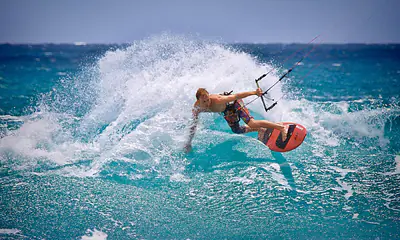
Kitesurfing in Onshore Wind — Tips for Beginners
Understanding Onshore Wind
Onshore wind blows from the sea toward the land, which means you're heading toward the beach as you ride. This is the most forgiving condition for learning kitesurfing--especially as a beginner--because the wind is predictable, the shore is always your safety net, and you'll never drift offshore. However, don't mistake "forgiving" for "easy."
Onshore wind creates short-period chop and wind that can be gusty and turbulent near the beach. The waves build quickly, and the water surface is rough and choppy rather than glassy. This unpredictability teaches you to stay centred, read your kite, and adapt your pressure--all critical beginner skills. For kitesurfing, onshore wind is ideal: it's how most riders progress from flat-water to choppy conditions and eventually to true wave riding.
Best Gear for Onshore Kitesurfing
Bigger Kite Setup
Go for a 14-17m kite paired with a larger twintip board (42cm+ wide) to generate power in lighter gusts. A lighter, more responsive kite like the Duotone Neo SLS 2026 will help you hook in earlier and maintain lift through the chop.
Smaller Kite & Board
Switch to 10-12m kite and a snappier, narrower twintip (38cm) for better control in gusty chop. You'll need a kite that responds instantly to bar input, such as the Cabrinha Nitro Apex 2026, which excels in choppy, unstable wind.
The Neo SLS is forgiving and playful--exactly what beginners need in choppy onshore wind. It's responsive to bar input, relaunch-friendly, and keeps you in control as gusts hit. Light weight means faster response and less arm fatigue in rough conditions.
When onshore conditions get gusty and chaotic, the Nitro Apex is your reliable workhorse. Its progressive response curve filters out turbulence while staying locked in power. The durable Apex material handles repeat launches and holds edge in rough chop.
Technique Tips for Onshore Wind
- Keep the kite high -- Onshore wind is turbulent near the water. Maintain your kite at 10-11 o'clock (or 1-2 o'clock) to stay in cleaner, more stable wind above the chop.
- Anticipate gusts -- Choppy onshore conditions bring sudden power surges. Keep your bar movement small and responsive; don't commit hard to a turn if the wind is unstable.
- Use the beach as your friend -- You're always drifting toward shore. Use this to your advantage: practice your launches and landings, and rest between runs without worrying about getting swept out to sea.
- Look ahead through the chop -- Rough water obscures what's coming. Keep your head up, scan the wind, and read the texture of the chop to stay ahead of gusts and lulls.
- Grip with your core, not your arms -- Choppy onshore wind fatigues your shoulders fast if you're fighting the bar. Relax your arms, keep your core engaged, and let the kite do the work.
Safety Checklist
Onshore wind creates sudden, sharp gusts that can catch you off-guard and catapult you over the bar. Respect the chop and choose a kite size for the lower wind range, not the peak gusts.
As you drift toward the beach, it's easy to relax and get sloppy with your bar control. Stay focused all the way in; kite accidents often happen in shallow water when riders aren't concentrating.
A safety leash is non-negotiable in onshore conditions. If you're separated from your board in choppy, turbulent wind, you need to dump your kite instantly. Always check your leash before launching.
Onshore wind creates rough, choppy conditions and makes it harder for others to spot you. Never ride alone; always have a buddy on the beach who can signal warnings or call for help if needed.
Dropping your kite low to find power in gusty onshore wind puts you at risk of uncontrolled spins and hard crashes. Keep the kite high and use bar input to maintain pressure instead.
Our Gear Recommendations at Surf Store
After 20+ years of riding in onshore conditions across Europe, we've learned what works. Here's what we recommend for beginner and intermediate riders tackling onshore wind:
The Evo SLS bridges light and medium onshore beautifully. It's stable in chop, forgiving on landings, and responsive enough to keep things fun. Pick 14-15m for light onshore days, 11-12m for gusty conditions. You'll ride it all season.
If you want a kite that's easy to launch, relaunch, and forgives rough bar input, the Moto X is your answer. It tracks true in choppy onshore wind and won't punish beginners for imperfect technique. Ideal for learning in messy conditions.
Ready to Master Onshore Kitesurfing?
Expert advice from riders who've logged thousands of hours in European onshore wind. Authorized stock, 30-day returns, free EU shipping from €99.