Stuck in a Kitesurfing Rut? — How to Progress Faster
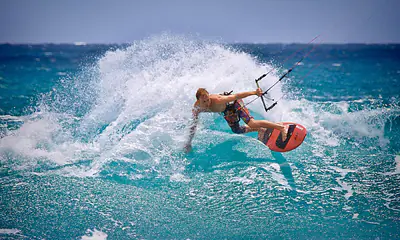
The fastest way to progress in kitesurfing is to combine consistent practice in the right wind window with deliberate focus on technique, not just time on the water. Most riders plateau because they're either practising in marginal conditions, relying on power instead of control, or using gear that doesn't suit their current level. With a structured approach and the right mentorship, you'll break through in weeks rather than months.
The Full Answer
Kitesurfing progress isn't linear, and that's by design. Your early wins come fast--launching, riding downwind, basic control--because you're learning the fundamentals. But as you move into transitions, tricks, and riding upwind, progress slows. This is where most riders get stuck. The difference between stalled riders and fast progressors isn't talent; it's how they train.
Fast progression in kitesurfing comes from four pillars: the right conditions, deliberate practice, quality equipment, and coaching or community feedback. You can't improve your upwind angle in 5-knot wind, no matter how hard you try. You won't nail your first transition if your kite isn't stable. And you won't know if your technique is actually improving without someone watching and correcting you. Combine all four, and your kitesurfing progress accelerates dramatically.
The mental shift is crucial, too. Many riders treat every session as recreation--cruise, have fun, go home. Fast progressors treat sessions as training blocks with a specific goal: land that transition, dial in your edge control, or extend your upwind angle by 5 degrees. That focus compounds over time and is the real secret to breaking through kitesurfing plateaus.
Practical Guide to Faster Kitesurfing Progress
- Hunt optimal wind, not any wind -- Progress happens in 12-18 knot range with steady offshore flow. Too little (under 10 kts) teaches bad habits; too much (over 22 kts) forces power over technique. Use wind forecasts ruthlessly. A focused two-hour session in good conditions beats eight hours of struggling.
- Pick one focus per session -- Instead of "improve everything," commit to one skill: upwind angle, 360 transitions, or edge control. Practice that single element for 60-70% of your time. Your brain consolidates skills faster with repetition than scattered multitasking.
- Get a local coach or experienced buddy -- You can't see your own mistakes. A coach spots weight distribution, kite position, and timing issues in minutes that would take you weeks to discover alone. Even two sessions a year accelerate learning by 3-6 months.
- Use a progression-friendly kite and board -- Gear tuned to your level makes kitesurfing progress visible. Undersized kites teach control; overpowered gear teaches fear. A stable, forgiving all-rounder beats a trick-specific board when you're still building fundamentals.
- Video yourself monthly -- Film short clips every 4 weeks. You'll see your posture, kite control, and line tension improve in ways you can't feel in the moment. It's instant feedback without waiting for a coach.
- Join a local crew or online community -- Watching better riders, sharing tips, and staying motivated matters. A community keeps you accountable and exposes you to techniques your local spot might not show.
Common Mistakes Slowing Your Progress
Struggling in 8-knot or gusty conditions doesn't build technique--it builds frustration and bad habits. Your nervous system learns tension, not control. Save practice for clean 12-18 knot days; use light wind for fun cruising only.
Borrowing oversized kites or riding boards too big masks your real ability. You'll feel powerful but learn nothing about edge control or weight distribution. Properly sized gear forces better technique and shows progress immediately.
You can't see your mistakes from inside your body. Most common flaws--late kite pop, weight on heels, lazy edging--go unnoticed for months until a coach points them out. One observation saves weeks of spinning wheels.
Trying to land your first backloop when you're still fighting your upwind angle burns energy and confidence. Master carving, edge control, and smooth transitions first. Tricks follow naturally.
Gear That Accelerates Your Kitesurfing Progress
The right kite makes progress tangible. For riders breaking through intermediate plateaus, a stable all-rounder like the Duotone Evo SLS is industry-gold: predictable bar feel, forgiving in gusts, and responsive enough to teach edge control without requiring heroic technique. It's the kite you see in coaching videos worldwide because it rewards clean technique and punishes bad habits--exactly what fast progression needs.
If you're newer and building fundamentals, the Duotone Neo SLS 2026 is our top suggestion. It's docile, intuitive, and extremely stable in marginal wind, so you can focus entirely on body position and kite awareness rather than fighting the bar. Both kites have the pedigree to grow with you from intermediate through advanced--you won't outgrow them.
The benchmark intermediate kite for reason. Predictable arc, immediate feedback on technique, and forgiving in chop. Teaches proper weight distribution and kite positioning without mask mistakes. Use this across your entire progression journey.
Built for progression without frustration. Extremely stable platform that rewards clean edging and punishes sloppy technique without biting. Perfect if you're still solidifying fundamentals and want a confidence builder that doesn't mask learning.
Ready to Accelerate Your Kitesurfing Progress?
Expert advice, authorized stock, ships across Europe within 24h. We're riders too--we'll match you with gear that suits your current level and growth curve.