Kitesurfing in Shallow Water — Safety & Technique Guide
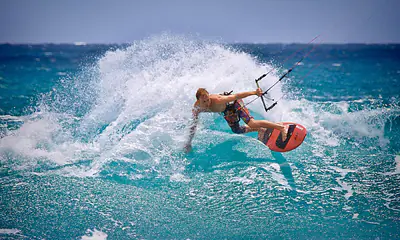
Kitesurfing shallow water safely comes down to three essentials: keeping your kite high and stable, reading the seabed and reef line before you go out, and practising recovery techniques so you can reset quickly if you fall. The biggest risk isn't the shallow water itself--it's losing kite control, catching an edge, or getting tangled in your lines near the bottom. Most accidents happen because riders misjudge wind window awareness or don't adjust their body position for low-speed riding.
The Full Answer
Shallow water kitesurfing is entirely doable if you understand the differences from deep-water conditions. In shallow water--typically anything under 2 metres--your margin for error shrinks because you can't generate as much speed to carve away from obstacles, and if you fall, you're landing on a harder surface. The seabed also creates friction that kills momentum faster, meaning your board stops quicker and your kite has less apparent wind to work with.
The core safety principle is kite position awareness. In shallow water, your kite must stay high and active in the wind window--never let it sink towards the water, because you won't have space to recover if it stalls or backflips. Your body mechanics also change: you'll be using smaller, sharper movements, and your weight distribution shifts more towards your heels to maintain control on the board when you're moving slowly. This is where many riders struggle--they expect shallow-water riding to feel like deep-water riding at low speed, but the physics are different.
Reading the break is essential. Before you paddle out, study the reef line, sandbanks, and any visible currents. Check where the waves break (if any), and note where the shallowest zone is. Many European spots--particularly in the Mediterranean and Baltic--have unforgiving rock reefs or sharp shells that demand respect. Talk to locals, scout the conditions from the beach, and don't assume a spot is safer just because it's shallow. A shallow lagoon with a sandy bottom is forgiving; a shallow rocky shelf is not.
Finally, understand that shallow-water riding requires less power kite--often one size smaller than you'd normally fly--because apparent wind and wave response are amplified. Your board control becomes more technical, your footwork more precise, and your exit strategy more important. If something goes wrong, you need a reliable self-rescue (a powered beach relaunch or hand-over-hand line recovery) and the fitness to execute it while standing in thigh-deep water.
Practical Guide
- Fly a smaller kite -- Go one size down from your usual quiver. Shallow water amplifies wind and responsiveness; undersized gives you better control and a faster depower stroke when needed.
- Keep the kite high and moving -- Never allow your kite to sink below the 45° line. Maintain a figure-eight rhythm or small circles to keep it powered and responsive so you can always exit quickly.
- Master heel-edge footwork -- Shift your weight more towards your heels than you would in deep water. This prevents catching a toe edge and gives you more precise control when riding at low speed.
- Scout the seabed and reef before riding -- Walk the break, note obstacles, identify the shallowest zone, and check for currents or tidal flow. Talk to locals and ask about hazards you can't see from the beach.
- Plan a clear exit route -- Know exactly where you'll ride towards when you need to stop--usually upwind towards the beach or into a designated safe zone. Mark it mentally before you launch.
- Practise recovery while standing in water -- Before you ride, practise picking up your kite and re-launching from waist-deep water. Dry-land line recovery drills (hand-over-hand) are also essential if the wind drops.
Common Mistakes
Shallow water amplifies apparent wind, and your normal quiver size will feel overpowered. Start one size smaller and adjust up only if conditions truly demand it--you'll have far better control and safety margin.
In shallow water, a sinking or backflipping kite is catastrophic because you don't have depth to recover. Keep the kite actively moving in the upper half of the wind window at all times.
Shallow water requires heel-edge control and smaller, sharper foot movements. Riding like you're in the ocean will cause you to catch an edge and crash hard on a firm bottom.
A reef, rocks, or sharp shells can destroy your session and your body. Never assume a shallow spot is safe; always scout visually and talk to locals about hazards.
Surf Store Recommendation
For shallow-water kitesurfing, your kite choice matters more than anywhere else. You need a kite that's responsive, stable at low speeds, and forgiving if you mistime your moves--because shallow water amplifies every input. At Surf Store, we stock several excellent choices depending on your skill level and local conditions.
If you're intermediate to advanced and want a dedicated freeride or bump-and-jump kite that handles shallow water brilliantly, the Duotone Evo SLS range (available in 2025 and 2026 seasons) excels. The SLS construction offers precise bar response and an incredibly stable platform even when you're working the kite in tight figure-eights. It's also forgiving enough that if you catch an edge and lose power momentarily, the kite won't collapse--it'll sit in the window waiting for your next input.
For beginners or riders looking for an all-round option that won't punish you in shallow water, the Duotone Juice range is exceptionally user-friendly. It's stable, powerful when you need it, and very accessible to learn on without fighting the kite constantly. The Juice D/LAB 2026 adds refinement and slightly tighter handling for intermediate riders who want a step up.
If you prefer Cabrinha, the Cabrinha Drifter Apex 2026 is purpose-built for light-wind and shallow-water conditions. It's exceptionally forgiving, has a wide wind range, and floats beautifully if you need to drift or relaunch from shallow water. Cabrinha riders swear by the Drifter for lagoon and reef sessions.
Ready to Gear Up?
Expert advice, authorized stock, ships across Europe within 24h.