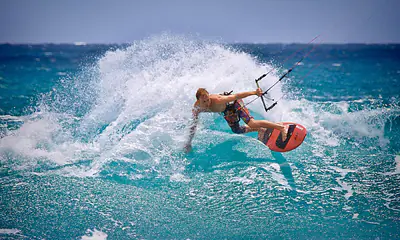

Kitesurfing the Tramontane — Roussillon Wind Guide
Understanding These Conditions
The Tramontane wind is the cold, violent northwesterly that rips down the Rhône Valley and across southern France--particularly around the Mediterranean coast and inland lakes. It's a thermal drainage wind born from high pressure systems meeting mountain slopes, and it arrives with almost clockwork regularity from late autumn through early spring. When the Tramontane is up, it's relentless: sustained speeds of 25-45 knots with violent gusts that can exceed 50 knots in a matter of seconds.
What makes the Tramontane brutal for kitesurfers isn't just the raw power--it's the sudden acceleration. You'll have smooth flow for a minute, then a rogue gust will hit hard enough to lift you sideways. The wind is almost always offshore or side-off in France's main riding zones (Lac du Salagou, Camargue, Méditerranée), which creates dramatic chop and occasionally clean, peaky waves. If you've only ridden light thermal breezes, the Tramontane teaches you respect fast.
Best Gear for These Conditions
Stepping Into Big Wind
Use a 10m freeride kite with stable, forgiving bar pressure. A 10-12m² ride-wave hybrid board (85-95L) gives you float in choppy conditions and helps you keep your footing during acceleration gusts. Your focus is bar control and aggressive edging--not tricks.
Expert Territory
Drop to a 7m or smaller wave kite designed for durability and predictable, snappy pressure. Pair it with a compact, responsive wave or freestyle board (60-75L). You'll sheet in hard, use massive edge control, and read the gusts by feathering and rotating your kite aggressively. This is survival-mode riding for experienced pilots only.
The Rebel SLS punches well above its weight in big wind. Designed for wave riding, it has a thin profile that keeps tension even in severe gusts, plus rapid response that lets you feather and drift through chop. In a Tramontane day, the 9m or 10m Rebel gives you precise depower without dead zones--perfect for reading those sudden accelerations.
Cabrinha's Switchblade bridges freeride and wave. The Apex construction is bombproof in sustained big wind, and the neutral bar feel means you can stay calm when gusts arrive. Use the 10m in the lower Tramontane range (25-32 kts) or scale down to 8m when it's genuinely heavy. Forgiving yet responsive enough to carve properly.
Technique Tips
- Anticipate the gust -- Watch the water surface for texture change 10-20 metres upwind. The ripples and chop pattern shift seconds before the gust hits. Start feathering your kite the moment you see the pattern shift; don't wait to feel the pull.
- Ride low, compact stance -- Keep your knees bent and weight forward. The Tramontane's sudden acceleration will try to rotate you; a solid edge and centre of gravity prevents being yanked off-balance. Sit deeper in your harness than you would in light wind.
- Feather aggressively -- Don't be shy with depower. Every gust peak is an opportunity to feather hard, ease the bar forward, and edge sideways. This bleed-off technique is what keeps you from involuntary loops or dives. Practise feathering in consistent 20-knot wind first.
- Use the lulls wisely -- Between gusts, the Tramontane often softens briefly. Use these moments to reposition, catch your breath, and commit to proper direction changes. Don't try tricks or complicated manoeuvres during lull--stay simple and direct.
- Stay offshore or parallel -- An onshore Tramontane pushes you into shallows and rocks. If you're riding inland lakes (Salagou, Leucate), position yourself offshore early. If you're near the Mediterranean, ride parallel to shore and use the wind shadow of coastal features as a safety valve.
Safety Checklist
Many riders choose a kite size based on average Tramontane speed (say, 30 kts) but forget that gusts arrive at 45+ kts. A kite that feels perfect in the lull becomes dangerous in the peak. Always size one bracket smaller than you think you need.
This wind is too unpredictable for solo sessions. You need a spotter on shore who can call out conditions and raise the alarm. Wear a helmet and impact vest; Tramontane crashes are fast and hard.
The Tramontane can rotate 10-15° during the day as the valley heats. A wind that starts NW can swing more W by mid-afternoon. Watch your compass and be ready to reposition. Sudden direction changes can catch you off-guard if you're not monitoring.
In gusty conditions, a quick leash failure means you're chasing your kite into a populated beach or across rocks. Inspect your leash knot and carabiners before every session. Use a recent-model quick-release system and carry a spare leash.
Tramontane sessions burn energy fast. Fatigue leads to poor decision-making and slower reactions to gusts. Set a time limit (60-90 minutes max) and exit when you feel tired. The wind will be back tomorrow.
Our Gear Recommendations at Surf Store
The Tramontane demands kites engineered for gust handling and predictable depower. We stock Duotone and Cabrinha because both brands excel at precision bar feel and durable construction--exactly what you need when conditions are this aggressive. Here are our trusted setups:
The Neo SLS is Duotone's refined freeride platform--lighter profile than previous generations, faster turning, instant depower. In Tramontane conditions, the 10m or 12m Neo lets you stay powered without drowning in the gusts. Forgiving enough for intermediate riders, responsive enough for experts. This is the true all-rounder for unpredictable big wind.
Cabrinha's Nitro is designed for aggressive riders who want to carve and progress in solid wind. The Apex construction is ultra-durable, and the slightly stiffer profile gives you confidence in heavy gusts. Choose the 9m or 10m for Tramontane peaks (32-40 kts) or go 12m if you catch a lighter-wind day (25-30 kts). Honest, direct, no compromises.
Ready to Gear Up?
The Tramontane waits for no one. Stock your quiver with proven big-wind kites and get expert advice on setup before you head to France.