
What Muscles Does Kitesurfing Work? — Fitness & Training Guide
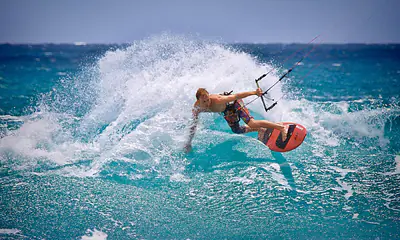
Kitesurfing is a complete full-body workout that engages your core, legs, arms, shoulders, and back simultaneously. Every ride demands constant stabilisation, explosive power and muscular endurance--which is why experienced riders often describe it as a mix of surfing, parkour and weightlifting on water.
The Full Answer
Your core muscles are the absolute foundation of kitesurfing. The constant micro-adjustments needed to stay balanced on the board, plus the rotational forces generated by turning and carving, demand sustained engagement from your rectus abdominis, obliques and deep stabilisers. This isn't a static hold--it's dynamic, explosive work that fires up your core in ways gym ab crunches simply can't replicate.
Your legs and glutes provide the power. Every pop (jump), landing and turn-initiation starts from the legs. Kitesurfing demands explosive strength from your quadriceps, hamstrings and glutes, plus the endurance to hold your stance for hours. If you ride switch (regular and goofy), both legs develop equally--a rare advantage of the sport.
Your arms, shoulders and back work constantly to control the kite. Holding the bar, managing tension and repositioning the kite through the window uses your lats, rhomboids, deltoids and forearms relentlessly. Riding upwind or in stronger wind amplifies this demand; lighter-wind sessions with smaller kites are still effective but require less upper-body force.
The posterior chain--your back, glutes and hamstrings--is heavily recruited during kitesurfing, which makes it excellent for posture and injury prevention. Most of us spend hours hunched over desks; kitesurfing naturally strengthens the muscles that counteract this, making it a genuine functional fitness activity rather than isolated muscle training.
Practical Guide
- Start with the right kite size -- Smaller kites (7-12m) build technique and core strength; larger kites (15m+) demand more arm and shoulder endurance. Match your size to wind conditions so you're learning, not struggling.
- Focus on lower-body stance -- Keep your knees slightly bent, chest upright and weight centred. This position maximises glute and quad engagement while protecting your lower back.
- Control the kite with your core, not just your arms -- Rotate from your torso when moving the bar, not just pulling with your shoulders. This distributes effort and builds genuine core strength.
- Build endurance gradually -- Start with 30-45 minute sessions and increase to 2-3 hours as your muscles adapt. Kitesurfing endurance is more important than short bursts of power.
- Mix wind conditions -- Light wind sessions (10-15 kts) demand more leg drive and core tension; moderate wind (15-20 kts) balances all muscle groups evenly. Avoid overly gusty conditions until your stabilisers are strong.
- Warm up before sessions -- Your shoulders, hips and core need activation. Five minutes of dynamic stretching and arm circles prepare your muscles and reduce injury risk.
Common Mistakes
Beginners often grip the bar tightly and control the kite purely with shoulder and arm strength, which leads to fatigue and poor technique. Your arms are steering wheels--your core is the engine. Engage your torso and let your legs absorb board forces instead.
Kitesurfing naturally recruits your lower back, but weak core stability can lead to strain. Build anti-rotation and anti-extension exercises off the water to protect your spine and improve your ride quality.
Jumps, handle passes and advanced manoeuvres demand exceptional core and leg strength. Rushing into these before your stabilisers are conditioned invites injury. Master flat-water carving and controlled turns first.
Cold muscles and joints don't perform optimally and are more prone to strain. A 5-10 minute activation routine before getting on the water dramatically improves muscle engagement and safety.
Surf Store Recommendation
The right equipment makes a massive difference in how efficiently your muscles work during kitesurfing. A well-sized kite that matches your skill and the wind conditions means you're using proper technique, not fighting the gear. Oversized kites force your arms and shoulders to overcompensate; undersized kites don't load your legs and core enough.
At Surf Store, we stock Duotone, Cabrinha and other industry-leading brands in kites and boards designed to develop your fitness safely. For building core strength and technique, a Duotone Dice (freeride kite, 2025-2026 models) offers playful feedback and progressive challenge. For serious muscle development across your entire body, the Cabrinha Nitro Apex 2026 demands consistent engagement from core to toes.
Your board matters too. A responsive, quality board from Fanatic or JP Australia transfers power directly, helping your muscles work smarter. Visit our store or contact us--we'll match you to gear that maximises your fitness gains and keeps you safe.
Ready to Build Strength on the Water?
Expert advice, authorised stock, ships across Europe within 24h.