
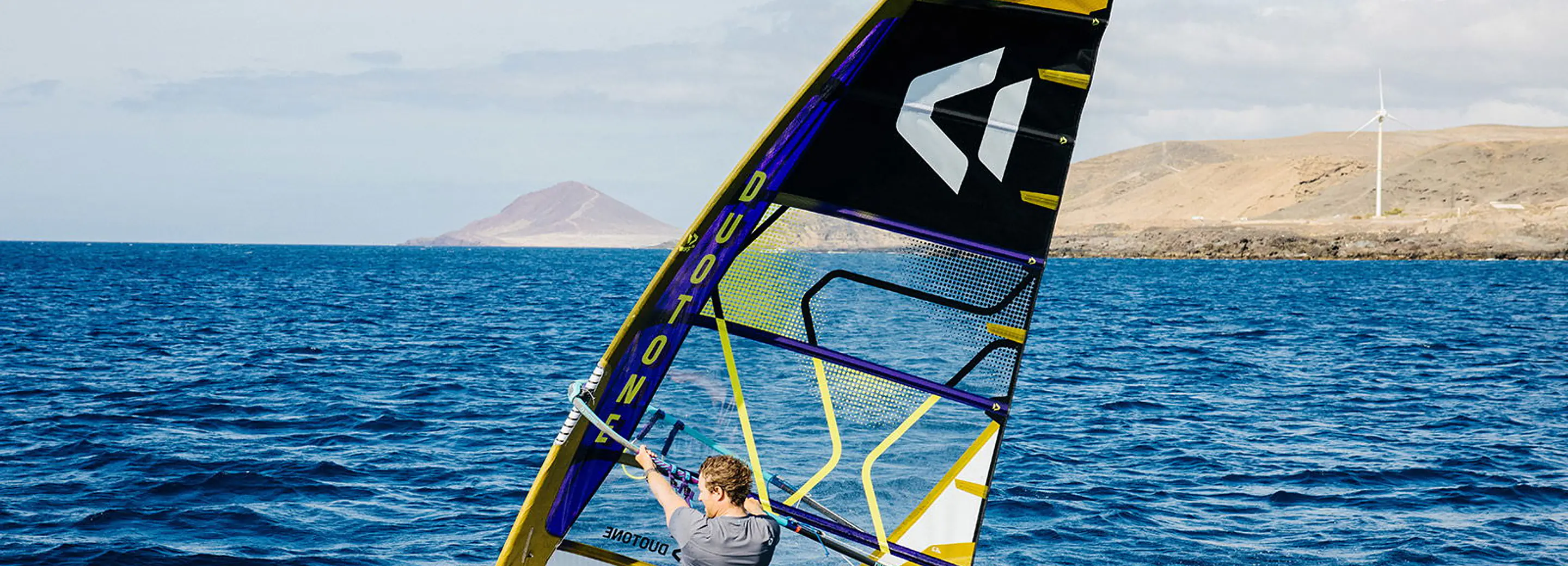
Windsurf Sail Size Guide 2026 — Weight vs Wind Chart
What to Look For
Choosing the right windsurf sail size isn't about a single magic number--it's the intersection of three things: your body weight, your local wind conditions, and how you ride. Get one wrong and you'll be either over-powered (losing control) or under-powered (too slow and lazy to stay upwind).
- Rider weight -- Heavier riders need more area to generate power; lighter riders require smaller sails in the same wind to stay in control.
- Local wind average -- If your spot blows 12-18 kts year-round, your quiver should cover 4.5-5.8m². High-wind spots (20+ kts) need smaller maximums like 3.5-4.5m².
- Sail technology & construction -- Modern 2026 sails (SLS, D/LAB) are lighter and more efficient; older designs or heavier builds need 0.3-0.5m² more to feel the same.
- Mast stiffness -- A stiffer mast (lighter, premium materials) lets you go smaller; softer masts work better with slightly larger sails for easier rotation.
- Personal technique -- Confident sailors push smaller sails and upwind angles harder; beginners want 0.5m² extra for easier powered feel and forgiveness.
- Sail efficiency & shape -- Wave and freestyle sails sit further back; freeride sails balance power and control for mixed use.
Beginner vs Advanced
Start Bigger, Lighter Builds
Aim for the upper end of your wind range--a 5.0m² sail in 10-14 kts gives you more power to push through flat water and easier gybes. Choose lighter, more forgiving builds like Duotone E_Pace or Duotone F_Pace that won't punish small mistakes. Your sail size is your safety margin.
Downsize & Optimize
You can ride 0.3-0.5m² smaller and stay powered with better technique. Premium 2026 sails like Duotone S_Pace or Duotone Super Hero D/LAB reward precise footwork and rotation. You'll feel the wind shift earlier and have more control in choppy or marginal conditions.
Budget Guide
Your sail is the engine of your rig. Budget reflects durability, weight, and performance--not just size.
Tier Price Range Best For Our Pick Entry €380-550 Beginners, learning the sport Duotone Alfa or Duotone Duke Mid €550-850 Intermediate, mixed conditions Duotone E_Pace 2025 or Duotone F_Pace Premium €850+ Advanced, racing, wave dominance Duotone S_Pace 2026 or Duotone Super Hero D/LAB 2025Our Top Picks for 2026
The 2026 S_Pace is the sweet spot for most European sailors: efficient in light wind, incredibly easy to rotate in waves, and rock-solid stability in gusts. Lightweight construction keeps fatigue low on longer sessions. Whether you're on the Sava or Lake Maribor, this sail covers 80% of conditions with one quiver.
The E_Pace has been the workhorse freeride sail for years--and 2025 keeps the formula simple: forgiving shape, predictable power delivery, and enough low-end grunt to unlock light-wind sessions. Ideal for intermediate sailors building a two-sail quiver or anyone who values familiarity over cutting-edge tech.
The F_Pace is designed to teach you right. Forgiving profile, easy rotation, and consistent power band. Its range leans toward lighter wind, making it perfect for beginners or sailors in moderate-wind zones who want one sail to cover most of the season without learning five different sail behaviours.
Purpose-built for wave riders and high-wind specialists. D/LAB construction shaves weight, so your arm won't be screaming after a long session. The Super Hero punches hard in gusty conditions and rewards progressive technique with snappy response. If your local spot regularly sees 15+ kts, this is your secret weapon.
Common Mistakes to Avoid
New sailors often buy a 5.5m² when 4.8m² is correct for their weight and wind. A sail that's too big forces you to depower constantly, kills rotation, and tanks upwind performance. You'll actually feel MORE in control with the right size.
Guessing your average wind kills your quiver. Spend two weeks logging wind speeds at your spot--use Windy.com or a local wind meter. Your sail size guide decisions must anchor to real data, not anecdotes.
2026 sails like the S_Pace 2026 are ~8% more efficient than 2018 models. If you're pairing a 2019 sail with 2025 gear, the older one will feel heavier and require 0.3m² more to match power. Update in pairs when possible.
Mast stiffness, length, and IMCS rating affect your actual sail size range. A soft mast may need a slightly larger sail; a very stiff mast can go smaller. Lock your mast choice first, then size the sail.
A single sail is a compromise sail. Two sails--say 4.5m² and 5.8m²--cover 14-22 kts with confidence. Three-sail quivers let you dial performance and weight to exact conditions instead of fighting one sail across a wide range.
Ready to Gear Up?
Expert advice, authorized stock, ships across Europe within 24h. Let's find your perfect windsurf sail size guide match for 2026.