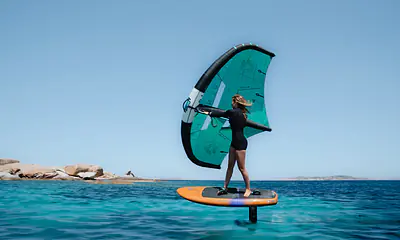

Wing Foiling in Waves — Tips for Surf Conditions
Understanding Wave Conditions for Wing Foiling
Wing foiling in waves sits in that sweet spot where you need enough wind to stay airborne on the foil, but not so much that the waves become unmanageable. You're looking at 10-22 knots of consistent wind paired with 2-4 foot waves. The beauty of this condition is that smaller, well-formed waves work better than massive surf--you want defined swell lines and clean faces where you can pump and carve rather than just survive.
Autumn through early spring is peak season for this in Europe. Atlantic swells wrap around the coast, bringing both wind and organised wave trains. The challenge is timing: you need wind and waves aligned. Light mornings often see pristine waves but weak wind; afternoons build texture on the water and stronger gusts. Spring storms are ideal--good wind range with decent swell still in the water. Summer flatspells are the enemy; winter can bring so much wind you're pinned and waves get choppy.
Best Gear for Wave Wing Foiling
Larger Wing + Sensitive Board
Start with a 5-6m wing to generate lift easily in marginal wind. Pair it with a voluminous, stable board like the Tabou 2026 Super Yaka or Duotone Sky Free 2026--boards that forgive mistakes and let you focus on wave selection and timing rather than wrestling the foil.
Smaller Wing + Responsive Board
Drop to a 3.5-4.5m wing and switch to a more reactive, wave-tuned board like the Tabou 2026 Pocket WING FOIL or Tabou 2026 Twister WING FOIL. These boards carve harder, accelerate faster, and give you the precision you need to hunt lines and rail turns in choppy, gusty conditions.
The Pocket is our go-to wave foil board. It's compact enough to punch through chop, responsive in turns, and built tough for coastal rock gardens. This is the board you reach for when conditions turn proper--waves have energy, wind has teeth, and you want a tool that rewards clean technique.
The CROSS is a wave-specialist wing designed to maintain shape in turbulent air and deliver predictable, confidence-inspiring handling. It excels in lumpy swell with variable wind--exactly what you get at exposed coastal breaks. Pop a 5.0m in the quiver and you're covered from light offshore mornings through gusty afternoon sessions.
Wing Foiling in Waves: Core Technique Tips
- Pop early, stay high -- Unlike flat-water wing foiling, you must launch the foil hard on wave faces. Commit to the pop; hesitation kills momentum. Once airborne, stay high above the wave to read the shape and plan your line.
- Use the wave's energy -- Pump down the face to accelerate, not just drift. Wing foiling in waves rewards active footwork. Your pumping generates forward speed and keeps the foil engaged; passive riders sink and lose steerage.
- Twist your hips, not just your arms -- Turning requires body rotation. Shift your weight back and open your hips toward your target turn. Arm-only steering is sluggish and exhausts you faster in waves.
- Catch waves on the shoulder, not the peak -- The peak is chaos. Approach from the shoulder, get a running start, then commit your pop as the wave bends underneath you. This gives you space to recover if you overshoot.
- Practice exit strategy -- Know how to bail cleanly. When you lose it, stall the wing immediately (angle it to lose lift), release the board, and swim clear. Wing foiling boards with foils are not toys when things go wrong.
Safety Checklist for Wave Wing Foiling
A carbon foil hitting your shin or ribs at speed causes serious injury. Wear impact protection (chest protector, shin guards) and always give others a wide berth. Never position yourself downwind of another rider.
Coastal waves often bring shifting wind as thermals and sea breezes evolve through the day. A calm morning can turn gusty by noon. Check conditions every 30 minutes and be ready to downsize your wing or head in if gusts spike unpredictably.
Cross-swell (two wave trains from different storms) creates confused, closeout seas. Wing foiling in this chaos is dangerous--you can't read wave faces, foil control becomes erratic, and collision risk soars. Wait for cleaner swell organisation.
A leash keeps your board (and foil) from becoming a hazard to others. A PFD is non-negotiable if you're tired, injured, or in cold water. Exhaustion happens fast in dynamic conditions--budget for it.
You can't depower a wing like you can a sail. If you're struggling to hold your wing in overpowered conditions, you're past your limit. Downsize immediately; pride costs fitness and safety.
Our Gear Recommendations at Surf Store
Building a wave wing foiling quiver means pairing responsive boards with wings that work across a realistic wind range. We've selected gear tested in genuine European coastal conditions--autumn Atlantic swells, variable offshore wind, and the chop that comes with popularity.
The Sky Free is an entry-level wave board that doesn't compromise on feel. It's voluminous enough for lighter riders to generate lift in marginal wind, yet responsive enough to carve when conditions clean up. Bamboo construction feels alive underfoot and absorbs chop nicely.
This Gaastra hybrid foil set is forgiving, durable, and designed for learning and progression in real sea conditions. The aluminium mast flexes naturally with wave impact; the compact front wing keeps you responsive without needing laser-sharp technique. It's a working foil for messy water, not a race weapon.
Ready to Gear Up?
Expert advice, authorised stock, ships across Europe within 24h. Building a wave wing foiling setup? Talk to us.